A GOOD LIE, EULOGY for Carlos Castillo
ALM No.94, October 2026
ESSAYS


The more I look back, the more I understand and accept that I never really understood my father. And anybody else who says they did, I find to be suspicious.
My father, Carlos, carried a lot of scars. Some were visible. But a vast majority were not.
We often make simple stories out of complicated men, because they are easier to carry. But people are rarely one thing of another.
Bravery can be mistaken for fear. Longing can look like selfishness. Pain can hide in anger. Genius can resemble insanity. Creativity can look a lot like lies.
Still, for many, understanding my father in black and white made it easier to accept who he was.
But after hearing all the stories about him these past three days, I am more convinced that Carlos Castillo was rarely—if ever—simple.
He could be brave and afraid in one single moment. He could be selfish, but full of love. He often masked pain with anger. He could be incredibly bright, but also terrifyingly dark.
Most of the time, he was all these things. All at once.
When I was growing up in Benitez, my father and his brother, Miguel, could find any excuse to fight.
“Carlos, shorts ko ba ’yan, suot mo?” [Carlos, are those my shorts you’re wearing?]
“Miguel, ikaw ba nagbenta ng Betamax?” [Miguel, did you sell the Betamax?]
Really, any word or phrase was good enough as a trigger.
On one occassion, Miguel did actually pull a trigger.
The story goes: My father came home to a pitch-black house, with Miguel’s pit bulls running amok.
He cautiously opened the front door.
“Miguel?”
In the darkness, perched with a BB rifle across the room, Miguel asked:
“Kakampi o kalaban?” [Friend or Foe?]
Papa answered: “Ako ’to, Miguel. Si Carlos ’to.” [It’s me. It’s Carlos.]
Miguel replied: “Kalaban.” [Foe.]
Then he cocked his gun, and shot him.
The metal pellet hit my father inches from the heart. But Papa did not go down.
As Miguel lined up for his next shot, my father charged him, and proceeded to beat him merciless.
My father was the one shot. Somehow, though, Miguel looked worse.
Papa was rushed to the hospital. The wound was classified as a gunshot wound, which naturally prompted a few follow-up questions.
“Sino bumaril sayo, sir? Kilala niyo ba?” [Sir, can you identify who shot you?]
Shot by his own brother, inches from the heart. And still, my father refused to give Miguel up.
Instead, Papa told them (And the authorities) he had been shot while walking down the street by an unknown assailant, who had escaped.
Apparently, my father thought this was the more believable story.
And my father really knew how to tell a good lie.
When I turned five years old, I received a phone call. People still used landlines at the time.
I picked up, and the man on the other end claimed he was my idol, Mick Jagger of the Rolling Stones.
“Dabid, kamusta birthday mo?” [Dabid, how is your birthday going?]
“Good boy ka ba? Mag-good boy ka, ha?” [Are you a good boy? Be a good boy, ok?]
I couldn’t believe it. After the call, I rushed to my father, and told him what happened.
He was quite impressed. Papa showered me with questions: Bakit daw siya tumawag? Sigurado ka siya yun? Ano sinabi niya? [Why did he call? Are you sure it was him? What did he say?]
With every question, I became more convinced that Mick Jagger somehow called a five-year-old boy, from across the world just to wish him a happy birthday.
To this day, I never found out who was really on the other end of that call—but I have my suspicions.
With my father, love did not always look like love.
Sometimes it looked like loyalty, when you least expected.
There were times it came after fists. There were times it was fashioned with beautifully written words.
Sometimes it looked like a small lie told to make his son feel special. Somedays, it looked like magic. Other days, it felt like pain.
That was my father: Carlos.
In the end, I think this world was simply too much for him. And perhaps he was also too much for this world.
I like to think he was always searching for a quiet place he could never find. A corner somewhere with less noise, and louder music.
Where the stories never ran out. And words were always true.
Somewhere sheltered enough to feel safe, but still dangerous enough to feel wild.
A place where he never had to explain himself. Somewhere he could finally just be the Carlos he wanted to be.
Again, I never “officially” found out if Mick Jagger really called me on my fifth birthday.
And maybe I no longer want to know.
But even if it really was him—even if somehow Jagger dialled 722-10-54 and called from London to Benitez, I would trade that call in a heartbeat just to pickup the phone one more time, and hear Carlos Castillo on the other end.
Paalam, Papa… Mahal na mahal ka namin. [Farewell, Papa… We love you so much.]
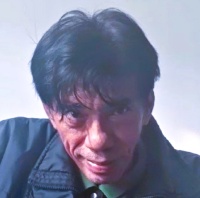
Carlos Castillo studied English literature and creative writing at the University of Santo Tomas, in the Republic of the Philippines. He published poetry and fiction while in college and has since written for various digital marketing companies.
Rest in Peace, my dear Friend.

Subscribe to FREE digital flip copy of the Adelaide Magazine printed edition.