ALL ABOUT MY MOTHER
ALM No.83, December 2025
ESSAYS


Mother’s Death Brought Home Memories
We survive, in the confusion
of a life reborn outside reason.
- Pier Paolo Pasolini, “Prayer to my mother”
-
My mother was a bitterly unhappy woman. Her bitter unhappiness came from a failed romance with life. She suffered the failure like a broken-hearted lover who grudgingly overcame all ill feelings to forgive her betrayer. The pain of forgiveness and the memory of betrayal never left her. She endured the crushing weight of circumstances every single day of her long life that only the sincerest love could have made possible. If there was one thing she retained to the end it was her pride, which she did by never making peace with the world. She battled the sword of passing days as if there was no other way except to heroically suffer for what you felt.
For a character from fiction my mother would gladly have identified herself with Nnu Ego from Buchi Emecheta’s The Joys of Motherhood, the only difference would be that Nnu Ego accepts her destiny of being a mother despite the fact that in the end it leaves her lonely and desolate. My mother took delight in motherhood as an escape from a punishing life that brought her no satisfaction. Perhaps, she closely resembled Mrs. Morel from Sons and Lovers. This comparison at times made her self-conscious in how she related to her sons.
She came into the world in 1939, a couple of months after the Second World War broke out. It was eight years before India ceased to be a British colony. Humayun Kabir called it an “age of innocence.” The promise of a post-colonial future was still in the air although the euphoria did not last beyond the 1950s and 1960s. What remained was an unprecedented level of treachery. Politics permeates social life and deceitful leaders make the masses equally perfidious for no other reason except that they imitate their leaders. Dishonesty and opportunism which replaced hope made the men and women of an entire generation to which my mother belonged, suffer from a poetic melancholy that bordered on depression. Some of the anguish is visible in Mukesh, Lata Mangeshkar and Mohammad Rafi songs where memory is about taking joy in the tragedy that life is all about.
For a temperamentally romantic girl, my mother had to suffer the humiliation of being one of many children in a large family with a single earning member. She began working in her early teens and her active working life contributed to her long-term good health. On the less positive side, some of her insights into how the world treated the unfortunate also came from an experience that was immediate and palpable to a girl who was just past adolescence. She had no illusions about people in general and men in particular unless that man happened to be St. Francis or Gandhi. Her fond admiration for saintly men and women stemmed from a desire to fill the hopelessness of what most men and women were like in real life.
As a young woman her sympathies were largely with the elderly; something about old age and the human condition moved her deeply. Despite feeling the pain of old people in general, her boundless charity was reserved for old men, regardless of external differences. Her attitude towards them was similar to how young mothers acted with their children, combining bossiness and latent affection. It was a peculiar kind of empathy where, in a poignant way, she felt the suffering of neglected old men who were either victims of indifference or cruelty, as if it were her own. For a woman who was not afraid of dying, she could never bring herself to see an old man's loneliness or pain and do nothing about it. Though she was mostly unsentimental, it was in those extraordinary moments that I witnessed the shape of her melting heart.
I never understood why she felt that way though. The only answer I could think of was her attachment to her own father, the only man I ever saw her hug like a child much to my amusement as a school-going kid and probably the only man she ever loved unconditionally. Many women particularly in South Asian contexts where the father-centered family structure fosters greater bonding, may share this blinding love for the father often projected onto sons.
The husband frequently exists as a marriage obligation that must be fulfilled for its own sake. “Only children are to be loved,” my mother declared on the day of my father’s funeral. “The rest of the things that you do as part of married life or raising a family are only because you have to do them,” she added. Lines like these ought not to have surprised me given the fact that my parents had a strained relationship, both being two individually likable though strong-willed persons, who rarely agreed on any one thing. If my father believed the sky to be blue, my mother would unequivocally declare it to be red, ready to take an oath in any court of law. For some reason, it never occurred to either of them that both could be wrong, and they were arguing based on a perception rather than the sky’s real color.
I am inclined to believe that most South Asian couples remain committed in marriage primarily for the sake of their children. This is something both my parents once in a while expressed as the main reason for their being together. Even if as a boy it did not seem like a serious statement, I now feel there might be some truth to it. That’s how countless families tend to be, though it would be unfair to say there are no loving couples in this part of the world, just because my parents do not fit the bill of an ideal marriage. Since I don’t belong to the happy families that are all alike, I am in a position to only talk about the unhappy families, each of which is unhappy in its own way.
What I don’t doubt is the fact that my mother believed as a matter of faith in what a marriage or any serious relationship stood for. She despised men who cheated on their partners with a peculiar intensity. She was not sympathetic to women who did it either, unless my mother felt that a man's cruelty pushed a wife or a partner into doing something similar. These traits are common among South Asian women and my mother was no different except for her tendency to prioritize her conscience over her personal preferences. This is a trait that along with my siblings I inherited from her. I cannot think of a single instance where my mother would delude herself into believing that something was right when she in fact very well knew it was wrong. Her conscience never deserted her in the smallest of things even if she did not always practice what she spoke, owing to human weakness more than anything else.
Though instinctually her heart was with the lonely and the defeated which came from a correct understanding of God and religion, her passionate nature instilled in her a need to either love or not love things or people. As her children at times we found it challenging to empathize with her intolerable pettiness and the meaningless prejudices she harbored towards certain individuals and groups. Such prejudices do not come from ignorance but from a vicious need to project one’s own unhappiness on others. She was cynically hostile to wealth and the wealthy while seeming to admire them in person. What was annoying was her pretending to be nice to people she disliked. As inexcusable as such a self-righteous attitude often is, what made it worse was that it resulted from my mother's need to make up for her own shortcomings which unfortunately had nothing to do with the people or things she was critical of. Trying to tell this to her felt like bringing a stone from the moon and cleaning it in the Sahara Sea.
Towards the end of her life she called me close to her to thank me for being around. I was slightly affected. These are not words sons like to hear from the parents who brought them into this world. She made it a point to give me her blessing every night before she went to bed. I always felt she only did this because she wanted me to know that her blessings were with me in case she left the world while I was asleep. That night she left the world. I remembered her calling to wish me. For an instant my heart ceased to beat. I responded to the air which had the silence of a grave: “Good night, sweet mother!”
Coda
I dreamt of my mother this morning. We were on a flight together. The flight did not have a pilot and landed close to water. I jumped out and landed on the water. My mother was calm. I remember telling her that there was no pilot for the flight. We were only two people on it. It’s a hot Indian summer. I woke up.
Would I embrace my mother warmly if she returned from the other world? I’m not sure. I would perhaps do so. We’ll continue to have our serious differences though. Do I wish to see her and my father in the other world? Of course I do. Given that I will eventually leave this world, there is no reason why I shouldn't see them. Without emotional baggage, bitterness or hurt, I could perhaps connect with my parents better. Maybe if we did not belong to the ‘lower-upper’ middle-class our lives would be different. We would argue less and not be as sour. Emotional repression is a logical offshoot for families like mine because we cannot deal with reality on a daily basis. It could destroy us. That’s how I realized that self-hate is a defense mechanism inculcated in lower-middle class children from struggling families so that they are ready to face the brutal reality of being treated as lesser mortals in the outside world. As a son, I resisted the repression and much later on, the self-hate as well. It was inevitable therefore that I move out of the shadow of my parents. Otherwise I would never have a personality of my own.
My parents were busy clearing loans they made in order to secure a future for their children. When most of your earnings go for paying loans it’s not possible to reach the equilibrium where you could sit and contemplate what it means to be together as a family. I am trying to rationalize some of their past actions in the present. The reasons for my mother’s persistent unhappiness were the social class that she belonged to and was condemned to live in. In other words, lack of money was the source of unending crises. She couldn’t mentally exit the class and so she had to make a virtue out of suffering for which she got plenty of encouragement through reading the lives of saints. Her charity towards others and her cruelty towards herself that by extension also meant cruelty towards everyone she loved and wanted to be loved by synchronized with one another. I cannot help but feel sorry for her emotionally unfulfilled life now that I think about it. Did she have the right to use motherhood as a justification for her actions even when it clear as daylight that she could possibly be wrong? I don’t think so. The bigger question for me is whether my mother was a victim of circumstances or if she had a choice to be another person which she refused to make. I doubt if I’m able to offer a satisfactory response to the question.
I dreamt of my mother more than a few times since she left the world. I don’t recollect speaking to her in the dream. She was silent as the grass on a cold wintry noon. My mother was obsessed with the dreamlike quality of life. Many years ago she recalled hearing a man explain to her how days turned into nights and then nights into days. Nothing about time was constant. Her worries about herself and her children wondering if and when they would grow up were rendered meaningless by the relentless passage of time. She sounded full of sadness whenever she said the words: “I was a girl just the other day. Today I am an old woman.” Her death obsession might have been a means for her to deal with life’s anxieties. The thought that everything will pass away can brighten the day of a passive sufferer like my mother. Her favorite line “This too shall pass” also meant that her worries were not going to last forever. Her broader philosophy was that the world was a horrible place and therefore we had eternity to compensate for it. The tragic downside to such a belief is that it became increasingly difficult for her to take pleasure in the smaller joys of life. The saddest part was the extreme depression that made it difficult for her to rest even while she longed for sleep with the object of waking up in another world.
I refused to give her more than the prescribed dose of medication for her aging-related psychiatric issues. In the course of time she had become addicted to the depression medicine and wanted more of it. I doubt if it was a suicidal tendency. My gut feeling is that it was more likely a desire to end the pain she had to endure for no reason. Imagine yourself walking inside a tunnel for decades of your life. At some point you’re convinced there is no light waiting for you at the end. Probably you’re too exhausted to walk any longer. What is it that would motivate you to continue? My mother felt that she walked her entire life hoping for that light. She had lost all hope of finding the “light at the end” and had no energy to walk any further. She might have wanted to say goodbye to end it all if only it would be as easy as turning off a switch. One of my regrets is not giving her the extra sleeping pill which would have made no difference because she eventually died. At least her life would have been a little more bearable with the extra pill.
The world doesn’t work the way we think in the present. We can only think logically in the future. It still would have been the same neighborhood, the same doctors, the same caretakers and the same hospital. What is the thing that could be different? My mother often said “All I want is a little love. I don’t want anything else.” I would give a little more of that if I could go back. The whole crisis surrounding aging revolves around a consuming need to feel wanted. Parents need children in order to existentially make their lives meaningful. Likewise, children need parents too in order to recognize the continuity of life. Death needs life as much as life needs death. An old man complained to the Buddha that he spent all his life for others and now that he had reached old age he found himself without anyone to care for him. The Buddha said that he would take care of the old man, which he did until the latter passed away. My mother would’ve loved this story.
In my dreams Mother and I have finally reconciled.
The Past as I View It
Any insight into the nature of the past is conditioned by feelings one experiences in the present. Therefore, any attempt to recount the past as narrative is a retrospective reconstruction of events subject to the dictates of the here and now.
My favorite analogy is TV channels dedicated to documenting animal life that typically humanize the world animals inhabit to make it intelligible to an audience that presumably knows itself well enough. Since the language and framework used to speak about animals is “human,” I wonder how animals would view these documentaries if they had to examine them from a consciousness of their own. When I look at the past, the imagery generated by my thoughts is lodged deep in the heart of the present. How exactly the past would talk about itself if it had the voice to do so remains a perennial mystery, only because we can’t go back in time except through memory.
This short piece about my mother is a one-sided conversation I am having with an imaginary reader. How would my mother see herself in relation to what I have written about her? My mother’s voice is lost in a past that is never going to come back, whereas I am caught in a present from which there is no escape. I can only write about her in her absence or rather because of the certainty of her absence. In her presence, perhaps, there is nothing to write about. She occupies the same space I do. It has to be either night or day as it cannot be both at the same time. The very nature of a description of a person from one’s past involves erasing that person from real space and opening the imagination wide enough to accommodate them.
The erasure has already happened because my mother is dead. This has nothing to do with me because in the nature of things I will die too. I am not celebrating her life as a momentous one. I can only describe the circumstances which led to her being who she was. To a large extent as human beings we are creatures of circumstances. If I am using my circumstances as an advantage to describe her circumstances, that’s because I exist in the present. My mother’s existence will not be meaningful because I write about it. My mother’s existence will be meaningful because she lived her life on terms and conditions she negotiated with her circumstances. In that sense, she is neither innocent nor guilty for being who she is or the choices she made as an individual, a woman, a daughter and a mother. I am not making an argument for a deterministic view of the past. I am simply stating that the past has a life of its own; the more we think about it the more it humbles us because so much of what we say now we wouldn’t have thought about it if we were in another space and a different time.
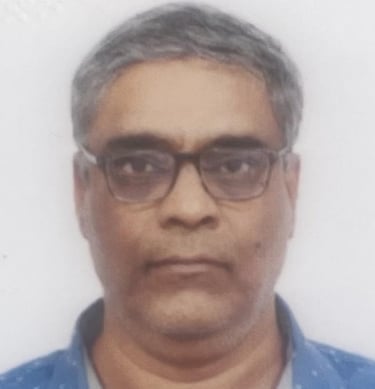
Prakash Kona is a writer and independent scholar. He completed his doctorate at the University of Mississippi in 1997.
Subscribe to FREE digital flip copy of the Adelaide Magazine printed edition.