ASHES OF MY MEMORY
ALM No.86, February 2026
ESSAYS
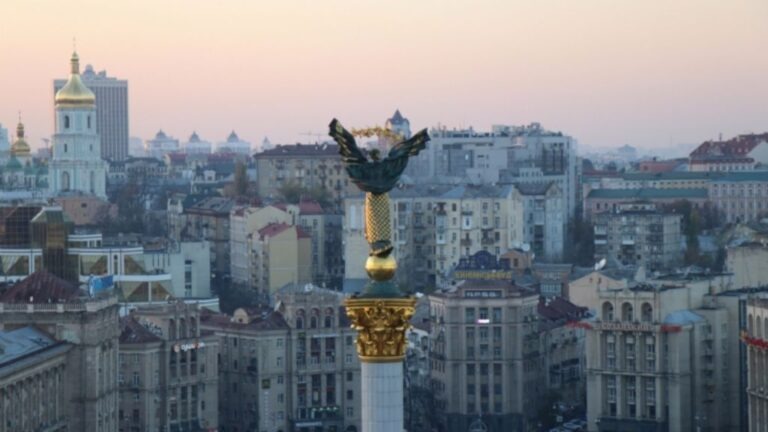
The war in Ukraine… It is not just news or headlines in global media. It is a deep, bleeding wound that has not healed for more than ten years. Russia’s full-scale invasion of Ukraine, the bombing of cities and villages, the Russian occupation, tens of thousands of deaths, and millions of refugees have forever changed our lives and our memories. Towns, settlements, and villages that were once full of life have turned into ghosts of the past. Everything that connected us to our childhood, youth, and memories has now been destroyed.
Every time I follow the news from Ukraine, I painfully notice that the cities of my childhood, youth, and adult life have either been wiped off the face of the earth or are barely surviving under the burden of Russian occupation.
I love my mining homeland, Donbas, with its endless steppe, its gusty winds carrying the sharp scent of steppe grasses, and its vast, bottomless sky. My native Donbas is made up of coal mine slag heaps and the chimneys of giant factories. It is a scattering of towns and villages stretched out in a chain across the steppe, where the distances between them barely reach a few kilometres.All of this forms the living heart of an industrial region. The hardworking people of Donbas labored day and night in the mines, factories, and plants, extracting coal, producing steel, and growing wheat.
Today, the Donbas of the past no longer exists. It has been trampled and destroyed by the enormous monsters of war, like in a terrible nightmare. One part lies in ruins. The other barely clings to life under the weight of Russian occupation. Mines are flooded, enterprises looted… There is no work… Life has been burned to the ground…
The city of Donetsk is the heart of industrial Donbas. Before the war, it was a city with a population of a million and a million rose bushes planted along its streets and squares. It is the city of my student youth and my first love. I studied at Donetsk Technical University twice, earning two degrees. Russian forces tore it out of Ukrainian space and time. Yet for me, it still remains that same city of roses where my youth once unfolded.
Horlivka - my city, where I have lived almost my entire life, has also been taken over by Russian occupiers. My family home remains there. In this city, I went to school, and years later, in the same school, my teachers passed on their knowledge to my son. In the Orthodox church, I baptized my little one. In this city lies my mother’s grave…
My Horlivka stands frozen on the edge of an abyss, right next to the front line. It is slowly dying under constant drone strikes and artillery fire that maim and kill civilians. The city is being destroyed, suffocating under Russian occupation, living without drinking water, without a future, without hope for peace… It still exists — but it's no longer the city I knew, not my Horlivka. To me, it seems empty, as if the heart and soul that once lived in it have vanished…
The city of Mariupol is a city of metallurgists, a port on the shore of the Sea of Azov. A city of courage and labor. Once, in my childhood, our family lived in Mariupol for a whole year. I still remember the smell of the sea and the salty taste of the wind on my lips.At the beginning of the full-scale war, it was occupied by Russia. Much of the city lies in ruins. Tens of thousands of Mariupol residents remain there forever—buried right in the streets, under the rubble of houses, in yards where children once played. The remaining inhabitants of the city survive as best they can in a destroyed city, without heat, without water, without hope, and without the right to speak aloud about their suffering.
There was also the city of Artemovsk. Ukraine restored its historic name, and today it is once again called Bakhmut. A city with the unique Artemovsk Champagne Factory. I remember tours through its narrow underground corridors and tunnels, where, along the walls, in dust and silence, the champagne matured in bottles. I remember school excursions to the Artemovsk Glass Factory and how we, children, excited by what we saw, would carry fragile souvenirs home. Bakhmut—a green, cosy little town with old merchant buildings and quiet streets. My memories of it are so vivid and warm. But now it is gone. Bakhmut has been erased from the face of the earth. Completely destroyed.The residents left, taking with them only what could be carried in the heart—memory…
I also remember a tour of the salt mines in Soledar—a small town near Bakhmut. Three hundred kilometres of underground tunnels carved into salt layers, wide enough for a truck to pass through. The exhausted mines were turned into a unique tourist attraction: 280 metres underground, you could play football on a salt field, where the walls, ceiling, and floor were all made of salt.
In the underground concert hall, music played, and at the “Salt Symphony” sanatorium, they treated respiratory and skin diseases. The air there was pure, as if cleansed and filtered by time itself. The city of Soledar no longer exists. It has been destroyed. It has vanished. As if erased from the map, but not from our memory…
And in the salt corridors of the village of Paraskoviivka, located near Soledar, there was a unique weapons arsenal from the times of the First and Second World Wars. Deep underground, among the silence and salt walls, the relics of history were carefully preserved—silent witnesses to the tragic and heroic pages of the past. Now none of it remains. Neither the arsenal, nor the corridors, nor the memory itself—everything has been erased, destroyed by war, as if it had never existed…
Volnovakha—a small town halfway to the Sea of Azov. Those who have been there in winter remember the local natural wonder: from Donetsk to Volnovakha—snow, grey skies, wind… And just beyond the town, suddenly, greenery, sunshine—as if it were another season. This unique climate boundary felt like a fairy tale. Now Volnovakha lies in ruins. Destroyed, dead, torn apart by war. Nothing remains of that wonder…
The settlements of Melekyne, Yalta, Shyrokyne, and Mangush—our favourite resorts on the shore of the Sea of Azov. We used to go there with our families, in lively groups with children and friends. We swam, sunbathed, and caught the last rays of the sunset by the water.
In the settlement of Yalta, we stayed at a student sports camp right on the seashore: youth, carefree days, sunshine in our hair, and salty skin after an evening swim…These holiday spots we once loved no longer exist. No holidays, no camps, no beaches…
Rubizhne and Sievierodonetsk—two cities dear to my heart, where my relatives and friends lived and worked at chemical plant.We loved visiting them, swimming in the river and in the clear sandy lakes, and picking mushrooms in the pine forest.In winter, we would ski together as a group through the pine woods, breathing in the resinous air. Now these cities are destroyed, and life barely flickers within them… Friends and relatives have left their homes…
There were also Avdiivka, Toretsk (formerly Dzerzhynsk), Chasiv Yar, Lysychansk, Kreminna, Popasna, Pokrovsk (formerly Krasnoarmiisk)…
The cities of my childhood, my youth, and my adult life… They were part of me. Streets painfully familiar, familiar faces, memories… Today, almost all of them have been destroyed. Some have been erased from the face of the earth; others stand frozen on the very edge of disappearance. Some can never be brought back—just like those who once lived there, loved, dreamed, and built their lives. They are gone.
The war has maimed the lives of millions, depriving them of their loved ones, their homes, and even the memory of yesterday. The war took from me my native, warm, one and only home as well. But I lost more than just it—I lost my past. My past has turned into a book with its pages torn out and burned. I no longer live in it… I only gently turn the pages of my memory, afraid of being scorched by their ashes
15 December 2025
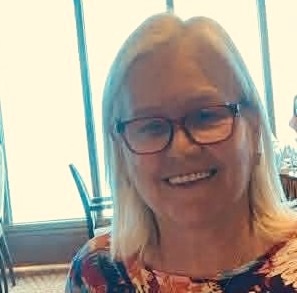
Zoia Zazvonova, aged 70, is a refugee from Ukraine and currently resides in Perth, Australia. She is formally trained as a civil engineer and economist; however, eight years spent under occupation led her to the realm of literary prose. Today, Zoia is working on translating her book into English — a work based on her personal experiences of living under occupation and in a hybrid warfare environment.
Subscribe to FREE digital flip copy of the Adelaide Magazine printed edition.