BEYOND THE RED LINES
ALM No.86, February 2026
SHORT STORIES
Why do we keep walking toward places clearly marked DO NOT ENTER?
What were we really chasing beyond the cross hatched red lines on the map—adventure, proof, or the kind of mistake that can’t be walked back?
These questions followed us into the Amazon, clinging to our boots with every step.
After the lights of Cusco fell away. No engines. No voices. No clink of glass. Just gone, like someone yanked a cord from our world.
Then the jungle spoke. The mosquito’s high pitched whine at our temples. Water gurgling somewhere far off. It wasn’t silence—never that—but something ancient, deeper, and layered. It was the absence of mechanical hum and human noise. Intense humidity pressed against our skin like a wet shower curtain.
Britni nudged my elbow, “Dad. You’re doing that face again.”
I blinked. “What face?”
She tilted her head. “The I’m about to make a questionable decision face.”
Kath snorted, dragging her pack higher on her shoulders. “He’s had that face since the Cusco airport. I saw it when we were told to drink coca tea for the elevation adjustment.”
There was no denying it. The canopy pressed so dense, midday was the color of dusk. Vines dangled like cables. The trail under our boots was damp and spongy, trying to swallow our treads.
A place I’d dreamed vivid enough to taste as a kid. A place that seemed less like a destination and more like a question walking beside me.
We found a map in a tourist shop that smelled of dust, leather and incense. The paper was brittle. Rivers inked in faded blue. And there, in thick red block letters was: FORBIDDEN ZONE.
Beau lifted his eyebrows. “That’s… subtle.”
B.J. turned the map sideways. “Forbidden to who?”
“To us,” Kath said, already grinning. “But as usual, it reeled Dad in like a hooked fish.”
I should’ve been the adult in the room. Should’ve said hey cool souvenir, let’s go get ceviche. Instead I felt that old itch under my ribs—curiosity like a hook giving a gentle tug forward.
“Maybe it’s just a play on words, you know a marketing ploy,” I said.
Britni pinched the corner of the paper. “Marketing doesn’t usually threaten you in red ink.”
And just like that, our adventure drifted toward something else. We started asking questions. The locals were polite at first, then abruptly busy. Each answer was a shrug shaped like a warning.
“You don’t want to go there,” one man said, rolling the words between his teeth. “Not for tourists.”
“We’re not tourists,” Beau said.
The man looked at Beau’s squeaky clean hiking boots and laughed.
We kept asking anyway. It turned into a scavenger hunt through Cusco’s back streets and small cafés. The conversations stitched with half Spanish, half hand signals, and a lot of no, no, no.
Every path led to the same name like those carved in tree bark. A man of influence with the Peruvian Department of Interior, Abel Muniz. The gatekeeper. The man who could say no with a rubber stamp.
We found him at his villa—white walls, wrought iron, an entryway that smelled faintly of polished wood and citrus. The place had the cool hush of money. Abel met us in a linen shirt, a grin already loaded.
“You are the family,” he said, arms flung wide, as if we’d been expected. His English was jagged but good humored. “You want a jungle adventure? Everyone wants a jungle experience. But the jungle does not want everyone.”
He gestured us inside like a magician inviting witnesses on stage.
“We saw a map,” I began.
Abel clucked his tongue. “Maps in shops—pfff.” He waved his hand like shooing a fly. “People make red letters to sell paper. Still… you are curious.”
Kath leaned forward. “Is it real?”
Abel’s eyes flicked to the kids, then back to me. “There are places,” he said softly, “where the forest is impenetrable.”
The phrase landed like a pebble dropped into a deep well. Not empty. Not uninhabited. Not ours.
Beau broke the pause. “So how do we go?”
Abel’s bark of laughter startled two birds in a nearby courtyard. “You do not go alone.” He leaned back, suddenly serious. “No, no. We cannot let you go into the jungle on your own.”
“Because we’d get lost?” B.J. asked.
Abel’s smile thinned. “Because you might stumble on someone who does not want to be found. And because you might make them sick just by being there.”
Britni blinked. “Sick? Like… from us?”
“From you, from me, from anyone who comes from the outside.” Abel tapped his own chest. “To them, our breath is a lethal weapon.”
I opened my mouth, closed it. The thought too heavy, like discovering the thing you so desperately desired just slipped through your hands.
Abel watched us. Then, like he couldn’t help himself, the warmth returned. “Still… curiosity is strong. We will do this the right way.”
He orchestrated the days that followed with a confidence that made the bureaucracy feel like theater. He arranged transport from Cusco, a driver, a hacienda deep in the rain forest. He then pressed each of our hands like family at a farewell dinner.
“You will meet Ruben,” he promised. “He will show you the forest. You will listen.”
Gonzalez showed up outside our hostel in a pickup truck that looked like it had been rescued from a bone yard. Miniature 4x4, rust freckles, and a petrified passenger seat of exposed foam.
“You sure this is our ride?” Beau asked.
Gonzalez grinned, few remaining teeth bright as river stones. “Sí. Perfecto.”
We loaded gear like stuffing a reluctant piñata. Three adults, four kids, packs jammed between knees. A sputtering engine and we were off.
The road snaked up into the Andes, a ribbon of dirt and mud barely wide enough for our tires. Switchbacks stacked like a staircase, every turn a coin flip between vista and void.
Kath muttered, “It’s like the opening scene from an action movie.”
“Action movies have seatbelts,” Britni said, gripping the door.
We bounced for seven hours, stopping only for chirimoya juice, a blend of pineapple and custard. The sun was intense at altitude, the wind cutting. Snow peaks watched us from a stretch of pure mountain air.
At Tres Cruces we stepped out into a winter bite that sliced through sweat-soaked shirts. The lookout was a spine of rock over a sea of clouds. When the sun lifted over the canopy far below, the whole basin flashed emerald.
Beau whistled. “This is unreal!”
“¿Te gusta?” Gonzalez asked, his grin spanning ear to ear.
Winding down through cloud forest the mist dripped from moss like slow rain. The air thickened. Breathing felt like swallowing warm wet toilet paper.
By the time Pilcopata appeared—hillside village stitched together with tin roofs and muddy lanes—we stepped out wrecked, plastered in grit, hungry in a way that felt ceremonial.
Hacienda Villa Carmen waited beyond the village like a hidden gem. Inside the candlelight vampire bats looped the rafters in lazy circles. The communal pit toilet was its own world—mahogany spiders the size of plates.
Britni recoiled. “Nope. Not going in there.”
Kath flicked on her headlamp sending a stampede of creepy-crawlies. “Welcome to the jungle, kids.”
Risk and curiosity—like twins always showing up together, whether you invite them or not.
Abel arrived that evening like a celebrity. He brought laughter, smoked fish, and a man in a green plaid beret.
“This is Ruben,” Abel announced. “Ethnobotanist. Forest brainiac.” Then to Ruben, in Spanish: “They are my… crazy family. Be kind.”
Ruben shook our hands, his grip dry and calibrated. His beard was black and dense. His eyes bright with a peculiar gaze of someone who spent years communing with nature.
“Tomorrow,” he said, in English crisp and clean. “We walk.”
We did. Ruben led us into the morning fog and shadows of green. The trail was a weave of roots and slick clay. He moved with machete in hand, slicing vines, brushing leaves aside, never rushing.
“Epiphyte.” he said, tapping a plant clinging to a trunk. “Lives without soil. Takes in air and rain.”
Britni leaned close. “Does it hurt the tree?”
Ruben’s grin cracked. “It uses a tree like a chair, not like food. No harm to the tree at all!”
He stopped and hooked a finger around a vine. “Liana,” he said, giving it a tug. It barely moved.
B.J. squinted up at it. “It looks like it’s holding the tree hostage.”
“It is,” Ruben said. “Like a straitjacket in slow motion.”
Britni laughed and reached for a cluster of needles at her feet. “And these?”
“Cedar.” He tapped the trunk with his knuckles. “Smell.”
She crushed a sprig between her fingers and brought them to her nose. “Like our grandma’s old chest,” she said.
Ruben smiled and moved on, rattling off names—lupines, ferns, things with Latin syllables stacked like Legos. We repeated the names stretching the sounds until they broke apart, nodding like tourists, half understanding, fully enchanted.
The forest leaned in close. Every few steps, the air changed—ginger sharp and bright, then wet bark, then the sour tang of fungi. Goose wrinkled his nose. “That one smells like old socks.”
“More like ancient socks,” Ruben corrected.
The warmth pressed gently against us, as if the forest were holding us in place long enough to decide what to do with us. Our bodies felt clumsy by comparison—too loud, too blunt—moving through something alive and aware.
We came to a wreck in vines—an Antonov II Russian plane tangled in green, a machine turned fossil. Metal ribs open to the sky.
Beau ran his fingers along a corroded wing. “How does something like this end up here?”
Ruben shrugged. “War. Drugs. Bad weather. Bad luck.” He tilted his head. “Or maybe crew decided jungle was better than city.”
Ruben cut a bamboo stalk with one clean chop, cracked it open, and gulped down clear pure untainted water.
“Tip it in from the corner,” he said, passing it.
The water was cold and faintly sweet. Like drinking the pure essence of mother earth.
While adjusting her pack Kath pressed against a massive mahogany, yelped an instant later. Ants poured down the back of her shirt in a streak of fire red.
“OH—no no no!” She tore her clothes off, swatting and dancing in the mud. Not sure to laugh or lend a hand, the kids held their breath.
Ruben laughed. “They like you.”
We walked until our shirts clung to our ribs and the sweat had nowhere to go. Ruben slowed in a clearing where light broke through in pale gold sheets.
He started walking again, voice a whisper. We followed, all of us suddenly quieter.
Ruben leaned back against a stand of bamboo, the jungle dusk pressing closer, cicadas whining like arcing bare wires.
"There are stories the jungle keeps close," he began slowly. "Some are too fragile to touch. Others wait—quiet as seeds under soil—until someone listens."
“Her name is Puka,” he said, tapping bamboo sharp with each syllable. “And when she was born—maybe ninety years ago—the world hadn’t found her people yet.”
B.J. and Britni sat across from him, twin silhouettes of curiosity, the rest of us silent but watchful.
“Deep in the Amazon,” He went on, “there lived the Chayo. They were one with the jungle—hunters, fishers, gatherers of fruit and honey. Palm-leaf shelters. No roads. No maps in or out.
He lifted his hands, fluttered his fingers, then let them fall. “Other tribes called them the Butterfly People because they never stayed long in one place.”
All eyes were on Ruben as he stroked his beard.
“The forest raised Puka. Every sound meant something. A snapped branch. A bird cutting off mid-call. Smoke that didn’t belong.”
“But something changed, the forest that raised her was no more” Ruben said. “First came rubber tappers. Then loggers. Chainsaws screaming where there had only been insects and rain.”
Britni frowned. “They just… showed up? “Did they know they were outsiders?”
Ruben nodded. “Not at first. But the forest knew. And so did the animals. Then they stayed.”
He leaned forward making eye contact full circle.
“Puka remembered her grandmother whispering, White men are cutting down trees. Whole hunting grounds erased. Animals gone. The Chayo stopped going to places they’d known forever.”
B.J. swallowed. “Did they fight back?”
“They ran,” Ruben said, quick and quiet. “Because running meant living.”
He paused, then spoke again, slower.
“One morning, just before dawn—when the forest held its breath—the loggers came in close. Guns. Shouting. Nine people died where they stood.”
As the canopy filtered dim light, our youngest son began fidgeting.
Ruben made a slicing motion with his hand and said. “Puka’s family didn’t bury the dead. They fled.”
The villagers retreated into the darkest corners of the jungle, every sense alive with danger. But before they vanished, they looked back.
Outside, thunder rolled, distant but heavy.
“After that,” Ruben continued, “Puka was pulled into a world she didn’t choose. Contact. Forced labor. People who took more than land.”
Britni shook her head. “How sad. Did she ever go back?”
“She carried the forest with her,” Ruben replied. “She married a man from the Karipuna people. When she left, she believed fifteen of her relatives were still uncontacted. Still hidden.”
He exhaled.
“Now! Only two are known to remain. Her brother Bota. And her nephew Timu. Somewhere deep in the trees. She’s seen one of their shelters. Just one.”
B.J. clenched his hands. “And the loggers?”
“Still there,” Ruben said. “Still cutting. Still clearing. Even after the government finally drew lines on a map and labeled them forbidden.”
He shook his head, once.
“Marks on maps don’t stop bullets. Or cattle. Or greed.”
The room went silent.
Puka’s words hung in the air like smoke: If they kill them, there won’t be anyone left.
Ruben straightened, eyes moving from face to face.
“That,” he said quietly, “is why stories matter. Because if the Butterfly People disappear without witnesses—without you knowing their names—it’s like they were never here at all.”
Which is why he shared everything—so the story would not sleep. So memories would not erode like riverbanks abandoned. So Puka’s name would live, carried in new voices.
No one spoke. The jungle outside kept breathing.
B.J. asked, “Will the jungle forgive us for trespassing?”
Ruben placed a hand lightly on his shoulder. "Forgiveness isn’t a gift. It’s a practice—like weaving a net, one patient knot at a time. The question is, will the need to keep weaving continue."
“That is the danger of contact. Not only violence. Disease. Fear. The forest for them is home. For others a prize.”
The clearing around us was suddenly too small. I pictured our own family stumbling into a village we didn’t understand, smiling, waving, bringing a disease on our breath the way you drop a match on to dry grass.
Back at the hacienda, we laid out our gear like proud children showing off new shoes. Sleeping bags in neat rolls. Dehydrated meals. Water filters. Solar chargers. A small arsenal of plastic confidence.
Abel and Ruben took one look and howled.
“No, no, no!” Abel wheezed, wiping his eyes. “Save it for your next glamping trip.”
Beau grimaced. “That’s… not reassuring.”
Ruben coughed behind his beard, trying not to laugh. “Looks good. Not for here.”
“I thought camping was the plan,” B.J. said.
Abel wagged a finger. “The plan is to return alive.”
That night, Kath and I lay under mosquito netting—more holes than curtain. Outside, the forest clicked, swooshed, and rattled. Somewhere close, a frog sounded like a miniature motorboat.
“You okay?” Kath asked in the dark.
“Yeah.” I paused. “No. I don’t know.”
She turned her head toward me. “The story about Puka?”
“What if curiosity gets away from us.”
Kath was quiet. Then: “We’re not going to hurt anyone.”
I had no response. Just a throb behind my ribs, the sense of being close to something that can’t be seen but could potentially do harm.
Morning came wet and bright. Abel watched as Kath and I set off for Atalaya to find a longboat. His arms were folded, expression half-amused, half-parental.
“You will not get lost?” he asked.
Kath flashed him a thumbs-up. “Probably.”
The trail to Atalaya was a green maze. Woolly monkeys bellowed overhead. Red howlers erupted beyond every bend. The air tasted of sap and hot mud. Without GPS, every bend was a guess of faith.
Atalaya was a scatter of wood shanties hugging the river. We introduced ourselves with smiles and broken Spanish. Our hands tried to make boats out of gestures. A boat owner finally nodded, spat into the sand, and named a price.
Kath exhaled. “Deal.”
The next morning at the rivers edge Abel introduced us to Jose and Santiago. Jose looked like a jungle myth: one eye sharp, the other gone to milky scar, loincloth, and head wrap. Santiago was his opposite: khakis, dirt-blotched shirt, calm posture, features carved from river rock.
Four shirtless boatmen joined us, all chewing coca leaves with tooth less grins.
Beau whispered to B.J., “We look like we’re going to prom and they’re going to war.”
B.J. whispered back, “Same thing sometimes.”
We pushed off upriver in a motor launch that churned brown water into froth. The boatmen hopped out at shallows, heaving the craft over ridges of rock.
Macaws ripped the sky with blue and yellow streaks. Toucans flashed absurd beaks. Everything felt too bright, too alive, as if the forest was showing off and daring us to keep in step.
We found a rare patch of sand and made camp before dusk. The boat turned downstream, the men of Atalaya waving as they disappeared like a door closing behind us.
We struggled with tents and nets while Jose and Santiago lay on the sand, driftwood under their heads, gazing at the stars like they’d been waiting for them all day.
Beau threw up his hands. “Why do we even have tents?”
Jose shrugged and nodded to Santiago. They both laughed.
That evening they invited us fishing. For them it was simple; for us it was slapstick. Lines tangled. Hooks snagged. Mosquitoes drank from our arms and legs like they were entitled.
Jose slid into the shallows, spear in hand. Two minutes later he rose with a catfish thick as an elephant trunk.
Beau stared. “Are you kidding?”
Jose tapped the fish’s head as if to say, That’s how we roll here.
They cooked jungle stew. A smell that made my stomach hesitate. Jose and Santiago ate with loud slurps of obvious satisfaction. We chewed granola bars quietly, feeling a tinge of embarrassment.
The gap between us and them reflected bright in the firelight—not hostile, just true.
Morning fog came thick as wool. We wandered the riverbank and saw a bloated animal half-submerged—hairless, blunt, with a stubby trunk. The tapir’s dead eye stared up through mist.
Britni clutched my sleeve. “Dad…”
“I know.”
Tracks on the sand nearby looked almost human. Bare feet. Long toes. The prints ran in and out of brush, as if pacing.
Santiago crouched, studied them. His jaw tightened. He stood and said one word.
“Gente.”
People.
The air changed. The forest moved from indifferent to aware. My skin prickled, the way it does when you realize you’re being watched and you don’t know from where.
Britni tried to laugh. “Maybe it’s from another camp?”
Santiago didn’t answer. Jose scanned the forest, one-eyed gaze beyond the river’s edge.
Downstream Britni was in the river up to her shoulders, hair slicked back, singing with a joy that should have been contagious. I imagined piranhas like rumors beneath the waters surface
“Britni!” I snapped. “Out.”
She rolled her eyes, waded to shore. “What? I’m fine.”
“You don’t know what’s in there.”
Toweling off she said, “Neither do you. That’s kind of the point, right?”
Kath met my eyes over Britni’s head, an unspoken she’s not wrong passing between us.
Curiosity and risk weren’t arm-wrestling out here. They were dancing to an unfamiliar tune.
Daylight faded early under canopy. The forest smelled of wet iron and bruised leaves. Then we saw the sign.
It was nailed high on a trunk, bright and blunt against the green. A warning in Spanish and symbols even the kids understood. A line drawn by people with preservation in mind.
We stopped. The river whispered. A bird call cut short.
Britni read aloud, voice low. “No entrar. Zona de pueblos aislados.”
Do not enter. Zone of isolated peoples.
B.J. stared at it, then at me. “That’s… us. We’re the ones who aren’t supposed to be here.”
My mouth went dry. We all stood there, packs heavy, the air thickening around our choice.
Abel wasn’t with us now. It was just our family, two guides, and a forest that didn’t need our permission to swallow us.
Kath said, almost too quietly, “We turn around.”
Jose and Santiago exchanged a look. Santiago nodded and moved to search the bank for raft materials. Their machetes began to clang in a constant rhythm. The boys and I walked behind.
The ladies, Britni, Kath, and Brighton stayed at camp in a loose knot of waiting. The river slid past like time in slow motion.
Before leaving, Santiago reached into his satchel and handed Kath a rifle. Old, pitted, the wood worn by hands from another era. Then he opened his palm and dropped three dented bullets into hers.
Kath stared at them like they were live insects. “What is this for?”
Santiago’s eyes flicked to the trees. “Jaguar,” he said. Then after a beat, softer: “Or humans.”
Britni inhaled sharply. Kath’s hands trembled just enough to notice as she cursed under her breath.
The boys and I marched single file, breathing loudly, as our guides hacked a narrow path to follow.
Then the whistles came.
Thin. High. Not bird. Not monkey. A pattern. Three notes. Pause. Two notes. Closer than they should’ve been.
Jose froze. Santiago raised his fist. All motion died.
The forest held its breath.
Santiago hissed, “Atrás.”
Back.
Jose’s machete lifted not to cut but to signal. We turned. The whistles came again, sharper now, as if the sender knew we’d heard.
Beau whispered, “What is it?”
Santiago didn’t look at him.
A signal, I thought.
From who or what?
I imagined Santiago answering, The ones who want us gone.
We moved fast. Not running, but an urgent walk, just half a step from panic. The jungle blurred. Branches slapped our faces. My heart pounded.
At the river crossing, moss-covered stones tucked just under the surface. We stepped carefully. The current pushed our calves, cold and forceful.
Goose went down in a flash—one foot sliding, arms flailing. He disappeared waist-deep, then deeper.
“Goose!” B.J. lunged.
He caught him by the pack strap and yanked. Goose came up sputtering. We hauled him upright. His face was shock-white.
He gasped, “I’m okay, I’m okay—”
“¡Mover!”
Move!
Santiago snapped.
We stumbled across on shaking legs, water dragging like seaweed.
Where were the piranhas of our imaginations? Not here. Not now. The only animals were giant otters rolling in the current, sleek bodies curving like commas, quick clicking whistles braided with the river’s voice.
On the opposite bank we started building rafts. The clanging rhythm of machetes against wood. Stripped balsa trunks, ivory inside emerald bark. Logs so light I couldn’t believe they’d float anything, let alone us.
Three rafts took shape, twelve by seven feet, elegant in their blunt simplicity. Bamboo poles for steering.
We shoved off.
The river picked up speed, white caps of current tightening around bends. Our boys, B.J. and Beau, took the lead raft. They grinned, cocky with youth and adrenaline.
“Don’t get fancy!” Kath called.
B.J. saluted with the pole. “We got this!”
They pushed into bigger current and vanished around a bend, laughter fading fast.
For a minute it was fine. Then the current got crazy. As they rounded the bend their raft nose dipped, then lurched sideways. It sucked toward a dark swirl near the bank.
“Wow—no—no” Beau’s voice cracked.
B.J. shouted, “Abandon balsa!”
The raft bucked. Two logs popped loose. The whole thing lurched into a sinkhole of roiling water.
They thrashed, clinging to the remaining logs. B.J. jammed his bamboo pole into the swirl, braced his legs, and hauled Beau by the arm as if pulling in a net.
They tumbled onto the raft, coughing, eyes huge.
“You okay?” B.J. wheezed.
Beau spit up river water. “Yeah. That was… exciting.”
While they lashed the raft back together, they saw him.
Across the river, half hidden behind a tree, a man stood nearly naked, spear in hand, face painted in thick red and black bands. He did not move. He watched.
It looked like the jungle had been holding him there for a thousand years.
The boys didn’t wave or call out. They did what Ruben said to do without being told: they lowered their heads, held the logs together, pretended they were just another piece of river debris passing through.
The man raised his spear a few inches. Not a threat. Not a greeting either. A boundary.
Then he melted back into green so completely, it was like magic.
Hours later, the boys drifted back into view, bare-chested and intact. Relief hit me so hard I almost laughed.
B.J. recalled the painted man’s stillness. The spear not lifted in attack but in boundary. It didn’t feel like hostility. It felt like survival practiced into muscle.
We rafted on in silence. The sky dimmed. The air cooled, even as our skin still sweated. My mind kept replaying that painted face, not with fear exactly, but with a kind of ashamed awe.
And yet even relief felt complicated now. We hadn’t been attacked. We hadn’t made contact. But we’d brushed close enough with a painted flesh and blood reminder.
Near the takeout spot, Brighton’s eyes were dull, her cheeks flushed. She’d been quiet for hours, fever slicking her skin. She swayed when she stood.
Kath touched her forehead. “She’s burning up.”
Brighton tried to smile. “I’m fine—”
“You’re not,” Kath said.
We dragged ourselves along a mud sucking path. Every step was a tremor. The hacienda lights finally appeared as pale, impossible squares ahead.
We reached them with the thin, ragged gratitude of people who have learned something they didn’t know they needed.
There, in the glow of candles, a traveling shaman named Alejandro came to look at Brighton. He smelled of smoke and crushed leaves. His hands moved sure, quiet. He brewed a bitter tea from bark and vine, pressed it into her.
“She will sweat,” he said. “Then she will sleep. Then she will return.”
Brighton drank, grimaced, and leaned into Kath’s shoulder.
While she slept, the forest outside stayed awake. I sat on the porch, listening to the hiss of rain, the long creak of trees, the occasional far-off whoop of something lurking.
Abel arrived the next morning, breathless with worry and humor braided together.
“You see?” he said, gripping my shoulder. “The jungle always has last word.”
“We saw a man,” Beau said with reserved quiet.
Abel’s smile faded. His gaze sharpened. “Where?”
Beau pointed upriver. “Across the river. Spear and painted face. He watched us.”
Abel closed his eyes for a second, like a prayer without religion. “You were lucky.”
“We didn’t talk,” B.J. blurted. “We didn’t go near him.”
“Good.” Abel looked at each of us, one by one. “Remember this. The worst thing is neither an arrow nor jaguar. The worst thing is sickness you carry without feeling it. You touch them with your air.”
Ruben joined us, silent for an opening.
“You wanted to know,” he said. “Now you know. Curiosity can have two edges.”
Kath tucked her chin. “Did we cross a line?”
“You saw where the line was,” Ruben corrected. “And turned.”
Abel’s voice softened. “Curiosity is not evil. But it must have a leash.” He tapped his own heart. “Here. Not yours alone. Everyone’s.”
The morning warmed. Birds screamed in the canopy. Brighton stirred awake, fever broken, eyes clearer. She blinked at us, then smiled faintly.
“Did I miss anything?”
Britni sparked a laugh that was half relief, half disbelief.
We watched her and the other kids, the way they were laughing now with a looseness that had been absent for days. I felt the laugh wanting to rise in me too, saw it stall against something deeper.
We didn’t tell Brighton about the man across the river, not yet. Not because she couldn’t handle it. But because I first needed to understand it myself.
Later, Ruben walked with me along the edge of the forest. He pointed out plants that healed, plants that killed, plants that did both depending on how you treated them.
“What happens if people keep going in?” I asked.
His voice stayed low, blunt as a rock. “Disease kills. Land gets stolen. People disappear. It already happens. Logging. Mining. Missionaries. Tourists chasing souvenirs.” He looked directly at me. “Even healthy curiosity can have consequences.”
“Do they ever wonder about us?” I asked.
Ruben smiled without humor. “Maybe. But wonder is safer than contact. They have everything they need. We are the ones addicted to craving more.”
That night we ate together—our family, Abel, Ruben, and our guides. The food was smoky and simple. Abel laughed until he wheezed at the kid’s exaggerated rafting stories.
At one point Abel raised a cup. “To curiosity,” he said, then paused. “And to stopping before it breaks something that cannot be fixed.”
We drank.
When we left the jungle, the road back to Cusco felt narrower than before, the switchbacks less a thrill and more like a reminder: you can go down fast, but climbing out takes care.
Weeks after, the trip kept replaying in flashes—fog curled over river, rifle in Kath’s hands, whistles threading through green, Beau’s shout, the sinkhole swirl, the painted man watching from a distance.
And through it all, that same question kept pressing me from inside.
What were we really chasing beyond that last thin red line on the map?
I know now that the answer wasn’t in the forbidden zone. It was in the moment we stopped at its edge, heard the whistles, saw the sign, and felt the change in our own breath. And the lasting impression isn’t that we turned back—it’s that for the first time in a long time, curiosity didn’t win by taking more. It won by learning where to stop.
I thought of the whistles. Of the rifle placed in Kath’s hands. Of footprints at the river’s edge that were not ours. Of people whose lives continued beyond our curiosity, intact precisely because they remained uncontacted.
On the flight home, Britni pressed her forehead to the window. “Dad,” she said, “why did we go?”
“Because curiosity doesn’t always want answers,” I said. “Sometimes it just wants to listen.”
The jungle hadn’t invited us in, and it hadn’t chased us out. It endured—older than our wandering, wiser than our plans. We moved along its margins, leaving little behind but footprints already fading.
Curiosity, I learned, isn’t about discovery. It’s about restraint. About knowing when to step forward—and when to step back.
Why do people keep walking toward places marked DO NOT ENTER?
Perhaps because some boundaries are not meant to be crossed, only approached closely enough to understand why.
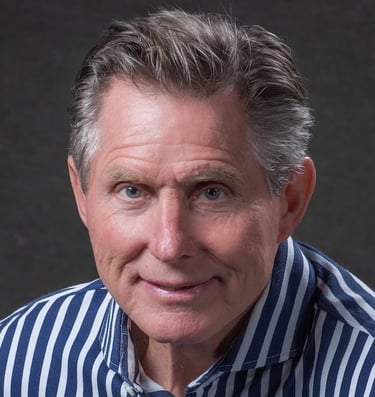
Barrie Brewer: He enjoys crafting lyrical stories with richly drawn characters that illuminate the complex depths of human nature. The author Barrie Brewer combines post-doctoral research with real-world experience to examine themes of ambition, adaptation, and human connections. His passion for exploring diverse cultures fuels compelling narratives that explore both inner transformation and external challenges of human behavior. He weaves together insights from adventure travel, and research in behavioral science to create vivid, emotionally resonant tales about human potential, risk, and resilience. His storytelling reveals the extraordinary within ordinary moments in life.
Subscribe to FREE digital flip copy of the Adelaide Magazine printed edition.