CASUAL SEXISM AND EVERYDAY RACISM IN THE SLOVENIAN LANGUAGE
ALM No.83, December 2025
ESSAYS


What if the words we use every day are quietly reinforcing inequality?
I have encountered casual sexism in the Slovenian language my entire life. At first, I did not recognize it as harmful, it was just part of everyday speech. But as I grew older and became more aware, these expressions began to bother me deeply. When I tried to speak up, I was often dismissed. “It is not important,” people would say. Yet I could not ignore how phrases like *“a si baba” were used to shame boys for showing emotion or failing to act “like a man.” This is not just about oppressing girls; it is about silencing boys, excluding LGBTQ+ youth, and enforcing rigid gender norms. We claim to be a society of equality, but our language tells a different story. When women are repeatedly told (even jokingly) that they are “less,” it sticks. It shapes how we see ourselves and how others see us (Antić Gaber).
Slovenian is full of expressions that carry sexist and even racist undertones. Some are obvious, like calling someone a “baba” to insult their strength or courage. Others are more subtle, like jokes that imply women are bad drivers or too emotional to lead. Phrases like “ženska logika” reduce women’s reasoning to something irrational or laughable, reinforcing the idea that logic is inherently male. Similarly, *“dolgi lasje, kratka pamet” equates femininity with stupidity, suggesting that a woman’s appearance negates her intelligence (ZRC SAZU).
And it doesn’t stop at gender. Expressions like ****“dela kot črna živina”, still used casually all over Slovenia, carry deeply racist connotations, dehumanizing people of African descent and reducing hard work to something animalistic and inferior. These phrases are passed down through generations, often without question. They are used in classrooms, on playgrounds, in homes, and they are rarely challenged. The problem is not just the words themselves, but the way they reflect and reinforce outdated ideas about gender, race, and identity.
What is even more frustrating is how normalized this language has become. People laugh it off, saying “It is just a saying” or “It does not mean anything.” But it does. It means something when boys are told not to cry because it is “girly.” It means something when girls are expected to be quiet, polite, and pretty, but not assertive. It means something when queer youth hear language that erases or mocks their identity. These words shape our culture, and they shape us (TheFlags.org).
I have seen how this affects people around me. My classmate, for example, was once teased for being sensitive. The phrase “a si baba” was thrown at him like an insult, as if being feminine was something to be ashamed of. I have heard young boys being told to “man up” and girls being told to “stay in their place.” And I have felt the sting of being told, again and again, that women are weaker, less capable, or just not meant for leadership. Even when it is said as a joke, it leaves a mark.
Language matters. It is how we express ourselves, how we connect, and how we define what is acceptable. If we want to build a society that truly values equality, we must start by questioning the words we use. That means calling out sexist and racist expressions, even when they are common. It means listening when someone says, “That hurt.” And it means teaching the next generation that respect starts with language.
This is not me saying we should erase our culture or censor every joke. But we do need to be more aware. We need to ask ourselves: What are we really saying? And who are we leaving out? Because if our words continue to reflect inequality, then so will our actions. And if certain expressions continue to shame, exclude, or dehumanize, then they are things that don’t belong.
Works Cited
Antić Gaber, Milica. “The Slovene Language Also Makes a Woman Inferior.” RTV SLO, 2 June 2014, https://www.rtvslo.si/news-in-english/the-slovene-language-also-makes-a-woman-inferior/338447.
“Jezik in spol: ženska poimenovanja v slovenščini.” ZRC SAZU, https://ojs.zrc-sazu.si/jz/article/download/2263/2051.
“The Influence of Language on Identity and Belonging.” TheFlags.org, https://theflags.org/the-influence-of-language-on-identity-and-belonging/.
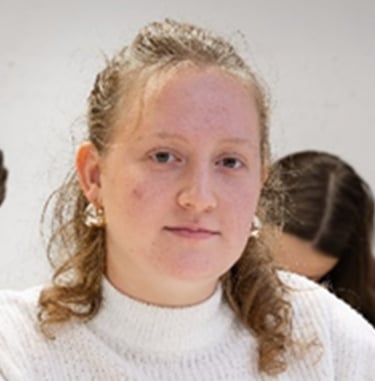
Žana Zupanc is a second-year student at Celje First High School in Slovenia, where she attends a classical program which focuses on Latin and humanities. Her writing explores the intersection of social impact, with a particular interest in global issues and cultural diplomacy. She is the recipient of the Scholar’s Laureate Award from the Immerse Education Essay Competition and serves as an ambassador for international academic initiatives that empower youth voices. She continues to develop her literary voice through essays that reflect her passion for culture and creativity.
Subscribe to FREE digital flip copy of the Adelaide Magazine printed edition.