Connie Jordan Green's poetry collection: Nameless as the Minnows
ALM No.86, February 2026
BOOK REVIEWS


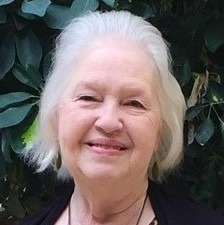
Nameless as the Minnows is a book of 64 poems. Green is a prize-winning poet, novelist for Young People and newspaper columnist. She regularly teaches workshops for active regional poets. She is a member of the East Tennessee Writers Hall of Fame. She taught Creative Writing for the University of Tennessee, and is the recipient of numerous awards, including the 2015 Brick Road Poetry Prize for her book Household Inventory. Her other poetry books include Darwin’s Breath and two chapbooks, Slow Children Playing and Regret Comes to Tea. She is also the author of two award-winning novels for Young People: The War at Home and Emmy. Her weekly column about country living, ran in her local newspaper for more than 42 years.
From the moment you read the opening (title) poem, Green pulls you on a journey that travels from childhood to adulthood. In “Nameless as the Minnows,” she views her 9-year-old self swimming as … a reflection of a brighter self I have yet to meet. The 23 poems in Section I, embrace her childhood but show how the world changed around her by the actions of the grownups in her life. Her move from a coal-mining community in Kentucky to the wartime secret city of Oak Ridge, Tennessee, where the Atomic Bomb was made, makes her life’s journey an uncommon one with a universal appeal not lost in Green’s writing. Her joys of growing up with two sisters, learning to drive, to appreciate gardening, to family members lost… her mother in “Elegy For my Mother.” I drive away from the nursing home... pull to the curb, put my head on the steering wheel, weep for your life... Her father’s hard work in “Earth, Always Earth,” … if the garden were more than metaphor for hope, if the garden—where you spent your hours with your back glistened with the sweat of labor, with the saving salt of life. And a poem in memory of her sister Sue – “On Not Remembering:” … you in shorts, sandals, cutting red roses from the rambler by the door… water lapping our toes... all we ever needed gathered in one small spot.
But Green also writes about the chores of everyday life, like “Clothes Drying in the Sun,” where My sister and I stand by the washer feeding sheets through the wringer rollers… we’ll pin to the clothesline where wind and sun will restore the softness we’ll spread on our bed… to her first job at “McCrory’s Five and Ten” where, It is always midday… the overhead fluorescent bulbs bright as the sun… but I am in charge of the young, my pocket filled with pennies for the cash register, for who under the age of ten knows about sales tax?
In Section II, Green remembers her family’s young days, when she and her husband moved to their farm, tended to chores and dealt with Mother Nature, while raising three children. In “Moving to the Country,” Green says, It was our first winter on the farm… we added a bath to a corner of the kitchen, stapled plastic to the windows, piled firewood on the porch and hunkered down. And from “Watching,” … only the sturdy stock of our mountain ancestors stiffening our spines for each day’s wood chopping, fire building…
After her move to the country, Green talks about the creatures on the farm, the everyday life with chickens, cows, her own children. In “Feeding,” she laments the hard work, … all day I lugged logs to our small fireplace, the house a cave we tried to heat, those children we fed, warmed… we fell asleep to the sound of wind at the corners, woke once more to hungry cattle, hungry children, the rhythm of our lives. Here, in “For Love of Smallness,” she dreams of … a chair with afghan, one lamp, one cup of tea, you close by with your singular devotion, one life scarcely long enough to hold the enormity of love.
In Section III of Green’s book, she shares 24 poems and prompts she has written in/from the workshops she leads and participates in, beginning with “Ars Specifica.” When silence moves on her little cat feet through the absences in your house, offer her a bed, preferably where sunlight patches the room… She speaks of “Gratitude,” saying, It comes to you at twilight, the open hand of a grandson offering you the day’s last strawberry… She speaks of language and how it found her in “Even Today,” … Childcraft volumes open to nursery rhymes or fairytales—the gingham dog and the calico cat forever battling while the owl and the pussycat put out to sea… language crept upon us… This section is a collection about all that language can be, memories, books, and even, “How You Might Count the Stars,” Start with children settled in their beds, crickets chirping beyond the windows, horses lined on the crest of a hill, wind in their manes like the fingers of God…
As a participant in Green’s workshops for many, many years I can promise you each poem in this collection will guide you on your own journey, whether you write poems or simply enjoy reading them. Green’s book is a life presented with as much realism and wonder as is possible, a collection you’ll return to time and again for hope and inspiration and an appreciation for an ordinary woman and her family living an extraordinary but simple life we all yearn for year after year.
Patricia Hope’s award-winning writing has appeared in Tennessee Voices, Anthology of Appalachian Writers, Pine Mountain Sand & Gravel, Quill & Parchment, MockingHeart Review, Artemis, Guideposts, Chicken Soup for the Soul, Bluebird Word, Pigeon Parade Quarterly, Mildred Haun Review, Liquid Imagination, American Diversity Report, and many others. She lives in Oak Ridge, Tennessee.
Subscribe to FREE digital flip copy of the Adelaide Magazine printed edition.