EPIGENETIC MOTHERING
Blog post description.
ESSAYS
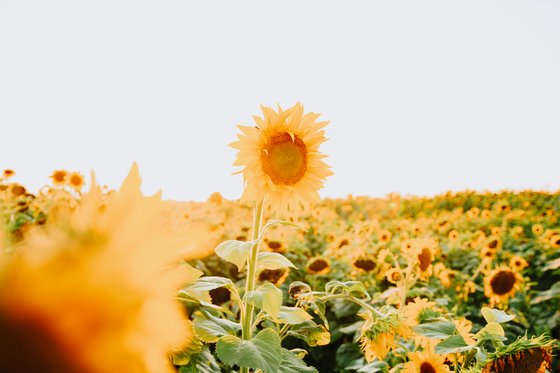
We were escaping. Single mom and eight-year-old co-pilot. Low sage bushes fanned out toward the horizon as we sped down the dusty highway dissecting the vastness of northern New Mexico. The silver nose of the rented Toyota cut through the shimmering heat. Red. Brown. Blue, blue sky. The road was the only vestige of human civilization in sight. No other cars, no buildings. No tractors or livestock. Not even a soda can or bottle littered by the roadside. The hours since we’d left Albuquerque already felt like a dead, forgotten skin we’d shed and left behind. The openness itself making us shiny and new.
My son hung his arm out the widow, pressing his palm against the hot rushing air. His eyes bulged toward the outside, as if opening them as wide as the landscape would make an aperture in his mind, capturing a video he could play over and over. We’d been silent for hours as we’d sunk into the stark beauty around us. But now his little boy voice pierced the quiet. “Mama! Stop the car! I want to run out into this! I was MADE for this!” His joy uncontainable, spilling out of his mouth.
I knew what he meant. It was July 2022, and it seemed the whole world was keening for release.
**
My son was six when I’d picked him up from first grade on a Friday two years earlier, when the New York City Covid pandemic lockdown began. My throat caught a bit as I told him that he wouldn’t be going back for a few weeks to the friend who told elaborate stories about swimming with dragons or the teacher who let him lead a lesson on Roman numerals. The parent pickup line usually pushed from the lobby against the heavy blue metal entry doors, but it was oddly quiet that day, as other families had already been keeping their children home in fear all week. When I’d left my downtown Manhattan office earlier that week under an order to work from home, I rode the elevator with a colleague and as the doors opened on the ground floor, we’d both nervous laughed when I’d said “I don’t know. See you in June?” The absurdity of the punchline imagining three months out of the office.
With schools closed, my mother entertained my son through FaceTime in his room, while I took Zoom calls from the couch. But his six-year-old mind was not made for two dimensions, and he’d run into the living room to stick his face into my camera. Colleagues found this adorable, as I loved their cats walking across their keyboards. We were more forgiving of each other’s creatures than our own. I wanted to have compassion for my son, confined to our apartment, away from other children and fresh air. But part of me was envious, wishing that my son could be easily dismissed like a a cat lifted up and dumped aside, tail held high. I was frantic with the weight of maintaining billable hours while all that I depended on to be a working single parent disintegrated beneath me.
As days of lockdown turned into weeks, I paced the floor at night, listening to the never-ending sirens racing across Brooklyn. When I did manage to sleep, I clenched my teeth so hard that I awoke with pain running from my jaw down the sides of my neck.
The only glimmer of sanity I had was that I thought I was falling in love.
**
In another era, in the wake of another global crisis, another single mother, my grandmother, took another small boy West, seeking something. At the end of World War II, she left her husband and the cold of Massachusetts for the orange and yellow citrus life of California, my four-year old father in tow. Family lore has this as a story of my grandmother’s freedom lust for sunshine, and warmth, by the sea that she loved.
It wasn’t until I became a solo mother that I questioned the narrative about my grandmother. By the time I asked though, she had long passed, but my dad, in his eighties, did his best to fill me in on whatever details he had heard or remembered.
I wondered, what was a multiday train ride with a four-year-old like? My dad assured me that trains in those days had bathrooms on board. I had pictured them sleeping in seats for days, transposing my experience of today’s Northeast regional trains back to the 1940s, but he told me they shared a bed in a sleeper car. I imagine them, her anxious that he might bother the other passengers, and him, blonde curls like my own son at that age, running up and down the aisles, or relentlessly tapping his fingers on the window. Did she pack food to save money, or buy it on board? My dad told me that in Chicago, two Japanese girls recently released from internment camps took him on as their plaything, entertaining him the rest of the way, and giving her some relief. But still I wondered, what marital cataclysm did she leave? Did she replay scenes from it in her mind, both ashamed and relieved at the leaving? Was she seeking something or running from something? Is there ever really a difference?
**
This trip was the longest break I’d had since becoming a mother. Seventeen hundred miles, five states and six national parks between New Mexico and the Pacific, just me and my son. It was the kind of travel I engaged in years before becoming a mother or a professional ensconced in the religion of productivity and the confines of paid time off. Europe. Asia. Lucious, languorous travel that forestalled the American achievement class adulthood for which I had come of age but was never really sure I wanted. Still, in the decades since then, I had made a kind of peace with a version of a life in America I thought I could live with.
But as the shock and tedium of lockdown eased, I found myself planning the trip with a desperation to feast on beauty, gulping it down like water after a long dry sleep until I forgot I was ever parched. Driving down that highway through the wild unexplored landscape ahead, fleeing the detritus of the pandemic, I could almost see all the days of my life before that one receding in the rearview mirror behind me, the front seat serving as the demarcation point between all that I had been, and whatever I would become next.
**
My grandmother was born in Massachusetts to immigrant parents who had escaped the Russian Empire’s Jewish pogroms as children. She was born 100 years before my son and died while I was pregnant. During lockdown, when America suddenly had a collective memory of the Spanish Flu, I realized she would have been the same age then as my son was during Covid. Perhaps there was some similar confinement during that health crisis that developed into the need to escape she seemed to pass epigenetically to me, and maybe to him, if his backseat declarations foreshadowed his future. Or perhaps it was deeper than that, buried in the genes of a people who had learned over hundreds of years of diaspora that the path of life was to escape whatever confinement came visiting, from slavery to pogroms to ghettos and possibly intolerable husbands, with little on your back, saving the weight of what you carried for the infinite space in your head.
As a young woman, my grandmother moved to New York City, where she took the five-cent bus to go dancing in Harlem. Because the Harlem dancers were better, she said. She and a friend once hitchhiked to Miami to escape the New York winter, returning weeks later the same way. She was a woman who looked for her independence in novelty, in art, in ideas, and swimming in the sea. She married my dad’s father, a man she had known growing up, in 1939. Working class Jews, deeply involved in leftist politics, she said their apartment in New York was always full of visitors, serving as a rest stop for political allies, stacked together and sleeping in rows on the floor. He was a union organizer, and she worked as a secretary. As a member of the Communist Party she told me, “I delivered the messages because most of the Communist women didn’t dress up, but I wore stockings and heels, so I was less suspicious.” Her young woman conformity to mainstream fashion became another vehicle by which she negotiated her escape from the mainstream.
She and her husband once traveled together to Mexico for a while. Did they hitchhike, like she did with her friend? I wonder now how the attraction to her husband began. Did she think, as they traveled South, perhaps seeing themselves as allies to the Mexican revolution or to see the art of Diego Rivera, that his freedom would somehow enable hers? In a world where women’s autonomy came at the behest of men, did marrying him feel like the opening of another escape hatch, a socially sanctioned way out of the drudgery of the narrow life she would have been afforded as a single woman without access to institutional forms of financial stability like bank accounts or credit?
**
I had met a strange but magnetic ponytailed man the summer before the virus took over our lives. He was a foot taller and almost a decade older than me and he had a long nose perched in the middle of his angular face. He was the kind of man who cast himself as a revolutionary, a veteran of Occupy Wall Street and the WTO uprising in Seattle. Like my grandmother, I liked my men with leftist ideals. He was a radical farmer displaced to the city via a break-up and a custody arrangement. But he had big ideas about climate change and regenerative agriculture and when we walked around lower Manhattan he would pluck leaves off trees and eat them as he described their medicinal properties to me. On one of our earliest dates, he said he was looking for a relationship where he could grow, so I asked if he wanted to go outside and make out.
After years of bad dates with lukewarm men I met on apps, the fact that he researched talks and comedy shows for us to attend, and texted when he was more than five minutes late felt like care, soothing in me a longing I had learned to ignore, the way we do when a need goes perpetually unmet. When he put his arm around me, pulled me toward his chest, and kissed the top of my forehead, I felt safe. He hadn’t finished college, but he was smarter and more observant than most men I’d met and could talk for hours about ideas and our mutual experiences of parenting, loneliness, and time spent searching for how to be in world to which we felt mismatched. Talking with him became my favorite thing, and I thought about him constantly.
As the city shut down, his flat western twang over the phone, peppered with “ain’t” anchored me in a mad world. We talked about getting our bikes to get outside. Mine had a broken back wheel he said he could fix. As a single mother, it was rare to have anyone offer to do anything for me unprompted or notice that I needed help at all. My ferocious want of him raged hottest in moments like that one, when I felt that he truly saw me, or at least saw what I needed, my loneliness and my yearning blurring the distinction.
**
I know little about my grandmother’s life in the earliest years of my dad’s. At some point, she and her husband had returned to Massachusetts from New York, and my dad was later born there. But her husband traveled the country for his work with unions, before enlisting and leaving for war. My father met his father only three times before he and my grandmother left for California. During the war, my grandmother lived in an apartment where another young mother and soldier’s wife lived across the way, and they helped each other with their babies. I imagine them sitting on a shared stoop, bouncing their babies up and down on the steps, whispering their resentments about being left alone, and their guilt for not sympathizing more with their men at war.
My grandmother had two sisters and her parents nearby, but I know nothing about how much help they provided her. I do know that the impetus for her leaving was that after her own father died, her mother, my great grandmother, moved to California in her widowhood. She asked all three of her daughters to follow, but my grandmother was the only one who did, the one who decided she had less to stay for than to go toward.
**
Weeks into the lockdown in New York, my son and I fled the city in another rental car, getting the last one at the Enterprise in Downtown Brooklyn, as thousands of other carless city dwellers also sought escape. The morning we left, in what turned out to be a strange kind of preview of the drive through New Mexico’s high desert, we were the only car on the road, driving through another alien landscape. Orange letters flashed over the empty expressway. “Stay Home. Bend the Curve.” New York City was devoid of people and movement and sound. Like a dystopian movie, there were newly abandoned vestiges of human civilization all around, the apocalypse realized. We were headed for my parents’ in Rhode Island, seeking support in a world that had collapsed from any we had known.
**
In 1946, the divorce rate in America almost doubled from what it had been at the start of the decade, as men returned from the War. Some were shell shocked in ways that were incompatible with domestic life. In other cases, their wives, who had worked in the war effort didn’t want to give up the primacy of being Head of Household as they were expected to. In still others, couples who had married hastily looking for an anchor in a time of uncertainty, found that when the grind of quotidian normalcy returned, they were not compatible. And yet, what doubling meant was that in 1940, 9 out of every 1,000 marriages ended in divorce, and in 1946 that rose to 18.[1] No fault divorce was still two decades away, and in Massachusetts, divorce could be obtained only on the grounds of adultery, abuse, or abandonment.
Family lore has it that my grandmother following her mother to California was is the story of two irrepressible women pursuing their own self-determination. Obscured though in that telling is the precariousness of my grandmother’s life at that time, caught as she was between the loneliness of being left with a baby by an absent husband, and a world in which she could not have bank accounts or credit in her own name, only able to legally lay claim to whatever cash she could carry. Perhaps the truth is that she went to California out of need for caregiving and financial support. The sunshine and sea were only an added bonus.
**
As Covid Spring turned into Summer, my son invented an elaborate fantasy planet. He drew its communities and seashores with colored pencils on a large piece of white cardboard, and meticulously named and labeled the countries and rivers and seas. It was a pyramid shaped wonder of human cooperation, where megacities of millions existed in a harmony of rainbow-colored roads and neighborhoods. Subway trains and buses always ran on time, and everyone lived and worked in enough proximity to have lunch at home. His house had one floor just for playing board games, another for eating, and another for stuffed animals. When I tucked him in at night, under the high ceiling where I had dreamed of my own future four decades before, he said “When I close my eyes, I visit my planet. I’m only on this one when my eyes are open.” His make-believe world of bright colors and efficiency was his six-year-old salve for the chaos and darkness of the world we were in. He was already learning how to escape.
I was grateful for my family’s support, but the Brooklyn life we’d left haunted me. Our sunny corner apartment, and the neighbors who I shared Friday evening beers with at the bar down the street, while our children played hide and seek in the doorways of the nearby shops. The walk to school down a tree lined street of red brownstones. And the ponytailed man who I talked to regularly on the phone and saw occasionally on stolen weekends throughout that year. My life was like a book I’d left in a taxi, dogeared and only three quarters of the way read through.
**
Like so many others who migrated west during and after the war, my grandmother arrived with my dad in Los Angeles to find a housing shortage. They stayed in Boyle Heights, the center of the city’s Jewish life, in a boarding house that didn’t allow children. They would stay out all day at the beach, until it was dark and quiet enough to sneak into their room, her heart likely pounding as she tried to shush him quiet to keep a roof over their head.
There is something romantic about my free-spirited grandmother and my boy dad spending the days frolicking in the sand and the waves together, mother and son, on the edge of the world, nothing but the infinite blue Pacific stretching past the horizon to the other side of the world. Did she hold his hands in hers, pulling him up to jump over the waves, both of them shrieking and laughing as the cold froth ran over his toes, as I did with my son at the beach? Perhaps they made drip castles as the waves washed sand into their swimsuits, or dreamt together of lands beyond their view, imagining all the places they could go one day.
The reality though was likely somewhat trying. At age four, my own son whined and begged to leave the beach after about an hour. Did my dad complain too about sand sticking to his skin, refusing the sandwiches she packed because they weren’t to his liking? Did their skin burn pink while they looked for benches in the shade? Did she get tired and snap at him, while she waited endlessly for the moment when they could lay their heads down in the dark of the rented room, anxious about how and when she would find a job so they could find a quiet, safe place of their own? Did she miss the friend she’d gone to Miami with, and the husband she’d left behind, her mind stubbornly aching for freer days, resenting her burdens, and then feeling ashamed of that resentment?
**
By the Fall of 2020, my son and I had moved into a high school friends’ empty Air B and B, a few miles from my parent’s house. I’d found a private school that was still attending in person, restoring a modicum of normalcy for us both, but consigning us to a full school year away from Brooklyn, uncertain if we’d ever return.
The ponytailed man visited me one grey November weekend. He arrived late, and the sun was already sinking when I met him in the driveway, wrapping my arms around him and pressing my cheek into his chest. But the long drive had made him tense and cranky, and he grumbled about everything. He looked at me with scorn when I mentioned I’d used a recipe for the dinner I made for him, and he disparaged the poor quality of the Air B and B pots and pans, banging them as he helped with the washing up, muttering about toxic chemicals from their non-stick surfaces. That night in bed, he reached for me, draping his long body over my mine. But I pulled away, hurt that he’d been unable to put his mood aside to acknowledge my weeks of yearning for him. The next day we argued about the politics of the long, tense election that had just passed. He stood over me shouting, gripping the sides of his head as if he was trying to keep it from shooting off his neck, his body too rigid to sit down. I couldn’t reconcile his outsized rage with the vulnerable man I loved who talked about his dreams and uncertainties, his love for his son, and who stroked my hair when we watched a movie, my head resting on his thigh. But as we stood facing one another, the weak early winter sun illuminated us through the front window, I felt his body balloon in fury from forces in his head I could not see, his shouting relentless. At that moment he was oblivious to me, and I folded up my insides. He didn’t hit me, but I knew that he could. There was a part of me that wanted him to, that wanted to walk into his violence and lose myself completely in the desert of him, abandoning the burdens of my own life, chasing something I could never catch.
When he left that weekend, he followed behind my car in his so I could point him toward the road that would take him to the highway. While I drove, I pointed out the window motioning for him to turn left. He pulled into the turn-only lane beside me, and I waved as I drove off. Inside me a small spark flickered, telling me that I’d never see him again.
**
At some point after my grandmother and my dad arrived in East L.A., my great grandmother bought a house where the three of them lived in a matrilineal, multi-generational home. My grandmother found a job as a secretary at the community JCC, which provided half-day childcare for my dad, and a big playground where he could spend time until his grandmother arrived to take him home. My grandmother eventually remarried, but throughout my dad’s childhood it was the backbone of her own mother’s caregiving that kept her and my father afloat.
Even as I am sure my grandmother was grateful for her own mother and the home she made for my dad after her marriage ended, I wonder about the thoughts she kept to herself. For her generation, at 29, she’d had my dad late. I was also what modern medicine refers to as a geriatric pregnancy, having my son at 41. She told me once that she had had my dad because she didn’t want to miss out on the full range of human experience. I too had longed to understand what I had been told was the deepest, purest love of all. And yet my experience of motherhood had not freed me from pining for romantic love.
How long did she continue to long for something she thought she’d get from her husband? How long did she grieve for her marriage? Did she think about her husband, as she and my dad rode the train, wondering if she’d done the right thing, for him and for herself? Would she have stayed if it weren’t for wanting something better for my dad than she thought she needed for herself? Did she find that the reality of the human experience she sought was more complicated than she’d expected, that while the long-term project of parenting does produce a deep sense of meaning, the daily experience is often tedium and exhaustion, punctuated by small dots of joy?
**
I wish I could say that the actual breakup came the moment I glimpsed the boundarylessness of his anger. But it took months more for me to relinquish the idea that I could have the parts of him that I loved, without the parts of him that scared me. And for years after ending things, he continued walking around in my dreams. I’d frantically search for him at the edge of the dark, the planes of his face as clear in my sleep state as they had been one early autumn morning back in Brooklyn, the first weekend he said he loved me, when I’d sat astride him, holding his cheeks between my palms in joy at the solace I felt between us, crying and laughing at the same time.
As much as I wanted to lose myself in him, a small firm mother seed in me knew that I would not. My son, the fact of his small smooth face and clear blue eyes, held me at bay. I could not let him see the mother he loved, love a man like that, desperately, fruitlessly, constantly forgiving without receiving the same in return, in hopes of arriving at some destination on a horizon that didn’t exist.
**
When I was a child, I loved swimming in the pool, seeing how long I could hold my breath, or opening my eyes to watch the ribbons of sunlight cut through the water. My grandmother was one of the only adults I knew who liked to stay in the water until the skin on the tips of her fingers pruned. She would stand in the shallow end with her feet planted wide apart, making a bridge of her legs for me to swim through. I’d hold my breath and dive under the water, pushing off the soft wrinkled skin of her knees as I wriggled through, popping up to the air at her back, and laughing. Her short grey curls were tucked under a white rubber swim cap, and she would laugh, too.
As children we accept the facts of the past presented to us as the water we swim in, metabolizing them as truth without understanding how that lore lodges into us becoming the bridge from the past to our very selves. But I long now to understand more than I was given. Did motherhood become the compass pointing her toward the freedom she’d always been seeking?
**
Traveling across the northern part of the country through Chicago, my grandmother and father would have seen different vistas than my son and I saw on our westward journey, gazing perhaps at cornfields, instead of sagebrush. As passengers, my grandmother would have needed a different kind of concentration, paying more attention to my dad than I could to my son, facing forward with him behind me. My mind wandered, sometimes so deep in the loss behind me, that I forgot he was there sleeping or gazing out the window. Was that part of their journey, too? Did her mind wander backward to the husband she could not or would not stay with, perhaps as she stroked the small head curled in her lap? Parenting alone can feel like involuntary confinement. The grinding days of lockdown magnified that for me to near imprisonment. But what I carry with me, passed from one generation of solo mothering to the next, is that we protect our children the best ways we can, and buried in that protection is the road toward freedom, both theirs and ours. If it were not for my son, for wanting better for him than I could chose for myself, I would have followed the ponytailed man down any road he would have taken me, and not been able to find my way home.
**
At Zion National Park, we rented water hiking boots and polls for a day traversing The Narrows, a trail that is also the river. As we made our way past crowds at the trail head, we entered spaces with only a few other hikers. The red and green walls of rock on either side rising high above us, meeting the startling blue sky. In places the clear water was waist high cooling us, allowing us to keep going, despite the ninety-degree morning. The rented boots helped grip the slippery rocks visible below the surface. As my son splashed toward a sliver of dry riverbank so we could have a snack, he stomped his feet and declared “I. Love. Hiking!” He wanted to go as far up the river as we could go, lamenting that we didn’t have a permit for the parts far beyond where we could reach that day. He was drawn into the idea of getting lost in something bigger than himself. But he was too young to understand the level of our inexperience, the danger of the open wilderness, or even that the farther we went, the farther we’d have to return. I bore the brunt of his disappointment when I calculated the time, our remaining snacks, and the rising heat of the day, saying that we must turn around. But I knew what he had yet to learn, that embedded in the magnetism of every freedom, taken to its extreme, is another form of confinement. The real liberty is the pendulum swing between the two.
As we made our way back toward the stand to return the rented gear, I trailed behind him, fatigued from the hike, carrying both walking sticks. I watched the back of his small head, shaded by his green hiking hat, bobbing ahead of me as we crossed the hot blacktop. My son. My compass. My earth.
[1] 100 Years of Marriage and Divorce Statistics United States 867-1967. National Center for Health Statistics
Rachel Rosen lives in Brooklyn, New York, with her son. She is a researcher by day, and writes creative nonfiction in her spare time. This is her first published essay.
Subscribe to FREE digital flip copy of the Adelaide Magazine printed edition.