FINALLY
ALM No.94, October 2026
POETRY
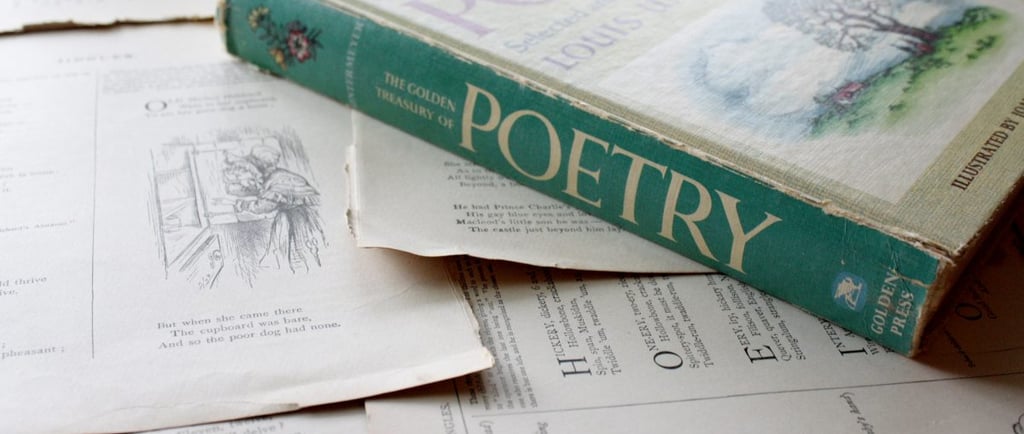
Nagging
…from Proto-Germanic gnagan, related to Old English gnagan “to gnaw”
People often talk about
a nagging voice in the back of their head.
I have one of those.
He nags in poetry.
You’ve never truly been nagged at
until you’ve been nagged at by a poet.
Like a dog with a bone.
A dog inside a bone.
Finally
What do you want?
You keep asking me this.
And you keep writing poems
that skirt around the issue.
Maybe some things don’t belong in poems.
You don’t really believe that.
Maybe I do.
Maybe pigs’ll fly.
So?
What’s the point wanting wants when we
know we have to make do with make dos?
Wants are moot, you think?
Wants are most defintootly moot.
So, what if we unmooted them?
To marry Claire Danes.
Marry? How very old-fashioned!
That is not where I saw this going.
No?
I imagined Christina Ricci or a young
Sigourney Weaver, circa Galaxy Quest.
All equally impractical wants.
There are some… practical considerations.
You think?
Would you settle for a quickie with
Jennifer Love Hewitt on a Boeing 737?
First class lav?
They’re all the same size.
It’s the kudos.
Passionatus
…from Latin passio (genitive passionis) “suffering, enduring”
Passion is usually about a fear of missing out,
so, when all’s said, it’s a young person’s thing
which is an odd thing for young people to feel,
what with their whole lives ahead of them and
many opportunities not to miss out as well as
second and even third chances up the wazoo.
With old people every day could be their last
bite of the cherry assuming they’re not sick
to the back teeth of cherries, assuming they
still have back teeth or even any teeth but all
sense of urgency has pfft! Worse, any sense
of… hell, it can’t even be arsed having a name.
Old folk suffer. The young, on the other hand…
Now I think of it, there’s no word for that either.
Contextomy
…refers to the selective excerpting of words from their original linguistic context in a way that distorts the source’s intended meaning
To help keep track of my lies,
I insinuate them in poems.
They’re much tidier in poems,
don’t you think? Orderly. Neat.
Not all lies work in poems, but
lies of omission are, surprisingly,
some of the easiest to work with.
Be succinct, but never terse, and
you’ll be amazed how much shit
you can cram into even a tiny haiku
with a little care and some moxie.
But don’t let their brevity fool you:
they’re all about the long game.
Fish Poem
I have a talking fish in my poem.
I should clarify.
I have a fish who can talk but not
a talkative fish.
He just swims around my poem
not saying much.
Perhaps he’s mulling over stuff.
That’s probably it.
Any time now he’ll let me have it.
Any… time… now.
Jim Murdoch is a prolific Scottish poet. In 2025 alone, he published 140 poems and has already exceeded that this year. Over the last fifty years pieces have been accepted by respected journals such as Acumen, Stand, and—much to his own surprise—Analog, though the greater amount by far have vanished without trace. For ten years he ran the literary blog The Truth About Lies but now lives quietly in Glasgow with his wife and, whenever the mood takes him, next door’s cat. He has published two books of poetry, a short story collection, and four novels—Jim, not the cat.
Subscribe to FREE digital flip copy of the Adelaide Magazine printed edition.