I THOUGHT EXCELLENCE WOULD PROTECT ME
ALM No.89, May 2026
ESSAYS


I grew up in South Memphis believing that if I checked every box, life would check me back.
Respect your elders.
Do your homework.
Stay out of trouble.
Don’t get pregnant.
Go to college.
I didn’t want to be the girl people whispered about—the one who disappeared behind trees with a boy and reappeared pretending nothing had changed. I didn’t want to end up in the Section 8 apartments near the railroad tracks, pushing a stroller before I understood who I was.
So I performed safety.
I made honor roll. I joined extracurriculars. I said yes ma’am and no sir. I carried ambition like armor. My mother was my example. After my father died while I was in middle school, I told myself I could survive anything because I was Brenda’s daughter. Brenda’s daughter was sharp-tongued when necessary. Brenda’s daughter handled her business.
Then my mother died two months before I graduated from my HBCU.
Grief rearranges the architecture of a person. It exposes how thin your protection really is.
I remember walking across campus knowing she would never see the cap and gown. People hugged me and said she would be proud. I nodded because that’s what strong daughters do. We nod. We hold ourselves together in public. We collapse later.
After I was told my mother had died, something else happened.
By nine o’clock that same evening, the locks were changed.
I had left that semester with a key. I came back to a door that would not open.
My belongings were still inside. Her clothes still hung in the closet. The couch where we sat. The kitchen where she stood stirring pots. Everything remained — except my access to it.
I was told I could not live there.
Conversations shifted quickly from condolences to logistics. From memories to market value. I had seen this before when my grandmother died — the way grief in our family could harden into calculation. My oldest uncle, who had been told last minute when his own mother died, had once been treated like an outsider. I remembered that. And now I understood it differently.
I looked at my oldest sister, who had a rocky relationship with my mother, waiting for her to say something in my defense.
She said nothing.
I wasn’t able to grieve. I felt alone in a way that had nothing to do with geography.
Still, I kept checking boxes.
Graduate school.
Student loans.
A small apartment three hours away from Memphis.
A full-time job.
If excellence couldn’t bring my mother back, maybe it could at least secure my future.
When I landed my federal job, I believed I had finally entered the protected room. Degrees framed on the wall. Policy manuals on my desk. A title with weight. I thought merit had rules.
I was wrong.
I learned quickly that comfort and competence are not the same thing. Some people walked into meetings already relaxed, already believed. I walked in prepared. Overprepared. I studied policy at night the way I once studied algebra in high school, determined not to be the stereotype anyone expected.
I noticed who was trusted without question. Who was corrected in private versus in public. Who could laugh off mistakes. Who could not afford them.
Once, I was asked by a corporate-level office to present because of my knowledge. I had built something solid—carefully researched, thoughtfully structured.
I remember the conference room — beige walls, fluorescent lights that made everything look slightly washed out. My slides were printed neatly in front of me.
“Yes, she’s smart,” someone said lightly. “But still too new.”
Too new.
The words floated just above table level, casual enough to deny later.
I lowered my head and let out a slow, controlled exhale, the kind you release when you need your face to stay neutral. I adjusted my pen. Pretended to review my notes. Pretended I hadn’t heard.
No one corrected it.
Also, I noticed I had gathered data from regional offices piloting a more efficient process. I emailed summaries in advance. I brought printed charts.
“What do you think?” she asked him.
He looked at my chart before answering.
A few minutes later, my male peer repeated part of my recommendation. My supervisor glanced past me.
This time, heads nodded.
I had degrees. I had results. I had done everything right.
But I was still “too” something.
Too young.
Too Black.
Too female.
Too unfamiliar.
That was the first crack in the armor.
There were other moments. Directives I gave that were reinterpreted, softened, rerouted. Authority tested not loudly, but persistently. Smiles paired with quiet resistance.
I kept working.
Because that’s what strong girls from South Memphis do. We adjust. We outperform. We refuse to confirm anyone’s low expectations.
But one day, I watched a colleague respond to a subordinate who had just received devastating personal news. The young woman stood there trying not to fall apart. Her shoulders were shaking. Her voice thin.
Instead of compassion, the concern was hierarchy. Who needed to be informed first. How it would look. Whether protocol had been followed.
I felt something settle in my chest—not anger. Not even disappointment.
Clarity.
I saw, in that moment, the kind of leader I would never become.
All my life I had believed excellence was protection. If I was educated enough, composed enough, ethical enough, I would be safe. Safe from bias. Safe from dismissal. Safe from the instability I grew up around.
But excellence is not armor. It is exposure.
It puts you in rooms where you must decide who you are when no one is grading you.
I realized then that survival had shaped me, but it did not have to harden me. I did not have to trade compassion for credibility. I did not have to mimic indifference to prove I belonged.
I could be steady without being cold.
I could be ambitious without being cruel.
I could lead without shrinking my humanity.
My mother’s last words to me were to do more than she did and to find peace where I could. For a long time, I thought “more” meant titles. Degrees. Promotions.
Now I think she meant something else.
More integrity.
More courage.
More self-definition.
The workplace is full of personalities. Some will protect themselves at your expense. Some will misunderstand you. Some will test you simply because you are there.
But none of them get to define you.
I am still Brenda’s daughter.
But I am also the girl who stood outside her own front door with a key that no longer worked.
I know now that no title or armor can guarantee safety.
Now I know titles and armor only make you heavy.
These days, I walk into rooms with my hands open.
If I leave with nothing else, I leave as myself.
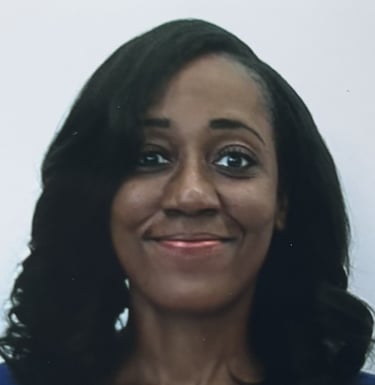
Natassia Guyton is a Veterans Rehabilitation Specialist and federal government leader with more than a decade of experience supporting Veterans and their families. She has held leadership roles including Assistant Division Manager and Certified Training Instructor and was the first African American woman to serve as Assistant Manager of the Benefit Eligibility Support Team in the Southeast District. A Memphis native, Natassia holds a BA in Mass Communication from Lane College and an MA in English from Tennessee State University. She is an active member of Alpha Kappa Alpha Sorority, Incorporated, and advocates for workplace equity, resilience, and mentorship.
Subscribe to FREE digital flip copy of the Adelaide Magazine printed edition.