I WAS DENIED A COUNTRY; SO I BUILT AN INTELLECTUAL VOICE
ALM 92, August 2026
ESSAYS
An Erasure Written Into Law
There is a particular kind of violence that leaves no visible wound: the violence of a signature on a page. In 1982, the Myanmar state enacted a citizenship law that did not expel the Rohingya people through soldiers or fire, but through definition - through the quiet, bureaucratic act of deciding who would count as a national and who would not. Historical erasure was accomplished less through spectacle than through category. Once a people is defined outside the boundary of citizenship, every subsequent act of violence against them becomes, in the eyes of the state, administratively coherent. The Rohingya have lived the consequences of that redefinition for more than four decades: statelessness, forced displacement, genocide, and a recurring, generational persecution that continues to this day.
Yet no legal category, however total it claims to be, has ever fully succeeded in defining a people out of existence. Alongside the record of suffering runs a second, quieter history - of those who insisted on thinking, studying, organizing, and building, precisely inside the systems constructed to silence them. This is an account of that second history, told from within it.
A Childhood Measured in Restrictions
My name is Mohammed Siraj. I was born on 14 December 2004, though my date of birth was mistakenly recorded as 1 January 2003 in UNHCR documentation - a small clerical error that is, in its own way, revealing: even the most basic fact of a stateless person's existence, the date they entered the world, is subject to institutional approximation rather than certainty. I was born into a Rohingya community in Arakan State, Myanmar, whose right to exist had long been contested by the state that governed it.
I learned, while still attending primary school, that identity was not a private matter but a public determination - one that decided whether a child could walk to school without fear, whether a family could seek medical care without negotiation, whether a future could be imagined beyond the horizon of survival. For Rohingya families, ordinary life was conducted under permanent restriction. Movement, healthcare, education, and safety were not rights so much as privileges granted or withheld by systems indifferent to individual merit. Fear, in that environment, was not an abstraction debated in political theory. It was the architecture of daily life.
Statelessness does not only remove a passport. It removes the presumption, held by every citizen without a second thought, that one's existence will be legible to the systems meant to protect it.
Political theorists have long argued that citizenship is not merely a legal status but the precondition for exercising almost every other right - what has been described as the foundational right that makes other rights possible. To be stateless is therefore to be suspended not outside society, but outside the very mechanism through which claims on society can be made. I did not encounter this idea first in a textbook. I encountered it as the condition of my own childhood, and only later found the vocabulary that named it.
Learning as a Form of Resistance
For displaced and marginalized communities, education is rarely a neutral institutional process. It becomes, simultaneously, emotional survival, intellectual resistance, and moral affirmation. I understood early that knowledge could not by itself dismantle structural injustice - no amount of reading repeals a citizenship law. But knowledge could refuse the permanence that such injustice depends upon. Every unauthorized act of learning was, in that sense, a quiet argument against the idea that our exclusion was final.
My education unfolded far from privilege, and the obstacles extended well beyond economics. The deeper difficulty was navigating a world that had already decided what a refugee was permitted to become. Yet these conditions sharpened rather than dulled my intellectual curiosity. I found myself drawn to international law, political theory, governance, human rights, and social justice - not as abstract disciplines, but as the only vocabularies capable of explaining the questions that had shaped my life since childhood: Why are some populations protected by international systems while others remain permanently exposed? Why does citizenship function as the gatekeeper of dignity? And can displaced communities ever move from being the subjects of policy to being its authors?
These were not rhetorical questions. They were the beginning of a discipline.
From Personal Struggle to Public Engagement
As my studies deepened, I moved into human rights advocacy, refugee affairs, youth leadership, and research on international law, politics, human rights, conflicts and security, governance and forced displacement. Through this work I encountered a pattern repeated across the humanitarian sector with striking consistency: refugees were discussed constantly, but almost never as intellectual contributors. Public discourse treated displaced people as subjects of concern - photographed, tabulated, pitied - while rarely recognizing them as researchers, policy thinkers, or institutional leaders in their own right.
This observation reframed my entire sense of purpose. Representation, I came to understand, is not a symbolic courtesy extended to the marginalized. It is the mechanism that determines whose knowledge counts as legitimate, whose experience is documented as evidence, and whose voice is permitted to shape policy. For decades, conversations about the Rohingya crisis have taken place in rooms where Rohingya scholars, researchers, and young leaders were, at best, an afterthought. International institutions debated our future while structurally excluding us from the process of deciding it - a form of what scholars of knowledge production call epistemic exclusion: the denial not of material resources alone, but of standing as a knower.
Founding the International Institute for Law and Politics
It was from this conviction that I founded the International Institute for Law and Politics (IILP) on 1 January 2026 - not from personal ambition, but from a broader intellectual and humanitarian argument: that displaced and marginalized communities need more than emergency relief. They need institutions capable of cultivating critical thought, legal literacy, research culture, and political education from within their own ranks.
IILP was built on a single organizing principle: that knowledge must serve humanity, not merely describe its suffering. In an era defined by political polarization, democratic fragility, humanitarian crisis, and mounting pressure on global governance, the Institute seeks to build a serious and credible space where scholarship, policy, ethics, and leadership converge - a space where the people most affected by displacement are also its most rigorous analysts.
As founder and president, my objective has been to help cultivate a generation equipped not only to respond to crises, but to shape the intellectual and political conversations that define justice and human dignity in the first place. Refugee communities are too often positioned solely as recipients of aid. I wanted to help build a framework in which displaced populations are recognized instead as producers of knowledge, advocates for legal reform, and full participants in global political discourse - not guests in that conversation, but its co-authors.
The Institute's leadership reflects this ambition in its structure. A Governing Council serves as the principal strategic and decision-making body, drawing law lecturers and students from universities across Bangladesh alongside members from other countries. An Executive Directorate Board provides operational leadership across multiple countries. An Academic Senate, composed of distinguished academics and scholars, serves as the Institute's intellectual authority. An International Advisory Board of respected scholars and professionals offers strategic and academic guidance. As a newly established institute with no financial backing, every member of this structure serves as a volunteer - a workforce assembled entirely from conviction rather than compensation.
Study Without a University
My own academic formation mirrors the Institute's mission. My associate and bachelor's degrees in health science deepened my understanding of the structural inequalities that shape vulnerable populations' access to care; my diploma in international law gave me the legal vocabulary to analyze displacement and statelessness with precision rather than sentiment; and my diploma in Academic Research Studies sharpened my ability to conduct rigorous, evidence-based research on complex political and legal questions.
Every one of these credentials was earned entirely online, because the absence of citizenship documentation and a passport has made attending a traditional university impossible for me. That fact is not incidental - it is the argument in miniature. A young person can complete rigorous coursework in law, health science, and research methodology entirely through self-directed, remote study, and still be told by the very systems meant to recognize merit that a legal document he does not possess disqualifies him from formal advancement. If I am granted a scholarship and the opportunity for postgraduate study, I hope to pursue a Master of Laws (LLM) in International Law or a Juris Doctor (JD), and to bring the same discipline to a classroom I have so far only been able to enter through a screen.
A Story Shared by Many
I have never regarded this story as mine alone. Across refugee camps and displaced communities worldwide, countless young people carry intellectual potential that circumstance alone keeps constrained - not for lack of ability, but for lack of institutions willing to expect anything of them. Perhaps the deepest injustice facing displaced communities is not only the denial of safety, but the denial of expectation itself. When a society stops expecting excellence from a population, exclusion stops looking like a decision and starts looking like a fact of nature. I have refused to accept that quiet substitution.
Displacement complicates the realization of human potential; it does not eliminate it. Statelessness can strip a person of citizenship, mobility, and formal protection, but it cannot strip them of intellect, dignity, or moral agency. If anything, some of the most disciplined commitments to education and justice I have encountered emerge precisely from communities that have known historical exclusion most intimately - because for them, learning is never merely aspirational. It is evidence, offered against a verdict the world has already tried to pass.
25 November 2023
On 25 November 2023, I was arrested alongside twelve other Rohingya youths after we traveled roughly half a kilometer outside the refugee camp to a small restaurant to receive certificates for completing a three-month course on Conflict Management and Resolution, taught by a professor from the Netherlands. An academic milestone - the kind celebrated without a second thought almost anywhere else in the world - was treated, in that moment, as an act of transgression.
In the aftermath, the authorities barred me from continuing online higher education and imposed a fine of 5,000 Bangladeshi Taka. During the incident, a senior police officer told me: "What will you do with your education? You are a refugee. Stay like a refugee. You have no right to study, and even if you study, it is useless because you do not have a country. You receive WFP rations every month."
The message was unmistakable: refugees were permitted to survive, but not to aspire - to remain dependent, but never to become independent.
That sentence has stayed with me not because it was cruel, though it was, but because it was so precise. It named exactly what the system expected of me: gratitude, not ambition. For security reasons I cannot disclose the full details of that incident. But I can say that neither the arrest, nor the fine, nor the humiliation moved me to abandon education, research, advocacy, or my commitment to speaking for the Rohingya and other displaced populations. The experience did not weaken my conviction that the struggle for knowledge and dignity is inseparable from the struggle for justice itself - it confirmed it.
Beyond the Grammar of Victimhood
International discourse has a persistent tendency to narrate refugee lives exclusively through tragedy. Suffering must never be minimized - the historical record of what the Rohingya have endured demands to be told fully and without euphemism. But reducing displaced populations solely to victimhood performs a second, subtler erasure: it forecloses the possibility of also being a student, a researcher, a builder of institutions. The Rohingya people are not only subjects of humanitarian concern. We are also thinkers, organizers, educators, and leaders, striving toward intellectual and civic contribution under conditions few societies would ask their own citizens to endure.
My aspirations remain rooted in this fuller vision. I hope to continue advancing scholarship, humanitarian engagement, legal education, and research on forced displacement, human rights, and global justice - and, more specifically, to help build spaces where marginalized voices are not only heard but structurally empowered to shape institutions, produce knowledge, and influence policy at the national and international level.
Making Toward Purpose
When I reflect on my past on the path to the present moment, what unfolds does not strike me as simply a story of pain, or a self-aggrandizing tale of success. The narrative that I am left with feels instead like an ongoing project of transmuting exclusion into membership, erasure into visibility, and banishment into purpose. I grew up with systems in which even the existence of my own identity can be questioned by state apparatuses, and over years of educational pursuits, advocacy, writing and creating an institution, I have learned how to affirm my own dignity through scholarship, moral integrity, and sustained efforts to resist silencing in the face of extermination, erasure, and de-humanization.
From generations past, the Rohingya people have been struggling to retain not just the physical but the historicity and shared identity that we have been denied in the eyes of the world.
Through study, through advocacy, and through leading the International Institute for Law and Politics, I too continue in that old effort - to insure that refugees remembered not for what they had to endure, but what we had to think, argue, mobilize, and create regardless of it.
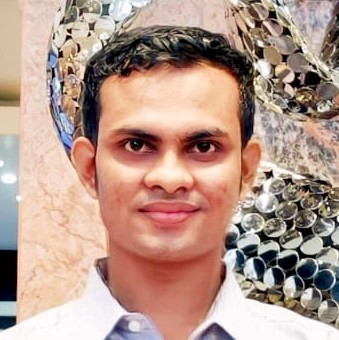
Mohammed Siraj is a Rohingya multidisciplinary researcher, human rights advocate, political analyst, and aspiring legal scholar. He is the Founder and President of the International Institute for Law and Politics (IILP), an independent, non-profit academic, research, policy, and leadership institute dedicated to advancing the study and practice of international law, governance, politics, human rights, forced displacement, statelessness, humanitarian affairs, peacebuilding, and sustainable development through inclusive higher education, training, policy dialogue, and global cooperation. His work focuses on international law, forced displacement, statelessness, humanitarian crises, conflict and security, education, and political affairs.
Subscribe to FREE digital flip copy of the Adelaide Magazine printed edition.