INTO EXILE
ALM No.89, May 2026
SHORT STORIES
I was six years of age, yet my memory still upholds every minute detail of that fateful night. The screeching of trucks across the road, the ticking of my family clock and the repeated bombardment upon the streets, still grips onto my consciousness like a viper. We hid quietly as our neighbourhood was riddled with despair and anguish, each building painted with a crimson brush. I was in my sixth year of life, still innocent, utterly ignorant to what my eyes were experiencing when I peered through the basement window. The horses on the road were decimated; the buildings which surrounded our neighbourhood were burning ever so slowly. Through a bleak crevice in the window, the smell of burning flesh crept inside and became our unfortunate guest. I was six years of age, too young to experience such decimation. I was unacquainted with the tragedy of war: as any child would be at such an innocent age. As my eyes had become fixated on the destruction, my parents packed together items and amenities for our escape. I recall emerging from the confines of our home, the fear still sits lonesome within my mind. I cried as I looked toward my mother’s angelic face, I begged her to save my life. I remember the trickle of every tear drop as we rushed forcefully into exile.
We crossed through the Warsaw mainland after the sun had completely faded leaving a minor trace of vision. We stayed very close to each other through the deep shrubbery which had painted the landscape. I recall grasping my mother’s hand with such ferocity that my grip could not ease. We walked quietly for some hours; each crackle of the shrubbery startled us, we could not see past twenty or so meters as a grimacing fog was covering our path. I did not have any real clue regarding our whereabouts or our destination. No clue what lay ahead.
My father was leading us forward while observing every footstep, identifying the direction we were required to take. We eventually arrived to a dense portion of shrub which separated itself from the mainland. Below us however, was a large amount of water – it was some kind of river. My father was the first to break the silence, whispering in our Polish dialect.
“We are at the Bug River,” he whispered cautiously. His eyes were flickering and darting around the environment, remaining continuously vigilant.
From here he whispered directly to my mother, in what appeared to be an attempt to shroud the dramatic possibilities of our journey.
“I am unsure if the border is being monitored across this river bank, but we have no other option than to cross through. Warsaw will not hold much..”
Before he could finish the sentence the sound of crackling brought forward a powerful surge of goose-bumps along my spine. My father grabbed my mother and myself, directing us to crouch down behind a fallen log. I was able to observe the area through a tiny loophole in the drenched piece of wood. The shrubs and leaves were brushing rapidly in the near distance.
“Heads down, quiet,” my father whispered as we continued to crouch, unaware of our circumstances.
A gradual crackling had remerged after a few moments of silence. It transgressed into the sound of crunching steps across the muddy surface, louder and louder as our heads became almost visible right below the log.
My heart was enveloped with a surreal pressure as my father slowly pulled out his glossy hunting knife and emerged from beneath the wood.
“We are only peasants, we are only peasants!” an array of voices called out.
We raised ourselves from beneath the log very cautiously, as my father concealed his hunting knife.
“We too are seeking to escape into exile, we must be quick if we have any chance of crossing safely,” an older man of the group explained.
Tension. Nerves. Powerful feelings of anxiety began to grow as I faced the density and depth of the river. I remember my body was shaking feverishly, it was a physical reaction to the adrenaline: I was scared. My mother had grasped my hand once more and whispered to me
“Aleksander, I am here with you, be a strong boy.”
With those words we entered the chilling Bug River, each step filling a portion of my boots with the icy water. We marched further and further, my family and some four others until we reached a small boat. We wanted to avoid a conflict, to find refuge, even if only temporary.
Fate however, seemed to adopt an unorthodox idea. We had ferried almost three kilometres, about half the distance to our temporary salvation before an unwelcomed catalyst broke our stride. Two circular beams of light surrounded us as we travelled. We rowed cautiously behind a vast portion of long shrub, staying completely silent, not uttering a single hymn. The spotlight did not fade, each second felt longer. After a few more seconds of paralysis, a flurry of projectiles flew past us from opposing sides. My father began to row violently through the shrubbery to avoid the bullet fire; we managed to escape as the bullets decimated the landscape. My wool jacket was gripped by the claws of death; I felt inches away from the reaper.
We made it across the Bug River after surviving the barrage of projectiles. The river was systematically being used as a border between the Soviets and the Germans upon the invasion of Poland, and we were illegal intruders.
We eventually arrived to a small town, some ten kilometres past the river. Through the painstaking walk, the fear of capture never subsided. My feet had become numb due to the icy water which had crept inside my boots, we were moving so hastily that I could not stop to empty them. I had noticed the immensely nervous nature of my parents; they gave off a powerful indirect message that capture was not out of the question. Our tattered clothes were more than enough to label us as peasants in exile. We eventually made it out of the congested danger zone and arrived at a small village on the Eastern border by sunrise. It was by sheer luck that a sympathetic family took us in. My father was the only member of our family who was well versed in the Russian language; therefore he was able to communicate with the villagers. We were given a modest shelter by this very considerate couple. They provided us with new sets of clothing to disguise our peasant appearance. I wore a matching pair of dark beige pants and top which kept me quite warm through the frosty nights. Each night felt completely different to the former, the smell through the town changed on a daily basis as I cradled closely to my mother each night to keep warm. One night would smell of burning oak, the next would smell of a rusty iron. My father was given a temporary job in a nearby hospital, while I attended a local Russian school for a few short weeks. I remember my teacher staring blankly in my direction after asking me a question which I could not answer. His stern unwelcoming expression was incredibly powerful.. Language was a difficult barrier to overcome. I was starting to feel the distinct feeling of homesickness; it felt like a pressure around my entire body, I ached with feelings to return to our cosy household in Warsaw. I wanted to sleep beside our fireplace and return to pleasant dreams. It was a drastic ask, and I prayed on the nights when there was a full moon that we could return to our home the next morning. I remember sitting quietly after returning from a day of school with my mother sitting beside me, there was a light knock on the door and I truly felt that my prayers were finally answered.
My parents seemingly knew that our capture would be inevitable; it was only a matter of time before our footprints would be traced. Our extraction took place roughly a month after we settled into our temporary home-stay. I recall the knock on the door and I remember the unusual placid nature of the KBG as they took us away. As we were lead through a patch of open forest, I was unaware of what we were to expect. The feeling was very uneasy and I could judge by the expressions of my parents that the situation was potentially critical. We were so secluded in this unknown forest that our executions could be well hidden.
We were temporarily relieved of the imminent despair when we arrived at a rail-road. An outstretched carriage was ahead of us with a large group of peasants being directed onto the dark train. On close inspection, I realized that the carriage was not intended for human deportation. The carriage was intended for animal transportation. It was lined with thick bars which seemed to represent some kind of prison. There were large wooden planks and piles of hay inside the structure. As we were forcefully placed inside the bars I noticed there was no food or water on board.. The outside of the train was covered with an outstretched metallic base which removed any traces of light.
I recall the pitch darkness within the train and the sound of quiet weeping. My heart beat was getting slower and slower by the hour. The nausea was set into motion quite quickly, my eyes felt like they were burning: as if a small overused blowtorch was resting against my eyelids. I can remember my stomach shrivelling as each hour drifted by, the carriage rocked tumultuously and we were unable to look outside. It was horrifically dark within the train, with the smell of urine being the paramount odour.
After what seemed like days the carriage had come to a halt and I heard the sound of footsteps right outside the confine. The doors were unlocked slowly with the chilling breeze brushing through. I recall a state of surreal confusion as my vision was unusually blurred and my stomach shrivelled from a lack of food. A group of us marched through the density of the Siberian forest. I was still grasping my mother’s hand while we walked bare-foot across pointed branches and other sharp objects. As a result of a painful, heavy fever, I collapsed for the first time as we reached a small array of primitive huts.
Six years of age.
I was alternating between states of consciousness while lying fixed on a smooth tapestry. The Siberian forests were bone-crunching and shockingly cold on a scale that I had never experienced. I was able to witness my mother covering my feet in old newspapers to keep my body warm as she wept with such profoundness. I tried so hard to reach a functional state of consciousness, just to relieve her, but each attempt drained more of my energy. I was suffering from a severe form of pneumonia. A powerful virus had clamped itself onto my central nervous system, draining me on each breath. There was a lack of basic food and supplies in the Siberian huts, it felt like my mind and body were slowly facing collapse as a result of the starvation and the illness. Was I still alive? The thought continued to circulate, my head was constantly spinning – my thoughts were shifting with each breath. It was a nightmare of alternating states of consciousness. I had eyes which were unable to open, unable to envision a revival. The reaper seemed to be visiting be once more, this time on a mental plane, within an unrelenting nightmare.
I recall the moments when I was brought back into a stable mental state by the whiff of a fresh apple. I remember that rather suddenly I was clenching onto a round, smooth object. It was fresh and reminded me of my yearly escapades with my grandparents into the lush plantations of Krakow. The warm nostalgia seemed to carry immense value in my return to life, I felt a distinct sense of internal relief as the pneumonia, simultaneously, was disintegrating. I still remember the day I was able to open my eyes. My mother was bowing her head in a silent prayer, clenching onto my hand with the same intensity that I had applied when we first fled from Warsaw. She had slowly raised her head and noticed my weary gaze. I saw her sunken eyes, deeply pained as I reached out for an embracing hug.
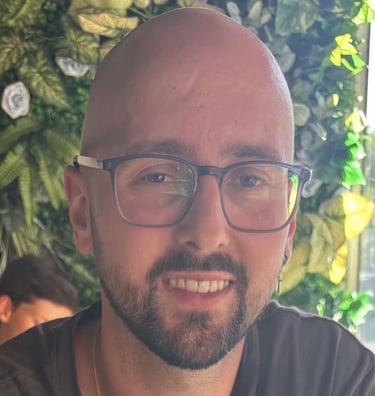
After working as a plumber in Melbourne for 9 years, Patrick Minkowski decided to pursue his love for writing and storytelling. His debut novella, Gemini Ode To Clockwork, was self published in 2025. Patrick enjoys writing dystopian fiction while also dabbling in the horror and thriller themes. Patrick hopes to write a collection of short stories in the near future.
Subscribe to FREE digital flip copy of the Adelaide Magazine printed edition.