LOST CONNECTION
ALM No.87, March 2026
ESSAYS
I was in the international food aisle at Giant when I received the text from my daughter announcing she had left and would not be back.
“Hey, I’ve left. I want you to know I’ve done so of my own free will. I am an adult, and I need to get out on my own. I am some place safe with people I trust. I just need time away, but I will not be coming back.”
The words crashed like cymbals into my ordinary day. I dropped a pack of tortillas back on the shelf and fled the store.
I’d read about parents whose children had disappeared. How did they show up at work, go through their routines, move on?
Now I was one of those parents. I had no doubt the girl was serious, that she did not plan to return. What had caused my 21-year-old daughter to leave without warning? As I emerged into the store parking lot, I felt untethered, unsure what to do.
V. had always been different. I first noticed it when she was in second grade and took part in a class celebration marking the end of the school year. I arrived midday from work and mingled with the other moms and dads. I noticed several little girls clustering, whispering and giggling, but mine standing alone. That was to be her lot, standing to the side throughout her childhood and adolescence.
A few years ago, before she started college, I scheduled a neuro-psych exam. The diagnosis of autism spectrum disorder (ASD) helped put V.’s difficulty making connections into perspective. The results, while not easy to hear, reassured me that all the failed strategies – arranging unreciprocated playdates, enrolling her in peer support groups – were not anyone’s fault. V. was just being herself: not one to show emotion, poor at keeping up conversations unless it was to dive into details about the bus schedule, challenged dealing with money because she lacked impulse control.
She had grown so much since then. At 21, she was immersed in college life, pulling solid Bs and writing detailed lab reports specifying what size pipette was best to measure water quality. I applauded her successes from afar while also crediting myself for encouraging her to join AmeriCorps for a gap year after high school. An extra year, extra time to mature.
I remained V.’s staunchest supporter. Her mother, of course, but also chief companion. Routinely, we’d walk the mile up the hill to get bubble teas, cuddle on the couch to watch Gilmore Girls reruns, and share nail polish. Like all mother-daughter relationships, ours had challenges, but we’d always navigated our disagreements, she the person of few words; me the one probing to glean how she really felt and providing her permission to express it.
So I was stunned by the text I received that morning. After picking her up from college for summer break, my husband and I had left town for a few days to visit our beach house in Delaware. V. said she was fine staying behind and didn’t let on about anything else.
I left her a voicemail from the Giant parking lot. “I can respect your decision,” I lied, hoping not to alienate her further. “I’m just not sure what’s happening. Can we please talk?”
Despite my best effort, my voice quavered. I doubted I’d hear back. I felt like I was peering in from outside my body, playing some kind of role. It was hard to fathom this was actually happening.
My husband and I tossed our belongings in the car and drove back to our house in the DC close-in suburbs, where I hoped V. might return or, maybe, we’d gather some clues. In the passenger seat I replayed everything from the last few days trying to fill in missing pieces.
V. and I had texted while I was away: about what she should make for dinner, about picking up an item from the store. All seemed normal.
But before that? She and I had a moment when she was unpacking her things from school.
My daughter was built on broad shoulders and legs, inheriting her father’s solid physique. I tended skinny and kept at it by starting every day on the treadmill. While people described me as tall and thin, I didn’t aspire that V. be my clone. I just wanted her to feel good, look good and be healthy.
Once V. arrived at college, she put on some serious pounds. We used to call it the freshman 15, but for her it may have been closer to 50. I liked to have a live-and-let-live approach with my adult kids, but seeing my daughter gain so much weight was painful. V. had sprouted jowls and her stomach hung over her waist band. I noticed she’d get out of breath going up the hill for tea. I worried prospective employers would get a negative impression and choose someone else. I feared she would be a fat person her whole life, with all the baggage that brought.
The morning we left for the beach, I broached her weight gain. I suggested she lose 25 pounds over the summer.
“I’m fine, Mom,” she said in a clipped tone.
I felt what I had to say needed to be said and pressed on. I told her it wasn’t healthy to be heavy and offered to help design a fitness regimen. Knowing I was tiptoeing around minefields and leery of hurting V.’s feelings, I strove to be gentle, supportive, adopt a we’re-in-this-together approach.
A piqued expression shadowed her face as she shook her head and busied herself with a pile of her dorm things. I dropped it.
It seemed unbelievable that a five-minute conversation had driven her away. I shuffled through other possibilities but kept coming back to that scene. I had seen that flicker of annoyance, how badly my words landed.
And, now, would I ever know where she was? Was she safe, as she claimed?
Then there was the problem of money. V. had very little cash on hand and no access to her bank funds unless I transferred them to her. For years, I had managed her finances because she needed oversight. She acknowledged as much after she binge-bought journal after journal with cute covers, the pages barely touched; huge packs of colored pencils; erasers with little heads; and bottles of hand sanitizer. When we cleaned out her bathroom after she left, we found dozens of mini-lotions with vanilla and rose scents.
The neuro-psych report confirmed V.’s inability to manage her money. We agreed to place her earnings, around twenty grand, into a savings account. I set up a weekly automated transfer promised to forward more to her as she needed it.
The lack of money now posed an enormous problem for a girl on the run and petrified me. During my conversations with her older brother in the days after V. left, he cut to the chase. “What’s she going to do for money?” he asked. “You need money every single day.”
Maybe I could use her banking challenge to convince her to come back, or at least to stay in touch. At the same time, my worse angel chimed in. Maybe being penniless might be a just punishment for her impulsiveness, her unwillingness to talk to me. Just cutting and running. Hadn’t I taught V. about the importance of communication? From years of being my kid, she knew I was both a talker and a listener, not prone to flying off the handle or acting rashly.
In the car, I scrolled through my phone contacts, trying to find someone who could shed light. V. had just a few friends – again, making and keeping relationships was hard for her – but I didn’t have anyone’s number. Then, as my thumb swept upward I came across the mother of her Girl Scout buddy, Lila. They had met at summer camp, and her mother and I had exchanged numbers to arrange playdates. The friendship survived the tumult of high school, and V. had planned to spend the night at Lila’s apartment one night while we were away.
I placed the call to the mother, explained what was going on, and she promised to grill her daughter and call me back.
True to her word, she called a few hours later. V. had spilled a little to her friend.
“She was pretty upset you were talking about her weight,” the mother said. “Also, there was something about her fidget spinners?”
I paused for a beat. Right. The little plastic things my husband had tossed in the trash when we were helping sort the piles of V.’s stuff. Surrounded by a mountain of boxes, luggage, and ripped grocery bags, we had come across what looked like Chinese-manufactured junk toys we wanted to winnow when V. wasn’t looking. We had encountered shelves packed with her dusty, unused trinkets for years.
“You know, having something to release anxiety like fidget spinners are really helpful for people on the spectrum,” the mom said. She should know, because Lila also had ASD.
Thus rebuked, I settled into self-recrimination. I had lost my daughter over pushing a diet and tossing toys. Why couldn’t she have just talked with me? I was that bad a mother she just had to get away.
When we got home, it was worse than I had imagined. Entering V.’s bedroom, I was greeted by blank walls. She had ripped all her artwork down. No trace of her possessions remained in the basement. I don’t know what made me think to look, but I pulled open the family file cabinet and discovered she had taken her passport, social security card, and birth certificate. Those documents – her identity – all snatched. Her not wanting to leave a trace of herself wounded me even more.
Someone must have helped her, I thought. This was completely crazy, not the sort of thing my daughter would think to do. Who was pulling the strings here? I knew V. was easily swayed by others. If the other person had something up their sleeve, V. would make an easy mark.
Sleep proved elusive. I kept my phone on the nightstand hoping to hear from her. That she had changed her mind, realized she had made a huge mistake. A flash crossed my sleepless face and I scrambled for the phone. It was just an Instagram notification.
Two days later was Mother’s Day. My son arrived from Baltimore, flowers in hand. When we hugged hello, he held his grip longer than usual. She had blocked his phone, too, he said. She hadn’t responded to him on any social channels, either.
“I can’t believe this shit she is pulling,” he said. “I’m sorry, Mom.”
I fixed a smile on my face as we took a picture in front of the roses. I wondered whether I would now and forever be the mother of one rather than two. At lunch, I managed to hold it together but when we returned, I said I had hoped all day his sister would show up at the door with a Mother’s Day greeting and an apology.
“I know that sounds pathetic,” I said. My eyes grew wet. I tried to dab at them discreetly. I really didn’t want him to see his mother falling apart, which was a thing with me, my need to appear strong, but he saw.
Early the next morning, as I sipped my coffee and scrolled my email in-box, I saw V.’s name. I couldn’t click into it fast enough, chiding myself for not checking the night before, as she had written around 9 p.m.
Finally a ray of hope, I thought. This is where it would turn. After all, it had been Mother’s Day.
As I said in my text message to you before, I am safe, V. wrote. I'm still going to go back to college in the fall. I'm an adult and know how to take care of myself and stand on my own two feet.
My eyes raced across the lines as the coffee churned in my stomach. Far from admitting blame or telling me she wanted to come home, her note confirmed she was gone and wanted to be. I was wrong about her changing her mind. Wrong, wrong again.
I need you to move all of my money from the savings account into my checking account so I have full access to it, she continued.
If you are unwilling to transfer all my money to me within 48 hours, I will be forced to file charges against you for withholding my money that I earned. I would prefer not to go that route, but I am ready and willing if you give me no other choice.
I was floored. The email didn’t sound as if it had even come from V. A note laced with threats and demands. Suddenly an obsession with money.
I tried to push down my panic so I could focus. I had resources, I could figure this out. I had been so worried she was safe, but now she had turned mean. Confusion, worry and anger vied for supremacy in my head.
My husband and I made an appointment to see a lawyer the following day. In the meantime, I called a friend whose sister was a therapist to ask for a counselor recommendation.
As I related the saga to Lisa, another call came in. In mid-story, I let it go to voicemail. Later, when I pressed play, I heard the voice of the woman housing my daughter.
I sank down on the small bench at the end of my bed as I absorbed her words. It only took two sentences to disabuse me of the notion that the woman would provide any help.
“I am the mother of the friend that Vanessa is staying with. I’m giving you a call, mom to mom, to give you some advice. Your daughter needs to be able to stand on her own two feet. And this is a time that you can make the right decisions. Or make the wrong decision and permanently destroy your relationship.”
Some advice. She had contacted me not to help resolve things, but to tell me how to be a better parent. My elation evaporated. The woman inserted brief pauses between each word for dramatic emphasis.
“She needs you to be caring and not manipulating and gaslighting. And the biggest issue is she needs you to release her money. We have proof you have her money and you are holding it hostage. It is not legally yours. You have zero rights to a penny of it. You’ve done nothing except threaten and all you’re gonna do by doing that is ruin your relationship with her. You still have almost an hour and a half to meet the 48-hour timeframe she set for you. It’s a large amount of money. She has been to the bank and they informed her that you lied to her.”
I stared at the phone. No one had ever spoken to me like this. This was who V. had chosen? The woman’s hissing words and nasty tone made me worry even more that V. might be in danger.
The relentless focus on the money. Was it possible I was being blackmailed? Defensiveness kicked in. Never once had I considered pocketing a dime of V.’s money. We had, together, stashed her earnings away to be dispensed in reasonable chunks, then all of it when V. matured. But releasing it to a young adult with ASD as she lived with strangers and seemed to have become a different person would be a terrible idea. Her ASD and poor judgment made her gullible to a woman like this.
Alongside, more doubts about my parenting. Was I an overbearing mother who’d overdone the money management, keeping V. from becoming a full-fledged adult?
At the lawyer’s office, the attorney confirmed that since V. was 21, a kidnapping charge was out. I could consider seeking legal guardianship, but that would take time and likely alienate V. further. The lawyer said them pursuing any legal charge against me was ridiculous but counseled me to keep sending V.’s $20 weekly allowance to continue our connection and demonstrate I cared.
I agreed but told her I couldn’t rest without knowing V. was all right. The lawyer provided the name of a private detective.
Ken, the PI, was quick, the background check made easy when I supplied the woman’s phone number. Debby (not her real name) lived near Charleston, SC and had a criminal record, small stuff like kiting checks and driving without a license. She had gone through a sketchy financial stretch, including declaring bankruptcy. Thank goodness she hadn’t committed violent crimes and appeared to be a small-time hustler. But reading the report remained unnerving. I couldn’t get the mother’s nasty tone out of my head, her mocking cadence.
I wanted to know more. Using the address the PI provided, my husband dove into Google maps and zoomed 3D into an apartment complex, a series of charmless low-slung buildings. I leaned over, trying to absorb that V. was at that moment in one of those apartments more than 500 miles away.
It didn’t add up until my husband reminded me V. had told us about a new friend in Charleston she had met on the online platform, Discord. I didn’t know much about Discord. I had read it was a haven for extremist groups. When I asked V. about it, she laughed and explained it was a networking tool and she had met some good people online. Given her challenges making friends, I figured it would be like V’s dive into the fantasy gymnastics she poured hours into every winter. She had corresponded with young women through that platform for years.
Now I feared V. was the victim of a long-game fraud. Debby and her daughter had learned she had a healthy savings account and launched a plot to line their pockets. What if V. were tied up in a chair in their living room as Debby demanded her to act this way? Maybe I would never see her again, my daughter memories ended with her at age 21. Maybe I should storm up to her at her college in the fall and demand she talk to me.
Days, then weeks, passed. I strove to regain equilibrium as alternatives swirled in my head. Some days I was sure we should drive south and pound on the door of that little apartment. But I remembered what the lawyer had said and stayed put. Friends and family members, like my brother, offered to intervene on my behalf, but I demurred, citing the attorney’s advice.
Other scenarios. If V. were hurt or killed, would the police be able to find me given that V. had erased her past?
I peeped in on V.’s bank account several times and saw occasional small purchases, most to Charleston’s bus system. She was alive and on the go.
The bank transactions had become my only connection.
What were the stages of grief? Anger had to be in there, and I struggled with it. What an impulsive, in-your-face middle finger move against me. No one had loved her like me. No one had supported her as much through the trials that came with growing up on the spectrum.
I went hiking with a friend. “You know there’s this thing with the twenty-somethings, right?” she said as we rounded a bend in the trail. “It’s called ‘no contact.’”
The bright blue sky stood in stark contrast to my mood shift. I ran to my computer when I got home. The search results yielded a huge cache: links to articles, strings in chat rooms. The Gen Z’ers lent support to one another, providing instructions about gathering birth certificates and artwork. Their casual shorthand: Going NC.
That explained so much. I had been NC’ed. My friend’s nephew had left his family and now, in his mid-20s, still didn’t speak to his mother. Was that to be my future?
* * *
One summer afternoon, six weeks after V. left, my phone flashed with a text. I was leaning against a guardrail in Georgetown next to my husband, grooving to an outdoor musician.
It was the Scout Mom. I’ve heard from her. Can we talk?
I handed my husband the phone to read as we walked to a side street. I was strangely calm. I didn’t want to let myself hope too much.
After we connected, the Scout Mom confirmed V. was in Charleston, which I knew, but then added a detail I didn’t: her living situation had changed. “They’ve asked her to leave, and they’ve given her days to get out.”
V. told the Scout Mom she was afraid to contact me, that she was worried I’d be mad. Of course I had been, but I also really wanted her to come home. V. hinted to Scout Mom about needing a new place, possibly moving in with her and her husband. Scout Mom was vacillating.
“You are really great to want to help,” I said, which I only half meant. Really, she should tell V. to get in touch with me so I could extricate her and then work on patching up our relationship. I treaded carefully, remembering how Scout Mom had schooled me about the fidget spinners.
“I appreciate you and all you’re doing. Can you please ask her to call me? We have a lot to work out.”
Scout Mom played messenger, and a day later V. reconnected with a text.
First off, I want to say sorry for leaving without telling you that I was gone. Or that I wanted to leave.
It’s been super difficult, TBH. I texted back.
I understand that and I’m sorry… A line space, then, It’s not working out here.
What a relief to hear from her! I didn’t want to scare her into cutting off contact again so I went into logistics mode. Even though I had so much to express, step one was getting her back. I booked her a train ticket for the weekend because she wanted to finish up her week’s shift at a Charleston restaurant.
Then her situation grew worse. V. was at work when Debby texted her to say she had two hours to pack and get out. V. had not completely screwed on an aspirin bottle cap and pills had spilled.
I cancelled the train, reserved a hotel room, and found a bus she could take the next day. She threw out most of her belongings, packed the rest, and took an Uber to the hotel, the two women watching her, videotaping to ensure she didn’t take any of their things.
The journey, a 15-hour trip, proved challenging, with late buses, long layovers, a flat tire. It was a bad end to what I soon learned was a very bad 6 ½ weeks.
* * *
Seeing her, it was hard not to forgive V. on the spot. She was my girl and she was back. Like always, she lived in the moment, not given to introspection.
“I treated you badly and I’m sorry.” As she apologized, her tone did not sound convincing. I knew all about her flat tonality, that it was her ASD. While I craved more of an emotional reunion, I wouldn’t get that. So, over days, I parceled out my questions. I wanted to know everything but didn’t want to sound overbearing. Everything seemed fragile.
My comments about her weight and focus on her appearance had stung. She recounted dinner-time discussions about meal portions, whether she could drop a dress size before a friend’s wedding. She fretted we had thrown out her things.
I cringed. Bad Mom moments.
The day we had left town, the Discord friend called. V. complained about us. The friend offered to pick her up, squeeze all her belongings in her car and handle the communication to sever ties with us.
To V., it seemed a terrific lark. She would spend time with her new friend and toss aside her naggy mom and stepdad.
I hung on her words. Deep down, it’s what I knew the whole time, those guilty thoughts about what I had done to make her to want to disappear. I knew this girl, I had raised her. She wasn’t good at expressing emotions – anger among them – and she didn’t have many friends. Leaving meant two problems checked off.
It wasn’t until she arrived in Charleston that things began to turn. She had to sleep in the living room in the tiny apartment. The pair often slept until 4 p.m. Lacking a table, they ate meals on the edge of a bed.
With all the stress, V. stopped eating. Even that got Debby mad; she accused V. of rejecting their food offerings, that she was too good for leftovers.
V. admitted she had made us out to be impossible to deal with and me as all-controlling over her bank account.
While I found that characterization infuriating, I needed to take care in how I responded. V. had made a bad mistake, but my daughter was not the only one wearing the black hat.
“Sit down,” I told her when we were in the kitchen. “I want you to hear this.”
I read aloud the Mother’s Day email, when she had demanded access to her bank account and threatened legal action. She looked pained and explained they told her what to write. As with the first text message I received while grocery shopping.
I paced around the kitchen while I spoke to her, trying to burn my nervous energy as I described the hurt, anger and, above all, fear for her safety at that time. She kept nodding and saying she was sorry.
I invited her to a coffee shop, a space we had gone in the past to talk over serious matters. We ordered hot drinks and sat by the window.
I told her I had messed up. That all I was trying to do was help, but if she didn’t want my help that was okay and I wouldn’t mention her weight again. I was sorry about throwing away her fidget spinners, too. We were trying to lighten the load that had filled half the basement, but we should have checked with her first.
When she asked me if we could pay for a pool membership, I grinned. “Like I’d say no to that,” I said.
She also mentioned the idea of seeing a therapist. Another quick yes.
And to my daughter of few words I suggested she write a note about what had happened and how she felt. She could own her mistakes, too, I said. We weren’t perfect parents. She wasn’t the perfect kid. I hoped she could express her honest feelings, even though that might be hard for her.
A key piece was for her to exercise better judgment, I said. She didn’t know the people she had chosen to live with. It was not a safe space. They wrote hateful texts and emails. They went nuts over loose pill bottle tops and were paranoid she’d take their possessions. In the future, her choices had to be sound.
She nodded. I hoped those words had landed, but I could only say so much.
“Hi Mom,” she wrote. “I made a GIANT mistake in going and not staying in contact. I just thought you would yell and be mad at me for leaving without telling you. I'm sorry I put you through so much sorrow and heartbreak and pain. I’m happy to be home and I want to earn your trust back.”
Her note spoke to me. V. had surmounted her reticence and pushed herself to the feelings level. In return, I resolved to be more aware, not let her physical appearance matter, and to avoid violating her sense of privacy and hold on her things.
While I was game to look inward and tweak this version of myself, I knew I was still likely to heap more kale on her plate than dessert.
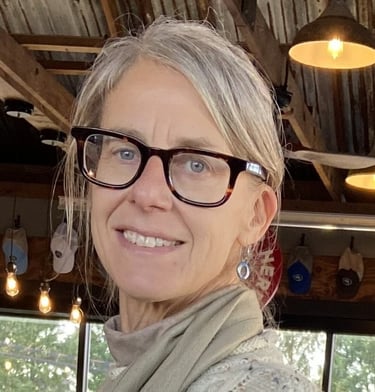
Valerie Berton has worked as a writer and communicator for decades. After winning prizes for creative writing in college, she set off on a journalism, then PR path before U-turning back to story writing. She's a co-founder of KindWrite Studio, a writing coaching and professional editing service, and volunteers as a proofreader for Cleaver lit mag and a mentor for Girls Write Now. Her essay, “Hasty Exit,” was selected for inclusion in B Cubed Press' Alternative Liberties II (expected mid-2026), an anthology of life in the mid-2020s. She splits her time between Silver Spring, MD and Rehoboth Beach, DE, where she is a member of the Rehoboth Beach Writers Guild.
Subscribe to FREE digital flip copy of the Adelaide Magazine printed edition.