MANAGING THE MOMENT
ALM No.83, December 2025
ESSAYS


My hands were shaking as I took a deep breath in, the air hitting my lungs like ice. The smell of the sour vinaigrette stung my nostrils. My thoughts blurred together like static on a television while my vision felt splotchy as if pen ink had exploded over my eyes. The hot room seemed to shrink, and I tried to look around. It was just another busy night at the restaurant, but my body didn’t seem to care; it had already hit panic mode. Keep going. I said to myself repeatedly. There’s no other choice. My chest tightened, and I felt like I couldn’t move, like roots had grown from the bottoms of my feet and had me stuck in the tiles of the greasy floor. My face was turning paler by the second, making me look ghostly. I felt sweat beads grow along my forehead; my breath sharpened into short, quick inhales and exhales. I was having another panic attack.
Often, people deal with stress and anxiety in fast-paced and high-pressure jobs, and they are unsure of how to deal with said anxiety and panics. With it being so fast and go, go, go all the time, it can often trigger anxiety in the moments you least expect it, but over time, I’ve had to learn ways to calm down, stay grounded, and get through that moment of panic.
I started working in a restaurant when I turned 16, and they promoted me to a shift lead shortly after. I was running shifts, training others, dealing with guests to ensure a positive experience, closing and opening the store, and managing my own emotions. At first, I assumed the job would be easy: take orders, smile, make the food, take the money, then repeat. How wrong I was. I never expected how fast things could spiral out of control during the rushes, how overwhelmed I or my coworkers would feel at moments, or how upset guests would get with us. It created an environment of stress that felt unavoidable. It took me a long time to realize that these feelings I was having weren’t just nerves, but fear. Through time, I learned how to deal with my emotions, not by avoiding them, but by managing them in the moment.
Remember That Panic isn't permanent:
Is this seriously happening right now? My thoughts blurred together. My movement almost seemed delayed from my thoughts. I was pushing myself more than I could handle, but as I looked at my team, I could see them on the edge of a breakdown, as if we were all standing on the edge of a cliff. If I were to break down, we’d be endgame. My thoughts raced, tears swelled, and anxiety tied my stomach into knots. I looked up at the line in front of me; at least 60 people were standing there, and I had to get through them and take their orders. I blinked rapidly, trying to flush out any thoughts of fear or panic. It didn’t work. I was stuck.
One thing I’ve had to learn both through experience and advice is to remind myself that panic isn't permanent. It’s not going to last forever. Lydia Hammond says, “When I start panicking, it often feels like a knot or like I’m going to be sick. Sometimes I need to whisper a little prayer like ‘Jesus, I can’t do this anymore’ and I often feel a sense of relief remembering that it will be over soon” (Personal Interview). Reminding yourself that panic will end eventually can be an extremely helpful way of reminding yourself that you soon will also be okay. Often, while working, I would tell myself things like, “It's okay. After this, we can go lie in bed,” or “Mom made cookies for when I get home.” I focused on telling myself things that would comfort me in a moment of fear.
As I took a deep, shaky breath in, I closed my eyes for a moment. Shhh, it's okay. You’ll be back home in less than an hour. I said to myself. I allowed myself to think logically instead of spiraling into a moment of fear. It rejuvenated me for the hour I had left. I let my hands keep moving, I worked hard on the orders I had and did it with a smile. Now, when I feel my heart starting to beat, I take a moment to whisper, “This won’t last forever,” and somehow that reminder can steady my hands and thoughts enough for me to keep going.
Focus On the Moment, Not the Whole Shift:
The tickets printed abruptly, and my whole screen was full. How was I supposed to work on this many orders in the short amount of time I had? My gloves seemed to stick to my hands like glue, and I felt the stress start to build in my gut. Like a 50-pound weight had been dropped on me. I grabbed the warm bacon and laid it on the piece of bread. Another ticket beeped through the machine. That was it, my final straw. I dropped the bacon and ripped my gloves off, trying not to scream.
It’s hard not to focus on the bigger picture, like “If I don’t get through these orders, then the customer will be mad, then we’ll get a complaint, then I’ll get in trouble.” This causes you to just create this giant list in your head of things that could go wrong. I had to eventually learn to take everything one moment at a time. What can I do right now, in this moment? Lydia explains, “I usually try to focus on what I can control, because a lot of things are out of my control” (Personal Interview). This knowledge can be extremely helpful in the long run. A lot of things aren’t your problem to worry about, and when you do realize that it can help you focus on what you need to do in the moment. Make the sandwich, move on to the next, etc.
Looking up from my tear swelled eyes, I whispered to myself., “What can I work on in this moment?” I looked over at the screen, acknowledging the order I had due in 2 minutes. Okay, we’ll start there. I opened the soft bread and began spreading the items needed for the sandwich: the moist turkey, bright yellow cheese, the round red tomatoes, and I kept going. Nowadays, when I get overwhelmed, I pause and ask myself what can I focus on right now?
Ask For a Minute, Take a Breath:
My eyes scanned around the room, looking for any way of escape. My heart was pounding, feeling like it was going to burst out of my chest at any given moment. My hands began to tremble, and I could feel a hot flash coming on. The only sense of relief was the cold air blowing from the cooler, like a water haven in the desert. I needed to get out, but everyone was relying on me.
It has taken me a lot of time, but I had to learn to put some of my needs before others, especially in situations like these. I have learned that it is okay to take a moment for yourself when you feel like you are on death's doorstep. Lydia agrees, saying, “I’ve had to step away before, many times. I try to go to the bathroom or get a drink; it helps me calm down and recenter myself” (Personal Interview). She also admitted that sometimes she struggles to take said break, but when she does, it's for the best, and she wishes she allowed herself to do it more often. We all deserve a minute to breathe and allow time for our bodies to calm down.
“Isaac,” I said, my voice was trembling, “I need a minute.” He looked at me with a look of shock but also of understanding. He nodded, and I felt free. My feet loosened from their position. I walked as fast as I could to the back of the store, where no one could see me. Sitting in my small corner, I let out all my emotions. I continued to quiver, and tears streamed down my face like a waterfall. After my moment in the corner, I allowed myself a minute to get a drink and calm down by taking deep breaths. I was already starting to feel better. Sometimes I still must remind myself that if I feel that tightness in my chest and my thoughts start to spin rapidly, I am allowed to take a minute for myself.
Working in this fast-paced job has taught me that anxiety isn't something I should be ashamed of; instead, it has shown me how to grow through struggles and learn who I truly am. Anxiety doesn't control me the way it used to because I have forced myself to deal with it in hard situations. Was that the best way to learn from it? Probably not, but I have learned how strong I truly am as a human. Panic makes you believe you are weaker than you are, and when you realize that you are more than that, you can grow so much.
Work Cited
Hammond, Lydia. Peer Interview. 21 October 2025.
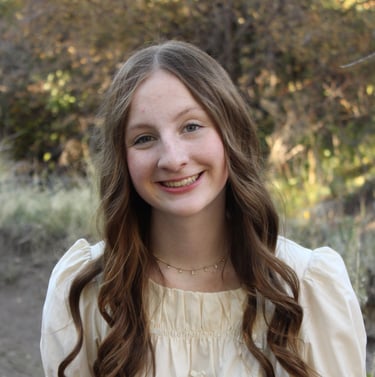
Grace Barker is an emerging writer and student studying apparel entrepreneurship. Her work explores connection, identity, and the quiet moments that shape young adulthood. When she isn’t writing or sketching design ideas, she enjoys reading and spending time with family and friends. This is her first publication.
Subscribe to FREE digital flip copy of the Adelaide Magazine printed edition.