ON BELIEVABILITY
ALM No.86, February 2026
ESSAYS
When a nation is founded on destroying and demoralizing other persons, everything built atop it is marred and filthy. You cannot get around it. The laws are based on biased perceptions that perpetuate until they boil over. After considering this I reached the conclusion that not only does it influence respectability, but it also impacts believability. Ones credibility is determined by one’s social status. It’s nothing new and while we mainly focus on it in terms of profession and career, it also plays a part in just being a person trying to navigate through this world.
In his book Nothing Personal, James Baldwin states, “If a society permits one portion of its citizenry to be menaced or destroyed, then, very soon, no one in that society is safe.” Growing up a Black woman in America, I can understand this sentiment well, as I am sure most who have experienced being forced into the role of Other can. I am not unaware that my country was founded on genocide, slavery, and hate. It is not something I would ever pretend does not exist because even to this day it sways the ways in which we do life.
Think back to the first time you had to prove your innocence. We live in a country with a judicial motto of “innocent until proven guilty” but for BIPOC people it is always the exact opposite. It’s worse if your identities happen to intersect with multiple marginalized categories. The more diverse you are, the less likely you are to be believed, the less likely you are to experience equity, the harder it is to pull yourself up by your bootstraps because not only do you not have bootstraps, but you were never issued boots in the first place. We, and I shall include you in this for a while longer if I may, are tired of the disrespect and tired of having to prove our worth and exhausted from trying to live up to the American dream that was not created with us in mind. And I am tired of having to validate my own existence.
And why should I have to? Why should you?
As a Black woman my experiences are often ignored or mocked. Men dress up on social media and pat their ugly Temu wigs pretending as though they understand the culture in a modern day minstrel show. Black women go missing and it’s almost always classified as a run away, even if they are middle aged, which means no news coverage, no one actually looking for them. And too often when they are found, if they are found, it’s assaulted and murdered and often far too close to home. When I sat out to write this, I didn’t expect to go too deep or too dark. I simply wanted to investigate my own disbelief and the times in which I wanted to be believed and was met with a cold wall of disdain. I feel quite capable of being able to talk on my own experience and so I invite you to sit with me as I mull it over. Two heads, as the saying goes, are often better than one.
A Laughable Phone Call
We all remember the #MeToo movement, don’t we? It was the first time that such a large group of women got up and shared their experiences with sexual assault and harassment, and while some cases were made up, the majority were true. So many memes were made, so many videos about women being desperate for attention or having been the reason they were molested or assaulted. And so many women shut down. It became a stark reminder of why many women never spoke up at all. And for me, someone who knows the trauma and still carries the scars, it was disheartening to see it become a trend that died out so swiftly.
The first time I was molested, I was around seven or eight years old. I lacked the terminology for it, but I knew that an older boy had done things that I didn’t like, things I had accidentally seen my parents do once or twice. I felt dirty and disgusting and from then on hated being touched. I still am not a touchy person and when someone touches me on my back it creates a visceral reaction in which I can feel the bile rising in my throat. Sadly, this isn’t just with strangers, even family. I never want to be touched unless I say otherwise, but as a woman, my personal opinions are often met with exaggerated sighs and eye rolls.
When I was a sophomore in college, I was raped. Yes, I knew the person. And yes, I called the police. But what is a woman supposed to do when the police hang up on her? Because that is exactly what happened to me. I will spare you the gruesome details, but when it was all said and done and I was alone, my first call was to the local police. They asked if the assailant was still there and when I said no, they told me to call a rape crisis hotline and hung up. Never asked the name, where I was, or anything. I had no idea what to do, I called the hotline…stayed on hold for half an hour, got transferred a few times, then their line hung up on me. If I had been looking for a clearer sign that I wasn’t valued, this was surely it. No kit, no justice. And I still had to work with that person for six months. Of course, I did my best to avoid him, but that doesn’t always work very well on a small college campus. I told a few people, who did not believe me, and eventually I stopped trying. I had an Obama phone at the time, no camera, shaped like a smaller Nokia brick. I couldn’t record any evidence and had no social media to post my outrage on. And I didn’t want to either, because I had just become a statistic. Me. A number. And there was so much shame in that. I took a shower, threw away my favorite dress and everything else I had on that day. I carried on, broken, but still moving. Years later, when I decided to try connecting with others I was often met with “well, what did you do?” or “what were you wearing?” and “you probably led him on.” At first I wanted to shout from the rooftops that no, I didn’t do anything. A woman doesn’t have to do anything but exist and someone will come up and harass her.
There are many other times in which I wasn’t believed throughout my life. I was no stranger to having zero credibility. Not within my family life, the younger sibling always taking the blame for the golden child older brother. Not at school, always accused of plagiarism or cheating. Not in meetings in which my voice and opinion weren’t welcome. But this, this hurt different. It was like a dull ache and a searing stab all at the same time, right to my heart and also to my brain. We know now that trauma alters brain chemistry and much of my childhood is erased due to trauma, but this was something that haunted me instead of leaving me. Why wouldn’t anyone believe me? Was I so unworthy of trust? What was my life worth?
The Importance of Belief
It only took one person believing me for me to go back to feeling something other than pain. Just one person who could understand and empathize, to tell me that I mattered and that it would be okay. I had been putting on a brave face, pretending like I was unfazed, going about life working and making sure I did all my assignments and showed up for my clubs and extracurriculars. I was still living and moving about in the world, but I no longer felt like me. Not until that voice said, “I see you.” In this case, it was someone who went through a similar traumatic event, one who saw that man regularly, and someone who had stopped allowing it to control her. That’s the shocking part. I didn’t need validation from all these different avenues or people, just one was enough. That’s how valuable empathy truly is.
So why is it that oftentimes, people have to fight for even an ounce of credibility? Even for those who haven’t cried wolf one too many times, there are times where we truly have to argue to be heard, to be seen, to be treated with what we call common courtesy. But then again, if it takes all that to get it, can we really call it common? Is it outdated or did it ever really exist? For Black and Brown peoples living in the aftereffects of colonization, not likely. For women, literally ever, it’s a hard sell. And yet, at the end of the day, we all want to be believed, to have our stories heard. But day in and day out we make the conscious choice to ignore the cries of others. Maybe it is because we have enough going on in our lives to worry about. Perhaps we grew up in a way that led us to doubt everything, believing half of what we see and none of what we hear.
Here’s the thing though, I would argue that belief is naturally a part of empathy. And empathy is that one thing that truly makes us human. While millions don’t have it, empathy helps us to relate to others instead of pitying them or looking at them like gum on the bottom of our shoe. Empathy reminds us we aren’t alone in this world that often makes us feel as though we are isolated and abandoned.
Challenging My Own Disbelief
I know that I have not arrived at some great revelation, but the great thing about life is that as long as I am living, I can continue pursuing that exact revelation. James Baldwin touched on the lack of safety in a society like mine. I am a witness to the ever-present danger of disbelief.
So how does one challenge it? Where does one cross over the line into gullibility? And who decides for me who is credible and who is not? Is there some criteria to meet? A form that must be filled out, dated, notarized, and sent via certified mail? Is there an internal work that must be completed before we can begin to feel empathy again?
When it comes to the various harassments and assaults I have faced in my life, I always questioned why no one believed me. What about me screamed “liar” or “fraud?” My skin tone? My socioeconomic status? The way I spoke? My gender? Some amalgamation thereof? I cannot say for sure but I do know that each accusation, every instance in which I was shunned, chipped off a piece of me and scarred what was left. Perhaps the buildup of keloids are what make me insensitive. And the scars of others have the same influence on them. They had no more room to feel for others or maybe fear of yet another wound kept humanity at arms length. Like so many others, my cries did not go unheard, they were heard. But they were ignored.
The world around me had stuffed cotton in their ears and then, for extra measure, put on ear muffs. We as a people don’t like pain, we don’t like feeling heartbroken and worn down. We don’t need any additional emotional labor to wear us down, our jobs, our governments, our close social circles, do that already. It becomes easier to shut our ears and that lack of care, in a way, is disbelief too.
One new scar to add to your collection. I am a patchwork of scars…it is my desire to never deal the same damage.
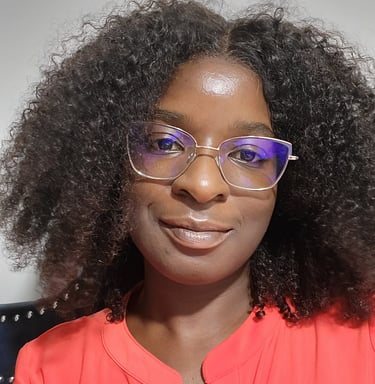
Chyina Powell is an author, editor and founder. She began Powell Editorial in order to help emerging writers become published authors. She offers diverse services and is always happy to share her knowledge of the publishing industry with her writers. Chyina is the founder of the Women of Color Writers’ Circle Inc., a nonprofit organization that offers community and safe space to women of color writers. When she is not writing or working with writers, you can find her with a book in hand and a cup of tea nearby.
Subscribe to FREE digital flip copy of the Adelaide Magazine printed edition.