STRANGER THINGS AND THE NEED TO ATTACH
ALM No.86, February 2026
ESSAYS
I cannot recall ever crying this hard, watching a movie or television scene, as much as I did during two scenes of Stranger Things. In both instances, the engine generating this unexpected, intense emotional response was music. When 'Running Up That Hill' and 'Purple Rain ' dropped at key moments of seasons 4 and 5, it ignited a psychological reaction I couldn’t understand.
True, both songs are legit masterpieces of 80s music. Yet, never once in the hundreds of times I had played these tunes did I feel anything close to what I had just experienced. I had to ask myself: What was so different this time around?
Then I remembered Richard Halgin, my amazing graduate school psychology professor. 'Think of memories as a suitcase filled with clothes,’ he once said. ‘The ones at the bottom are hidden but shake their contents in just the right way, and some will make it to the surface.’ Those two scenes and the music that accompanied them unlocked something hidden, lifting my feelings to the surface. This essay is about those feelings. It is about their deep resonance with the characters, themes, and messages exhibited in those two now-iconic Stranger Things scenes, and how they reflect the universal need for humans to fight evil and connect with others.
If I look back and characterize my first decade of life, it would not be an exaggeration to call it idyllic. Our family of five lived in three different countries and was afforded wonderful opportunities thanks to my father’s job as an ambassador. Born in my home country of Lebanon, I spent three years in Morocco and seven in Sweden. Most of my memories as a preteen were from our home in Stockholm, nestled in the beautiful and posh tree-lined street facing the Baltic Sea. Friends, sports, travel, and family time were abundant, with no single worry consuming my mind.
But in three years (a third of a lifetime when you are this young), my mother died of cancer, my sister attempted suicide, and my father retired, forcing a return to Beirut - Lebanon’s capital - in the middle of a raging civil war. Nothing was familiar as a 12-year-old. I didn’t speak the language well, was culturally shocked by how different kids were compared to Swedes, and, of course, the risk of death was looming as we never knew when the next cycle of violence would return.
At that age, I found my refuge in golf, so to speak. Playing this sport wasn’t technically safe – Lebanon’s only golf course was notorious for being in the line of fire – but it was the important distraction that gave me purpose. I also wasn’t interested in education, really, perhaps only to learn in Mrs. Huda’s history class as a young teen fantasizing about their hot teacher. I had a couple of good friends, but never did I have this powerful group bonding experience and connection that was made so evident in the very first episode of Stranger Things.
I discovered music soon after a short-lived ‘dating’ experience. My brother and sister had both extensive record collections, but I never paid attention to any of them. In today’s world, I don’t even think this romance qualifies as dating: May and I never exchanged numbers but kissed at a couple of parties. When a month later she decided to like someone else, the loss hit me hard. But I recovered quickly when something else grabbed my full attention.
With power cuts becoming increasingly more common as the war raged on, the only reliable media source in Lebanon was battery-operated radios. Lebanon barely had any music stations in the early 80’s, but I was in luck. On an island about 125 miles west of Beirut came my salvation: I discovered BFBS, the British Forces’ radio station that played Western hits 24 hours a day from their military base in Cyprus.
I was transfixed. I loved how DJs spoke, introduced tracks, but most of all, I was developing an emotional connection with the songs and bands that blasted through the radio. I had this massive Grundig 1000 portable radio with a three-foot-long antenna that cost a fortune to power with eight A batteries, but I didn’t care: music was it. I was particularly obsessed with the UK Top 40 chart. I listened to every week’s rundown religiously, even memorizing the top chart positions of songs from my favorite artists.
On a summer night in 1985, the signal from the station in Cyprus was weak. Just as cable TV and Wi-Fi connections can become temperamental during storms and cold weather, overcast conditions cause radio interference. It didn’t help that bombs were falling during one of the most difficult periods of the war, but I was determined to listen that night. As the broadcaster announced the highest new entry at # 9, the radio signal was strong. Here it was, crystal clear from beginning to end: Running Up That Hill. The song was magical from the first listen. Kate Bush had returned from a long hiatus, and she stole my heart.
Every listen of Running Up That Hill until it appeared in Stranger Things was, at a conscious level, feeling the love of an amazing song and an imaginary bonding with an artist who doesn’t know I exist. But when Max fought Vecna as the song played on midway through season 4, she used it as inspiration to fight back and survive, finding a will to live despite the pains and guilt of losing her brother. Max’s primary motivation to escape the evil grip of Vecna is believing she is worthy of living and believing she is worthy of Lucas’s love.
And there it was, the explanation for my abundant tears, 40 years later: I connected with Max’s psychological state as I suddenly recognized listening to music in the dead of night, as bombs were falling, was an unconscious desire to stay emotionally alive and not be silenced by the evils of war. As I heard Kate Bush’s music lift Max out of hell, it echoed the decades-old sound that signaled that even in the midst of destruction, I can feel deeply and be lifted through music. Nothing would silence that.
I graduated from high school in the spring of 1984, and, like any teenager, I was excited to start college. But that wasn’t what I looked forward to most in the months ahead. My mind was focused on my first golf tournament in Europe, representing my home country at the Greek Open. This anticipation was not overblown: the week I spent on the Mediterranean coast near Athens at the end of the summer was extraordinary.
Sure, I played decent golf, but what is forever cemented in my memory is not my athletic performance that year but the bond I made with multiple players. That week, we spent every waking moment off the course enjoying life at its fullest, something impossible to do living in a country at war. After the tournament was over, I stayed a few extra days. This is where the real magic - and the heartbreak - happened.
Claudine lived in Greece and loved golf. Since my short-lived emotional connection with May, I had never gotten any serious romantic attention from a woman. Claudine was fully invested in getting to know me. We played golf, spent time in the town, talked for hours, and ate the best food. When I returned home, I felt a deep attachment, despite having known her for only a few days. I started college as I longed for a return to Greece, imagining how amazing seeing her again would be.
Purple Rain, the single from Prince’s masterpiece album of the same name, was released the week I started college. I had also started my first job as a DJ at a local radio station and would play the song almost every time on my show for months. The song was magnetic: it had this irresistible pull beyond its sheer musical greatness. I did not understand why.
Now, thanks to Stranger Things, I do. Prince describes it as: "When there's blood in the sky – red and blue = purple... purple rain pertains to the end of the world and being with the one you love and letting your faith/god guide you through the purple rain." As the heroes of Stranger Things cast the decisive blow to obliterate the Upside Down, Eleven, the teen with innate psychic abilities, chooses to sacrifice herself in the process so that her powers in future (secret) experiments will never be used on other kids.
There is an ambiguous component to this plot. In a final twist at the end of the series, we don’t really know if Eleven is dead or alive, and her boyfriend, Mike, believes she lives. And like any person longing to regain a lost, powerful connection, I always hoped and dreamt that I would see Claudine again.
Needless to say, feelings towards her subsided, and life moved on. I continued to play songs on the radio, and my improving skills eventually landed me a prime spot at Lebanon’s top western music radio station. Radio One. At that time, I had graduated from college, the 80s were ending, and Lebanon was on the final stretch of a 15-year-long civil war. I had gained confidence in my worth, felt more secure in my looks, and had the advantage of being a fairly well-known personality in Lebanon’s radio world.
But as we all know, fame or money never replaces what humans long for the most: the need to attach to another who makes us feel unique, to unite with a person as if we were one. Prince’s song is about uniting two people as the mixture of end-of-the-world hues eventually forms the color purple. It is trusting that, in that critical moment, “you are being with the one you love and letting your faith/god guide you through” it.
That divine guidance came in the form of a caller who got through on Christmas Eve to get on my live radio show and chat. The 90s were about to begin, and so began a love story with that caller, Geena, the person who still shares my life today. Through five seasons, the characters in Stranger Things fought together in unison to combat evil and stay connected. Through 35 years of our own lives, Geena and I persevered through thick and thin, loving one another, and in the process, accomplishing the single most important purpose of human existence: to form trusted and lasting attachments.
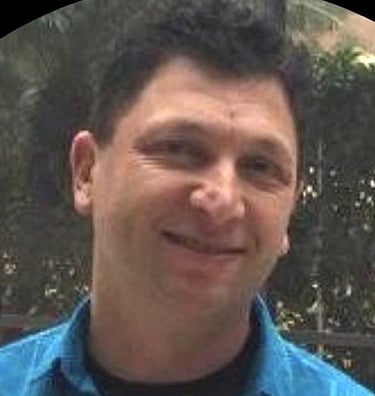
Bilal Ghandour: I am a licensed clinical psychologist who practices in the state of North Carolina. My expertise is in addiction, eating disorders, PTSD, and personality disorders. I am Associate Professor of Psychology at Elon University, where I teach psychology courses and conduct research. My work has been published in academic journals and in the popular press. I was recently featured in People magazine, coinciding with the release of a co-authored work, 60 Days of Disconnect, a book that addresses the mental health impact of excessive social media use on teens and adults. I also give talks on the topic nationally and continue to play golf as a senior member of the Lebanese national team.
Subscribe to FREE digital flip copy of the Adelaide Magazine printed edition.