TECHNOLOGY AND THE FUTURE SELF
ALM No.83, December 2025
POETRY
Technology and the Future Self
We stand on the edge of a new frontier,
where the self is no longer fixed,
but fluid,
shaped by codes and circuits,
by algorithms that learn
the contours of our desires
before we even speak to them.
In this digital age,
our reflection is no longer bound
to flesh and bone—
it is scattered in data,
in the infinite web of zeros and ones
that stretches beyond time.
Who are we becoming
in the hands of machines?
Our thoughts mirrored by AI,
our dreams rendered in virtual realms
where reality bends,
where time is just another construct
waiting to be reprogrammed.
We are no longer just ourselves,
but the sum of all our interactions,
our identities multiplied
in every profile,
every avatar,
every carefully curated self
projected into the cloud.
In this world,
we transcend the body
our senses digitized,
our memories archived
in endless streams of data.
We are not bound by the limitations of time,
not anchored to a single moment.
Instead, we exist in the space
between the real and the imagined,
between the now and the infinite.
VR becomes our new landscape,
where we can inhabit any form,
any face,
rewrite the narrative of who we are
with the flick of a switch.
We can step into worlds
that reflect our deepest selves,
or escape into ones
where we become something else entirely.
But in this evolution,
where do we find the line
between what is real
and what is constructed?
What becomes of the self
when our identities are malleable,
when the future self
can be rewritten again and again
with each technological advance?
The boundaries blur,
and we are caught in the in-between,
suspended between human and machine,
between presence and projection.
We are creators,
and yet we are created,
molded by the systems we designed
to serve us,
but which now shape the very essence
of who we are.
In this future,
we will be many things
a chorus of selves,
a constellation of identities
spread across time and space.
Our roots will be digital,
our lives woven into the fabric of networks
that never sleep.
And still,
we will wonder
in the vastness of this technological age,
in the infinite possibilities of the virtual,
Who are we really?
What remains of the self
when reality is whatever we make it,
when time is no longer linear,
but a loop,
a spiral,
a ripple in the code?
In the end,
we are both the architects and the experiment,
building futures
that reflect our deepest fears
and our highest hopes.
And somewhere,
amidst the machines and the data,
we will search for the truth
of who we are,
of who we will become.
The slow return
There was a time I forgot how to move.
How to speak without apology.
How to name myself
without shrinking.
I disappeared
without anyone noticing.
Not all at once
but slowly,
like a tide retreating
so far out
you forget
it was ever there.
I lived underground.
Not in death,
but in pause.
Held in the hush
of becoming something
I didn’t yet have words for.
There was no light there,
only the feeling
that something might grow
if I stayed long enough.
I didn’t bloom.
I didn’t rise.
I stayed.
I listened.
I let the silence
do what it needed to.
Now,
I begin again.
Not with certainty,
but with softness.
A step.
A breath.
A name I am learning to say
without fear.
This is not the end of sorrow.
But it is
the beginning
of me.
My rebirth.
The Place That Never Became Home
There is a kind of loneliness to that…
This town cradles itself in a valley,
the hills rising around it like a wall,
trapping its breath in a rhythm I’ve learned to live by,
but never felt as my own.
The streets wind with a quiet stubbornness,
leading nowhere new, just bending back on themselves.
every corner holds a memory, but none of them are mine.
I came here once with hope folded neatly,
tucked into a suitcase alongside the dreams,
the kind that make you believe a new place
could be a fresh start, a blank page to write on,
but the air here never quite softened,
always held a chill, a distance between me and its heart.
I learned to speak its language,
but never quite found the words that fit my tongue.
Now, years have passed, and roots have grown,
not the kind that reach deep and strong,
but ones that twist and tangle, binding me here.
Family, the home we built between these walls,
children’s laughter echoing through hallways,
like a thread that ties me to this place.
Their faces light up at the familiar,
the warmth of knowing every crack in the sidewalk,
each swing set, each summer sun that feels like theirs.
And I, I am caught between the light in their eyes
and the shadow that stretches within me,
longing for a place I can’t reach anymore,
a place that exists only in memory now,
where the sky felt endless and the roads knew my name.
I think of it sometimes, like a whisper at the edge of a dream,
where the sea stretches wide and free,
and the air wraps around you like an embrace.
But here, the sky always seems a little smaller,
and the hills press in like a promise unfulfilled.
The town knows I do not belong to it,
and I know it too, in the way people glance and turn,
how the streets never learned my steps,
how the silence lingers when I walk into a room.
There’s a kind of loneliness in that,
one that doesn’t soften with time,
but settles like dust in the corners, unnoticed, unswept.
Sometimes I drive to the edge of town,
where the hills drop away into the horizon,
and I imagine roads leading back to the place I came from,
where my heart first learned the shape of belonging.
I close my eyes and picture it,
the wind carrying the scent of salt,
the trees that never stopped waving hello.
But then I turn back, hands gripping the wheel,
and drive home to the faces that wait for me,
the ones that trust in my presence like a heartbeat.
I find my way back to a house that holds my laughter,
but not my dreams, to a bed that keeps me warm,
but never quiets the ache inside.
I look at the walls I helped paint,
and feel the distance in every stroke, every nail.
I have learned to be here,
but I have never truly arrived.
I wake to mornings that repeat themselves,
the sun rising over the same ridge,
casting shadows I know too well.
The days slip into each other,
threaded together by a kind of resignation,
the kind that comes when you’ve built something you can’t leave,
but can’t quite call home.
And so I live in the space between,
between the longing that tugs like an undertow,
and the ties that bind me to this place,
half a heart here, half a heart somewhere else.
I wonder if this is how a tree feels,
planted in the wrong soil, roots stretching desperately,
but never finding the depth they need.
it stands, it grows, it even blooms,
but the leaves always curl at the edges,
missing something only it can name.
But still, I stay, because leaving now
would mean unraveling everything we’ve built,
the laughter, the routines, the small comforts.
I hold onto them with hands that ache,
and hope that maybe one day,
this place will shift, or I will soften,
and the quiet will become something I can call peace.
Until then, I move through the days like water through stone,
wearing myself against the shape of a life I chose,
even as my heart keeps looking for the way back.
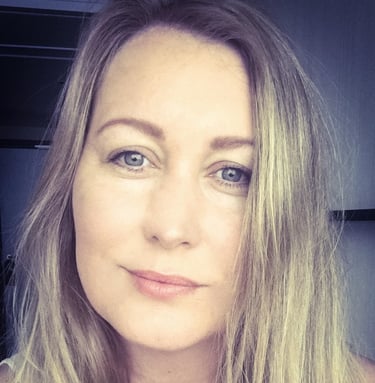
Tania Winther is a multidisciplinary artist, poet, and author based in Norway. A lifelong nomad with roots from both Australia and Norway, she writes about art, identity, and the strange beauty of belonging. With a diverse background spanning both science and the arts, her creative practice thrives on the intersection between disciplines, where curiosity meets expression. As a poet, interpreter, and voice-over artist, she explores the relationship between language, identity, and sound, bringing life through art and voice.
Subscribe to FREE digital flip copy of the Adelaide Magazine printed edition.