THE LAST APPLE OF WINTER
ALM No.96, December 2026
SHORT STORIES
When I pushed open the iron gate of my father's orchard in the first week of December, after thirty-one years, the hinges cried out as if they had been waiting all that time to say my name.
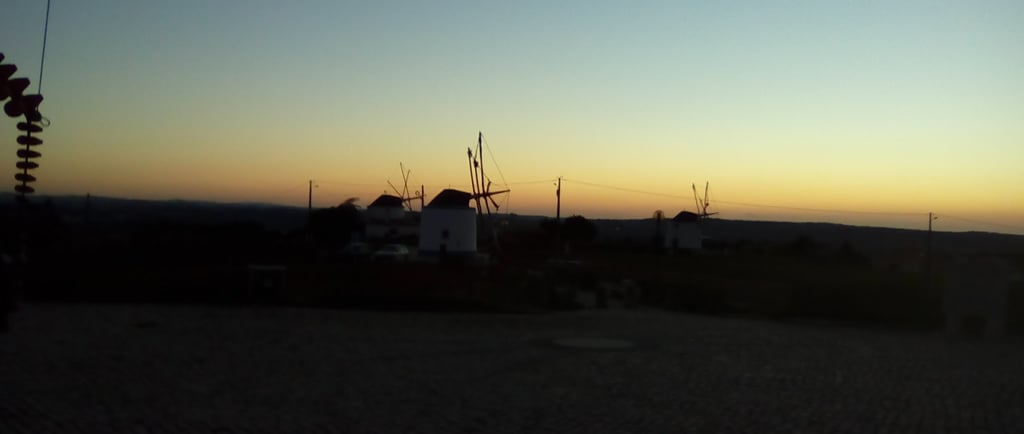
Snow had come early to Killa Saifullah. It lay along the bare branches of the apple trees. Beyond the wall the hills were the colour of old tea, and somewhere a dog barked at nothing.
I stood there with a small leather bag in one hand and an envelope in my coat pocket. I had carried the envelope from Islamabad, where my cousin had pressed it into my palm at the airport, and before that, though I did not know it, from the winter I was seventeen. My name was on the front in a girl's careful handwriting. It had been lying in the dark for thirty-one years.
I will tell you how it came to me. But first I must tell you about the tree.
When I was eleven, a family moved into the mud house on the other side of our wall. The father was Master Daud, who had taught Urdu in the government school until a quarrel with some official sent him home to his brother's land. He was a thin man with a cough and an enormous laugh, and he owned forty books. His daughter was ten. Her name was Gulalai, which means flower, though nobody who met her thought of anything so quiet.
She climbed our wall on the second day. I was sitting under the old mulberry at the edge of the orchard, losing a fight with a page of my reader, and she dropped down beside me with a scraped knee and looked at my book upside down.
"You are holding it like a man who is afraid of it," she said.
"I am not afraid of it."
"Then why are you reading with your eyes closed?"
I was, nearly. Letters had never held still for me. But Gulalai took the book, turned it the right way up, and began to read aloud, and the sentences in her mouth sounded like something worth chasing. She read to me every afternoon that winter and the next. Then she began pushing her father's books through a gap at the bottom of the wall, wrapped in newspaper. Poems, mostly. She loved the old Pashto poets, Rahman Baba above all, whom she read the way other children recited prayers. I understood only that if I learned to read, she would have to keep talking to me, and I wanted nothing more.
Our trees gave small red winter apples that hang on long after the frost. Every year, after the last picking, one apple stayed behind, too high or too stubborn, and in the first week of snow Gulalai would find it. We called it the last apple. She climbed, I held the ladder and complained, and then we sat beneath the mulberry and divided it with her father's pocket knife, the cold sweetness running down our wrists.
"Whoever eats the last apple," she said, the winter I was fourteen, "must make a promise to the other."
"What kind of promise?"
"A true one. You will know it when you have it."
I said I would promise to read every book on her father's shelf. She laughed and said that was not a promise, that was homework. She promised, in turn, to teach me to write a proper letter, with a beginning and an end and nothing false in the middle. It was the year I first noticed how the light came through her hair, and the year I first learned what kind of coward I was.
Water is what ended it, as water always does in our country.
In our valley the water comes from a karez, a tunnel the elders said our great-grandfathers dug, and each family draws it by turns, counted in hours. My father's family held the night turn on the eastern channel, from the evening prayer until the dawn call, a right written down nowhere. In the dry summer I turned seventeen, that right was disputed. Master Daud's brother said the water had been taken from his fields. My father said it had been taken from nobody. Men who had shared bread for six years stopped greeting each other. Then someone broke the wooden sluice gate in the dark, and a cousin of mine was struck with a spade, and the shouting that followed was the kind that cannot be unsaid.
No one died. Only a way of living together did, quietly, the way a lamp does when the oil runs low.
Master Daud left in October on a hired truck, his forty books tied in rope beneath a mattress. I stood hidden behind the mulberry, because my father had forbidden me to go near the road. Gulalai sat on the tailgate with her feet hanging. She saw me. She did not wave. She held up a small book, and then the truck took the bend, and the dust closed over everything.
That night my father fed the poems she had lent me into the stove, one book at a time. My mother stood in the doorway with her hands inside her shawl. She said nothing, and I said nothing, and the fire was loud.
I could have run. The truck was slow on that road, and I knew the shortcut through the almond field. Instead, I stood behind the tree and told myself it was not my place, that my father would be shamed, that a boy of seventeen has no right to follow a girl across a province. All of it was true, and none of it was the reason. I was afraid, and I let the fear decide.
By spring I was in Lahore, studying engineering, a profession my father chose because it produced bridges, and bridges, he believed, were the opposite of feuds. Then came a long, orderly life in Toronto, in a flat that looked over the lake. I married Meena, a schoolteacher who fed sparrows on our balcony and laughed at my jokes in three languages. She once told me a person is allowed more than one love in a life. I loved her fully, and I lost her at forty-three. Still, I carried a locked room I never entered, and when snow fell on the city I could smell mulberry wood.
I went home once in all those years, twenty-five years ago, for my father's funeral, and did not walk past the mulberry. My mother, grown small and quiet, put a hand on my cheek when I left and said, "Come when you are ready." I did not ask for what.
She died in the last week of November. Storms cancelled the flights out of Toronto, and by the time I landed in Islamabad she had been in the ground for two days. My cousin Anwar met me beyond customs, holding a flat envelope gone soft as cloth.
"It was under her Quran," he said. "It has your name."
Beneath my name, years after the ink, my mother had added a pencil line: I could not burn it, and I could not give it. Forgive me, both of you.
Both of you. I read that line standing up, then sitting down, then standing again.
Only on the road did I begin to understand her. The letter must have come that first spring, to a house where my father had fed Gulalai's poems to the stove while my mother watched. A woman who had seen that could not hand over a letter, and could not burn one. After he died, each year she kept it, making it harder to give, because giving it meant confessing it. So she sent sweets to Quetta instead. It was no excuse. It was how a frightened woman had managed to love.
The envelope was still sealed. I had not been able to open it in Islamabad, or on the long road through Zhob, or in my mother's empty room, where her slippers still waited by the bed.
The mulberry stood where it had always stood, only larger, its trunk split and scarred. I sat down on the root where I had once failed at reading. The snow fell on my sleeves without a sound. I broke the seal.
Haroon,
My father says a letter should have a beginning and an end and nothing false in the middle, so I will try.
We are in Quetta, in two rooms above a tailor's shop. My father coughs at night and pretends he does not. He has not spoken your father's name once, and I think that is how I know he loves him still.
I saw you behind the mulberry. Do not tell me you were not there; that tree has never once been able to hide you. I was not angry. A boy cannot carry an entire valley on his back, and I would not have asked you to.
But I have decided something, and since I cannot tell it to you across the wall, I will tell it to you here. This is not the end of the story. Water goes where it is led, and so does hatred, and so, I think, does everything else. Someday somebody will lead it differently. Perhaps you. Perhaps me. The orchard will still be there, and the last apple, and I have worked out my promise at last.
If I ever live near this tree again, I will come to it every first snow, for as long as there are apples, and wait one hour. That is all. One hour is not a great deal to ask of a life.
If you are reading this, you have already been late once. Do not be late twice out of shame.
Gulalai
I read it three times. I sat there while the snow settled on the page and I brushed it away, and understood how much of my life I had spent not trying.
"You are holding it like a man who is afraid of it."
I did not turn at once. The voice was lower than it had been, rubbed smooth by weather, but the sentence belonged to no one else on earth.
She stood at the gap in the wall where the stones had been taken out long ago and never replaced, a grey shawl around her head, a long wooden fruit picker in one hand. In the other, wrapped in a white handkerchief, was a single red apple.
She was forty-seven now, her hair silver at the temples. She was impossibly, exactly Gulalai.
"I am not afraid of it," I said, and my voice broke on the last word.
"No." She came closer. "You never were afraid of the book."
"I have only just read it," I said. "My mother hid it. I did not know, Gulalai. I swear I did not know."
"I know you did not." She said it gently. "Your mother told me in October, when she was already very ill. She held my hand and said she had done a wicked thing. She wept, and I told her there was nothing to forgive. If I had truly wanted the letter to arrive, I could have walked it across this wall myself. I was a coward too, Haroon. Did you think you were the only one?"
I put my hand against the trunk, because the ground seemed to have moved. I wanted to ask whether my mother had been afraid at the end, and the words would not come. Gulalai did not hurry me.
"She also told me," Gulalai said at last, "that you would come with the first snow. I told her that thirty-one years is a long way for snow to travel."
"Every year?" I asked, when I could.
"In Quetta I stood at a window. Then your mother began sending sweets at Eid, and my father, who had not spoken your father's name in years, sent the plate back with dates. This went on for six years, two stubborn old people and a plate. Then we came home, to my uncle's house on the other side of this wall. Nineteen years ago. Every first snow since, I have come. One hour."
I did the arithmetic, and wished I had not. Nineteen winters.
"How did you know which snow was the first?" It was the only question I could manage, and she smiled.
"I watch the ridge like a farmer. The first flakes always melt. When snow stays on the wall, I come, whatever the hour."
She told me the rest as we walked the orchard. How the elders had built a cement sluice with an iron gate and a marked stone, so that each family's hours were measured and not remembered. How her father had died ten years ago, asking to be buried in the village graveyard, among the men he had once refused to greet. How his forty books had become the first shelf of a school for girls that she now led, in four rooms behind the mosque, with a hundred and twelve students.
My father had wanted me to build bridges. It had taken two old people and a plate of sweets to show me what a real one weighed.
At the end of the orchard we stopped under the mulberry. Far away a voice began the evening call, and it carried over the snow and the wall and both our families' land.
Gulalai unwrapped the handkerchief. The apple was small and dark red, its skin turned to glass by the frost. From her coat she drew a worn knife with a bone handle, and I knew it before I saw it clearly.
"My father's," she said. "He would have wanted you to have the first half."
She cut it. The sweetness ran down my wrist exactly as it used to, and for one moment I was eleven and seventeen and forty-eight in the same breath, and the mulberry stood over us as it always, had.
"You owe me a promise," she said. "You ate the last apple."
"Last time I promised to read every book on your father's shelf."
"That was homework." "I want a true one."
I looked at the woman who had waited an hour each winter for a boy who never came, and the answer arrived the way she had said it would, whole and quiet.
"I will not be late again," I said. "Not for the snow, and not for anything."
She nodded slowly. Then she put her hand over mine, and we stood while the last light went out of the valley and the snow went on falling over the orchard, the school, the graves, and the shared water under its ice.
In the morning I oiled the hinges of the gate. It is a small thing. It is the kind of thing a man does when he intends to stay.
Nisar Kakar is a university student of English Literature at Quaid-i-Azam University, Islamabad, Pakistan originally from Killa Saifullah, Balochistan, Pakistan. A passionate writer, poet, and public speaker, he writes both Pashto ghazals and English poems, while actively exploring themes of youth empowerment, social issues, and education. Through creative writing, debating, and digital content creation, he seeks to amplify young voices for positive change in Pakistan and across Asia.
Subscribe to FREE digital flip copy of the Adelaide Magazine printed edition.