THE NUMBER
ALM 92, August 2026
SHORT STORIES


The waiting room was quiet except for the clock that hung above a faded landscape painting and ticked with a steady and patient authority. For most people, it was background noise. For the older patients, it seemed louder. Each second announced itself like a small verdict.
Marie Williams sat beneath the clock with her hands folded in her lap, her fingers resting on the strap of her purse, gripping it lightly. Inside the purse was a folded sheet of paper on which she had written her symptoms the night before so that she wouldn’t forget them: Pain in the left side. Difficulty finishing a breath. A moment of dizziness when she stood. Worse in the morning.
She had rewritten the list twice to make the letters neat.
Across from her, a television played a daytime talk show with the sound turned off. The host’s mouth moved energetically while subtitles raced across the screen. No one was watching.
Marie shifted in her chair. The movement sent a sharp, tightening ache across her ribs. She inhaled slowly, waiting for it to pass. It did not pass. It only softened, like a hand loosening but not letting go.
A medical assistant appeared at the door and called her name.
Marie stood carefully and followed the assistant down a hallway that smelled faintly of disinfectant and the hand sanitizer mounted beside every door.
The examination room was small, neat, and well-lit. Marie sat in a chair while the medical assistant took her blood pressure and typed something on her chart in a computer.
“The doctor will be in shortly,” the medical assistant said and closed the examination room door behind her.
Marie looked again at her folded paper, rehearsing the order of the symptoms in her mind. She wanted to explain it correctly, clearly, the way people explained things when they hoped to be taken seriously.
A few minutes later the physician entered. After a polite greeting, he seated himself at the computer.
Marie started to explain her symptoms. “I’ve been having this pain—”
“Mm-hmm,” the physician said without looking up.
He scrolled down her chart quickly, his finger tracing down a column of notes. Then he stopped at the line that stated Marie’s date of birth—eighty-three. His eyes paused there. The number settled into his thinking with the quiet certainty of experience. He had seen thousands of charts. He knew the patterns. Bodies wore down. Joints stiffened. Pain appeared in places where time had quietly eroded the machinery.
Marie was still explaining. “It started about two weeks ago, and it feels different from the arthritis I usually—”
The physician swiveled in his chair, faced Marie, and nodded. It was the kind of nod that suggested listening, though it required very little of it. “Pain in the side at your age isn’t unusual,” he said. “Musculoskeletal, most likely. Happens as we get older.”
She paused, then said gently, “But it’s when I breathe. And sometimes it feels like pressure.”
The physician gave another nod, then turned back slightly toward the computer. “Normal for someone your age,” he said.
The phrase landed with the calm finality of a closed file.
Marie felt the words settle around her explanation, wrapping it up before it had finished unfolding. She looked down at the paper in her hands. Three symptoms remained on the list she had carefully written the night before. She did not read them.
The physician typed a short note on her chart into the computer, a recommendation for rest and an over-the-counter pain reliever. “It’s nothing alarming. Nothing that required investigation,” he said, then stood and added before leaving the room, “Let us know if it gets worse.”
Marie sat for a moment without moving. The paper with her symptoms rested in her hands like a letter that had never been opened. The pain in her side tightened again as she breathed. It had not left with the physician. It stayed with her as she slowly stood, folded the paper once more and placed it back into her purse. Then she left and drove home, feeling disappointed and a bit angry.
As she drove, she said to herself aloud, “My age—a number—spoke louder to him than anything I had tried to say. He made me feel like I’m just an old woman close to death, so why bother. It’s true, I guess. Ageism in the practice of medicine is alive and well—at least in my case.”
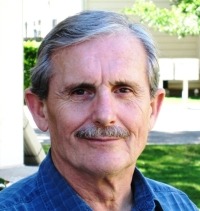
Frank Zahn writes nonfiction, fiction, and poetry about people navigating loss, memory, injustice, work, aging, and the quiet reckonings that arrive when life refuses to simplify itself. His publications include nonfiction books, articles, commentaries, book reviews, and essays; novels; short stories; and poetry. Currently, he writes and enjoys life at his home among the evergreens in Vancouver, Washington, USA. For details, visit his website, www.frankzahn.com.
Subscribe to FREE digital flip copy of the Adelaide Magazine printed edition.