THE OLIVE GROVE
ALM No.87, March 2026
ESSAYS
I spread my towel and wet, Canadian-white skin on the warm sands of Kosmas beach. My knees are pleasantly numb, the pain subdued by the shockingly cold waters of the Saronic Gulf. It’s mid-May. The Aegean should’ve been warmer, especially with global warming, but the Hop On Hop Off guide had warned me Greece was having an unseasonably cool Spring. The frigid water has gifted me respite from months of burning and throbbing in both knees and my left leg.
The rhythmic crash and suck of surf massage my muscles and mind, but, as the sun warms my skin, pain creeps back into my left leg, encroaching once again on my peace. My right knee responds with twinges. Bloody hell. Instead of exploring temples, museums, and stadia, I’m stuck with hooped knees. Relax woman. Remember how lucky you’ve been. Sixty-one years of almost never having pain for more than a few days at a time. Stop complaining. Karen’s retreat is bound to soothe the inflammation.
Writer and therapist Karen Connelly’s kind face pops into my mind. She and her husband Rob have invited a group of six writers to their sanctuary on Lesvos Island. They want to share the wonder that is Greece. This will be my first writing retreat and the first time in fourteen years I’ve gone on vacation without my laptop. I’ve left my work back in Qualicum Beach. My patients have been sorted, as best I could, and advised of the date of my return. For the next while, I am determined to forget I am a family doctor. This time is for me. A time to piece together my shattered self after the shipwreck of a marriage of thirty-nine years.
I close my eyes to focus on steady ventral vagal breath. Salt and the smell of fish tease my nostrils. Pigeons warble next to me. My mind slips again, back to my home on Vancouver Island. I’m grateful it, at least, is whole. The last few weeks have been a rush of renovators working to mitigate the damage of a flood affecting the whole lower floor. There’s been additional frustration because of inept plumbers who left me five days with no water. Until the day before my departure, I wasn’t sure the house would go on the market. But yesterday I handed the keys to my realtors and set my hopes on the retreat. I will write my way into making sense of a world upended.
Laughter and shrieks come from the ocean, adolescents and children ducking and diving the waves, their parents sunbathing on the beach. A familiar tug drags at my chest, the reminder my family isn’t whole. When I return home, it’ll be to an empty house, no more husband, no more Penny, our pet conure, nor Shelly, our cockatiel—feathered proxies for children. The house is too big for one person. I’ll only be living there until I can get it sold. While I’m away, strangers will be traipsing through the home I’d thought destined for Roelof and my remaining years.
We’d purchased the home when I still thought it was physician burnout causing most of my distress. We had problems. Sure. Who doesn’t? I thought we could fix them, but, within weeks of moving from the interior of BC to Vancouver Island, I finally admitted to myself the true source of my distress. Still, the decision to end our relationship was the hardest one I’d ever made. Seven months later, I am reeling from hurt and shame and hope the retreat in Greece will help me heal.
For the sake of my knees, I brave the cold water again and then take my wet self to a beachside restaurant. After a delicious lunch of fish and salad, I limp to the nearby bus stop to wait for the tour bus. I’m stopped by a man, the gray-haired gentleman I’d noticed sitting opposite me in the restaurant. My pulse quickens. He’s not unattractive and his French accent appeals to me, especially as I’m trying to learn the language. We chat and walk for a while, and then he touches my forearm and invites me to spend a pleasant afternoon with him. A thrill of possibility flutters through my body down to my much untended nether regions. Dare I?
I’ve only ever been with one man, and, in the past far too many years, I’ve not felt desirable. The temptation to indulge in a spontaneous tryst is pressing, but I eventually decline, grinning like a teenager as I turn back towards the bus stop. There may be other opportunities with a man or a woman or an other, but the time now is for detachment. For breaking patterns of desperately seeking love and acceptance. For turning inwards for completion. For creating new wiring in my brain—away from co-dependency. Only when I can comfortably be alone will I allow myself space to let another person in.
The bus picks me up and we navigate the madness that is Athen’s traffic, the result of half of the ten million population residing in the capital. I’m dropped off close to the Acropolis Select Hotel and I hobble over narrow, cobblestoned streets, between white-washed apartments with slanted, solar panels on roofs cluttered with flapping laundry. Balconies bloom with red and pink bougainvillea and bicycles. That night, I dress in my new blue cotton dress, the patterns summery and light, like a day on the beach. I’m about to leave the room, when I notice two pieces of fabric on the wooden floor. They’ve fallen from the suitcase.
Their edges are ragged, the swatches cut from two random pieces of fabric I’d grabbed the day I left for Athens. Karen asked us to bring two pieces of cloth for a tree-tying ceremony in the Olive Grove. It sounds rather woo-hoo to me, but I drop the fabric in the suitcase and leave for the hotel’s rooftop restaurant. There I capture more of Greek’s magic as I savor a sumptuous meal, the sun setting on terracotta tiles and Athen’s crowning glory, the remains of a citadel, the glorious Acropolis and Parthenon occupying a rocky outcrop. My heart swells as a mist settles over the vista. I feel as if I am breathing the soothing air of ancients.
The following morning, at Athens International Airport, Eleftherios Venizelos, my good humor is tested when computer mishaps and my La-La-Land brain conspire to cause me to miss my flight to Mytilene. The nine-hour wait and the one-hour flight to Lesvos later that afternoon is spent in a dreamy, snoozy, haze of numbness. I’m curious about the change in me, this lack of excitement. Prior vacations with my ex were roller coaster rides of manic joy, irritability, anxiety, and periods of tempers flaring. Years of mindfulness work, EMDR, and, more recently, internal family systems therapy have helped calm my brain. This will make the coming miracle possible.
Kristos, the taxi driver, transports me from Mytilene through rugged rolling hills, past pristine sparkling waters, coastal towns, and fields of sheep to Skala Eresos. I feel the clamp constricting my chest loosen. I barely register the quaint beauty of Hotel Kyma, nor the key in my hand. I am already reaching for the ocean swim at our doorstep. The icy waters of the evening Aegean purges the last of my reserve and I wash ashore, open to a new experience.
An hour later, at the restaurant, I meet the seven people who will be part of my restorative journey. Karen I’ve met before at a writing conference, but not her husband Rob nor the other five women from across Canada. We sip Greek wine and Ouzo and tantalize our taste buds with smooth and spicy dishes of eggplant, calamari, cuttle fish, salads, dolmade, tangy tzatziki, and crunchy fried zucchini flowers. This is the first of many sumptuous meals shared over the next week with the wonderful people who bring with them the stories of their life transitions, loss, and courage.
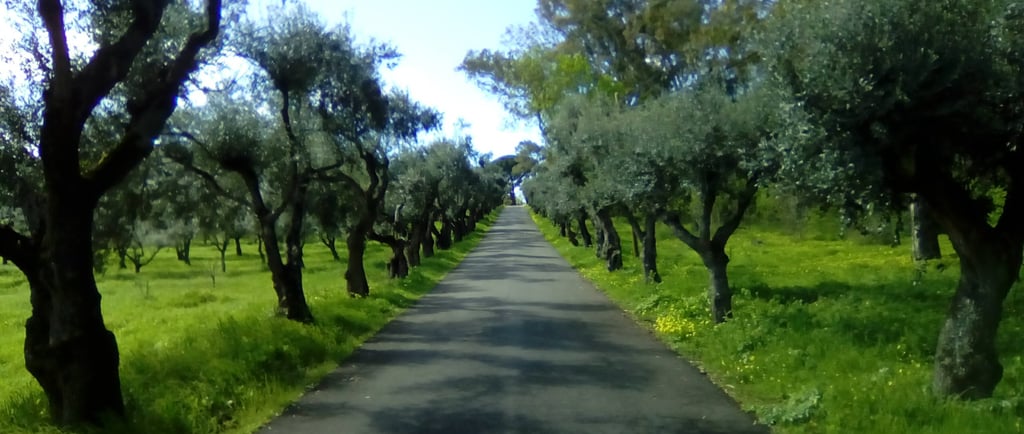
At ten in the morning, Rob and Karen collect us and we bounce along cobble stones and crusted rutted roads through the countryside to the Olive Grove. The house is a cool, white bungalow with a glorious porch overlooking wildflowers, herbs, trees, mountains, and the sea. We each choose our tree beneath which we will meditate and write. A fig tree chooses me, its scars and hollowed parts speaking to the past sixty-one years of my life..
I bow my head to enter its canopy and spread an olive-collecting net, burlap sacks, and blankets on the hard ground. I feel the trunk, the stems woven from multiple fig trees into a single misshapen form. I think of my therapist who has been helping me integrate those parts of me that cause me distress, the hurt child, the rejected and abandoned adolescent, the people-pleasing wife and doctor. Frantisek helped me identify the parts of me that arose in childhood to defend against harms inflicted, the defenders protecting me in a difficult and hostile home environment. The responses from childhood that helped me survive are inappropriate in adulthood and I’m working on finding new ways to respond, using tools to rewire old programs in my brain.
Dry leaves crunch under my bum as I shift to find a spot between the tree’s roots. I lean back against rough bark. Above, two bleached branches stretch out in front of me, their ends coming together like an embrace. The shadow and sun-green leaves are like open palms with stubby fingers. Karen says the fig tree is known as a hardy tree, one that can grow in parched, nutrient-poor soil.
I think of the first three years of my life, those critical formative years, the rocky start followed by years of physical and mental childhood abuse. Unease mushrooms in my belly and chest, a roiling musty queasiness. I breathe with the tree, inhaling peace. I’m safe. I can sit here with these big emotions. A sweet scent drifts into my consciousness. Wonder overtakes me. My sense of smell is the most dormant of my senses, the slowest to awake, yet here it alerts me to the presence of bunches of Oregano. Dizzy with delight, I dip my nose into fragrant white blossoms. The fig tree, ancient soil, and new growth will support me through my journey to healing.
The weeks passes and I fall into a routine. I wake each morning to the famished squeals of the newly hatched swallows nesting outside my door. On the way to breakfast, I’m infused with hope as I watch the tiny mother feed wide-open beaks. Our kind hotel hosts greet me and provide nourishing food while I sit on the outside patio with my new friends. The ocean, only feet away, is bright blue and green, waves tumbling and crashing against the beach, the water so clear I can see through the crests to eternity.
The morning meetups with our trees are followed by guided meditation under Thalia, Karen’s favorite olive tree. I sit, or shift to lie, depending on my knee pain, on the indigo cotton blanket large enough to accommodate all seven women. Each session will bring change, at first noticeable in diminishing physical symptoms. The radiating pain in my hips, thigh, calves, and foot will settle at the site of dis-ease, my knees, especially my left knee. Soon, my right knee no longer hurts. I am a chronic pain doctor. I know what is happening.
The past few months of high stress lit up my alarm brain, the place in the brain alerting me to danger. The limbic system is Pain Central Station, with connections to areas of emotion, memory, motion, and behavior control. The limbic brain has focused all the past months of alarm on my legs, spreading increasing pain outward, while lowering my ability to cope with the sensations.
Perhaps the pain is more than a warning of physical and emotional injury. I believe it is my body’s way of forcing me to stop and rest. Usually I rush around, looking after others, ignoring my symptoms. In the Olive Grove, I can attend to my physical and emotional health. I won’t do what I have done in the past years. I won’t dissociate or ignore my pain.
As the days pass in meditation and nurturing care, my alarm brain resets. I notice the pain diminish so that I only feel it when I step incorrectly or when I use my knees more than I should. Bliss overtakes me as I am no longer overwhelmed with the feeling of sick, that deep unsettled reminder of helplessness. I am in a community of friends, supported, getting better.
Freedom overtakes me. Karen mentions the nudist beach at the far end of Skala, and I suggest a skinny dip. “Jelly bits and all!” The women laugh and soon “jelly bits” becomes one of our many chants. As soon as we reach the beach, and before I overthink it, I strip off my clothes. My first public nude swim! I’m not concerned about the kite and wind surfers on our left as I float in the waves, bathing in the warmth of a Greek sun, in the joyous shrieks of the women.
The following day we visit a monastery. Gale force winds buffet the car as we wind our way up the mountain to the very top. Ancient stone walls, weathered wooden shutters, and crumbling arched doorways welcome us into a cloistered church hall. I’m enveloped in a cushion of silence. Warm, dark wooden pews, an altar, and high-backed seats hold the memories of all who have passed through. Gold flakes glitter from somber icons and chandeliers. I breathe the fullness of the divine.
The priest invites us to offer a name for their prayers. Confusion rattles my insides. Who needs these holy men’s prayers the most? I write Roelof’s name down, light a candle, and move to the left side of the church. With my body pressed against wooden railings, I lean my elbows on the ledge. My head drops into my open hands. I sob.
I cry for the loss of love created in a brain hungry for acceptance and connection. My tears are for so many years of dreamed-up Big Love. I cry for the parts of me that defended against the truth, seeking for me safety in the comfort of lies. What in the past thirty-nine years together was love and what was an abnormal attachment, a co-dependency?
My thoughts travel to the past, to the first years of our marriage when we were so wrapped up in each other. The joy and happiness we experienced. We were connected and gave so freely of ourselves. Unconditionally. When did it change? Why? How had we squandered such love?
I believe I can trace the change to a time early in marriage when Roelof resigned from his engineering job. I blamed his PTSD and very difficult childhood when he failed to find work. While I thrived practicing medicine, he may have experienced increasing shame. Fear that I would leave him. The better I did at work, the more threatened he must have felt. Threat overtakes the brain, paralyzing higher thought and emotion. The survival brain can annihilate the ability to think of others, empathy and compassion smothered.
My left hand reaches for the carved wooden support at my side, the smooth wood warm in my palm. Where are you Roelof? Can you feel my soul reaching for yours? For your warm hand in mine. Your strong body against my back. Your arms holding me tight. How can I bear to never be held by you again? If only there was a way to quieten your unyielding defenders, the ones that imprisoned your body in a tight, unsmiling grip. The monsters took away your laughter and your kindness. How I miss you. Those parts of you that shone through your past traumas.
From the right side of the church, laughter draws me back to the present. Rob and the priest enjoying a joke. My spirit lifts as I gaze at them and the other women in the church. I bow my head, thank the universe, and step out of the church into the wind. They follow soon after, checking to see if I am okay. I marvel at how they have accepted me. Without criticism. Without judgement.
When I’d introduced myself to the group, I’d warned them as I warn my patients, “I can be a bit much. My ADHD and anxiety turn me into an excitable devil. Please let me know when I overstep.”
They listened and agreed to tell me if I was making them uncomfortable. Although my bluntness surprises them, they seem to enjoy me, even the times when I am more honest than advisable. “Say what you REALLY mean, Judy,” becomes a frequent refrain.
Karen supports my way of communication, this pressure to speak, but then challenges me with a thought, “Perhaps this is yet another version of yourself, something you keep telling yourself.”
Her words resonated. I’ve been telling stories all my life, stories about the happy childhood I’d had, a malignant dissociation from the truth. When I was in my fourth year of medicine, I’d awoken to the true nature of my dysfunctional family. It had left me with psychosis for five months. When my family abandoned me, I jumped into a relationship with Roelof and then believed it was perfect long after it had become toxic. I realize I need to examine the thoughts I feed into my brain. These thoughts create a reality that causes dis-ease.
In the Olive Grove, we are working on dis-ease. Exploring. Poking. Prodding. Integrating the hurts and harms until they became a thing of the past that can safely be carried. My anxiety lessens as I feel acceptance. The urge to share everything bouncing around in my hyperactive brain lessens.
There’s another physical change. For the first time in my life, my hands are warm. I think of the times my patients screeched when I examined them. “Cold hands, warm heart,” they’d say when they recovered from my icy touch. My ex joked, “You’re dead, you just don’t know it yet.” Not dead, just damaged. Now my hands are warm. I press my palms against my cheeks and wonder fills me. I think of the monastery. I have lost him but I now have warm hands that hold me.
There is another special moment under Thalia, on the indigo blanket. The abundant joy I feel demands release in speech, too much, certainly for a meditation circle. Karen takes my hand, to center me. I gaze around into the loving eyes of the women and turn away, burying my face into the cotton. A soft touch on my shoulder brings me to tears.
When I recover, I share, “I’ve never experienced such unconditional love. Such acceptance of me exactly as I am.”
Later, I will realize I have received love, from people like my aunt, the one member of the family who had never rejected me, from friends, teachers, from the unguarded parts of my ex and my family. My protectors guarding me against hurt had prevented me from feeling love so completely as I do now. Finally, I am free to love and be loved.
Birdsong, the healing sun, and the scent of sage and jasmine welcome us to our last day in the grove. The tree-tying ceremony. We circle the chosen tree and chant:
“Every day in every way I am getting better and better.”
“It always works. It’s always a blessing.”
Standing in a circle under the tree, stories are shared and fabric tied to the branches. I tie my first piece of cloth, cut from an armchair covering. Roelof had spent many hours in the recliner and the fabric protected the leather from the prolific pooping of Penny, our conure and the teeny offerings from Shelly, our cockatiel. I cry as I tie the knot. My heart aches at the loss for the man I thought he was, the man he could perhaps have been, and for the man he is. I am grateful to have experienced my life with him.
I wipe tears and snot away with my second piece of fabric and laugh. “It’s apt,” I say to the group. “The fabric can hold the secretions representing all the years of sinusitis caused by anxiety inflammation.”
The cotton is soft in my hand. The material no longer feels like a random choice. Printed on bright red are white anchors, yachts, and the wavy lines of an ocean. The anchors represent the haven provided by him when I was vulnerable and weak from grief. After my psychosis, my family abandoned me. He’d held my sadness then, until I grew stronger. The stronger I became, the more threat he may have felt. I can’t remember when I started to feel confined, but the feeling of safety changed, until the anchors represent the manipulations he used to control me. I can now sail alone.
The fabric remains in the olive grove, holding my pain, flapping in the winds, baked in the sun. I leave Greece lighter. Stronger. Strong enough to sit with difficult feelings. Strong in the knowledge that I am supported by new and old friends, family, and community. Each time I feel alone, I will place my now warm palms to my cheeks and remember that I can reach the universe.
Judy Dercksen, an ex South African, now Canadian trauma informed family doctor is also a pain mentor, and the family doctor for Pain BC ECHO for pain. Writing about racism and apartheid in South Africa led her to an understanding of herself and complex PTSD. She shares her knowledge of chronic physical and emotional pain on her website, https://painimprovement.com/ and on IG https://www.instagram.com/chronic_pain_doc/
https://www.facebook.com/DocJudyDercksen
Her other stories can be found on her writing website https://judydercksenca.wordpress.com/
Subscribe to FREE digital flip copy of the Adelaide Magazine printed edition.