THE SECOND TIME MY BROTHER JUMPED INTO THE OCEAN TO GET AWAY FROM A WHALE
ALM No.94, October 2026
SHORT STORIES
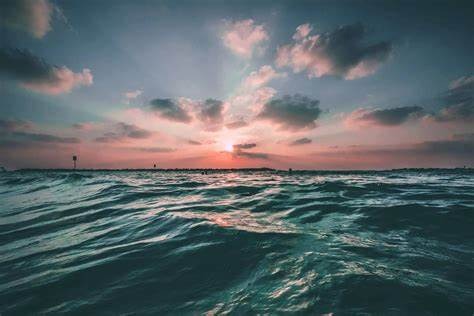
The second time my brother jumped into the ocean to get away from a whale was the time we took our neighbor’s rowboat out in a heavy fog and a whale surfaced right beside us. Actually, it was foggy both times that he jumped into the ocean to get away from a whale. You know how it is sometimes on the coast when the fog comes in. It can roll in so thick you can barely see three feet in front of you. I have tripped over rocks on the beach in a heavy fog. But think for a sec about what I just said. My brother jumped into the ocean to get away from a whale. Yup, you read that right. Now, I know what you’re going to say. “But, that’s exactly where the whale was.” Yeah. The first time he jumped into the ocean to get away from a whale, he was on his surfboard. I know, I know, you’re going to point out that if the whale scared him that much he could have just paddled back to shore. Or caught a wave in. But no, he decided, for some crazy reason, that going into the water was the better way to get away from something that was already in the water. The second time he did this, as I said, he was in a rowboat and he actually jumped over the side right next to the whale. He didn’t even jump out on the opposite side of the boat. It’s a good thing that whale wasn’t a Great White Shark. But I’m getting ahead of myself. Let me begin by telling you about the first time.
Growing up on the beach, you seize any opportunity to go into the ocean. Swimming, snorkeling, surfing, body surfing, exploring tidepools. Sometimes just walking along the inner shore and kicking your feet in the water. Our lives centered on the ocean. Despite preconceived ideas, it’s not always sunny on the California coast. Sometimes it rains. Sometimes it gets foggy. We used to go surfing in all weather and at all times of the day; early mornings, late afternoons, even in the darkness of night. Night surfing can be fun. Sometimes, when plankton blooms thick and causes bioluminescence in the water, the wake from the surfboard will glimmer phosphorescent blue. Like something from a Cezanne painting. You can shake your hand in the water and sparks will fly in an explosion of cobalt and indigo. Like a sparkler at a 4th of July party. It is surreal. Unless the moon is out, you can’t always see the waves while surfing at night. You sit on your board and when you feel the lift, the rising surge of the wave, you start paddling. Surfing in a heavy fog is like that. The color of the water blends with the color of the fog and it can be quite disorienting. You’re in the midst of a grey murk, like being inside a cloud. You feel the movement of the water but you can’t see the wave until it is upon you.
We were surfing in a thick fog on the day of the first whale. The waves were not very big that day but we didn’t care. The important thing was to be in the ocean. As waves travel across the ocean and reach the shore they form swells and group together in sets. A set being a cluster of usually around four to eight waves, although that can vary. After the set rolls through, there is usually a brief lull until the next set arrives. During this time, you sit on your board and wait. On this day, the day of the whale, there were three of us, my older brother Mike, my friend Chris, and me. We were sitting on our boards, bobbing in the water, talking, laughing, splashing water at each other, when suddenly there was a loud sound.
Psssssssshhhhhhwhoosssshhhhhh!
We felt a heavy mist rain upon us and there was a fishy smell and about ten feet away, a whale surfaced. It was a Gray Whale. It scared the heck out of us. My older brother, the tough guy who spent most of our youth beating me up, screamed. Yeah, he screamed, just like in the bathtub scene in the movie Psycho. His scream scared Chris and me even more than the sudden appearance of the whale. Then he jumped off his surfboard. He jumped right into the water just a few feet from the very thing that frightened him. He wasn’t being heroic or anything. He wasn’t leading the charge, running into the battle like Lawrence of Arabia. “Come on, men!” He was trying to get away. He didn’t actually jump in, he kind of slipped off his surfboard right into the water like butter melting in a pan. Then he started swimming.
Now, living on the beach and spending a lot of time looking out at the ocean you frequently see whales. The Gray Whale, Eschrichtius robustus, is a baleen whale, like the Humpback and the Blue Whale. Baleen is stringy stuff, like hairy wet spaghetti inside the whale’s mouth that the whale uses as a filter. The Gray Whale migrates from the cold, food rich waters in the Chukchi and Beaufort Seas along the norther perimeter of Alaska down along the west coast of North America. One of the longest migrations in the animal world, around 12,000 miles round trip. They swim the long distance to Scammon Lagoon in Mexico where they give birth to their young. This is when we used to see them. When they were on their way south and again when they traveled back north. They swam right past our house. However, we usually saw them from a distance.
Seeing my brother go into the water like that struck Chris and me as funny. So, we started laughing. But we stayed on our surfboards. The whale bobbed in the water beside us for a few minutes. Later, I would think back and wonder why I didn’t paddle over to it so I could touch it. The whale was so close to us that, fog or no fog, we could see it quite well. Its skin was greyish/white and blotchy and I could see clusters of barnacles along its back. It looked like a large floating pickle. After a minute or two the whale sank beneath the surface of the water and was gone. It didn’t arc its back and dive like you always see in pictures. Nothing so dramatic or spectacular. Its tail flukes did not rise up with water sheeting off. It just sank away.
We could hear my brother’s frantic arm strokes beating the water as he swam toward shore. Chris and I waited until the next set came through. I grabbed my brother’s surfboard which was still floating beside us (this was before those leash things that surfers use nowadays so they don’t lose their board) and I held it as I surfed a wave in. Reaching the shore, we found Mike standing shivering further up the beach away from the water’s edge, away from the whale. Chris and I started laughing again. My older brother was so embarrassed that he didn’t say a word. He just snatched his board away from me and turned and walked away.
Chris and I were still laughing.
The Gray Whale is kind of an anomaly in the world of whales. Look at a chart of the great whales. Most whales are streamlined and sleek. Consider the Blue Whale and the Fin Whale. Look at the Humpback Whale and the Minke Whale. Okay, the Sperm Whale looks like a huge baseball bat with fins but the Gray, well, the Gray looks like a distorted zucchini that swims. It kind of looks like a punching bag that has been punched too many times. It is lumpy and dented and warped. It is inelegant and ungainly. It has a series of bumps, like the knuckles along the back of your fist, running along its back toward its flukes. And its pectoral fins look like huge misshapen ping pong paddles. One almost wonders how they can swim at all. They look like something that evolution has cast aside. Like a creature that was left behind as evolution moved onward.
It is thought that modern whales evolved from four-footed mammals called Pakicetus. Pakicetus looked almost wolf-like with a thick, muscular body, a large head and a long snout. It had sharp, pointed canine teeth. The Pakicetus took its first steps into the water some fifty-million years ago. Why did it venture into the water? Well, it is thought that most likely it went into the water to eat fish but also, perhaps, to get away from larger predators. At any rate, it eventually sallied further and further into the water and through time its legs evolved into flippers, its tail spread wider and turned into flukes and its snout migrated to the top of its head and became a blowhole. Yes, that is a simplistic version of whale evolution. I know it is much more complicated but whatever that creature of old was, it eventually became the whale as we know it. The Gray Whale, on the other hand, went a slightly different direction. It turned into what is known as an Eschrichtius. Google the word and you’ll find that the gray whale is the only living member. While it is a member of the cetacean world, it branched off into the Eschrichtiidae family and Eschrichtius genus. In other words, the Gray Whale is its own species.
Anyway, that was the first time my older brother jumped into the ocean to get away from a whale. The second time was when we took our neighbors rowboat out. Our neighbor, of course, didn’t know we took his boat. It was early in the morning and a wall of fog was building offshore but hadn’t quite made it to the beach yet. There were no waves to speak of. At least there were no waves that were worth surfing and we would pretty much surf in anything. The three of us, Mike, Chris and I, were walking along the beach wondering what to do. Mike saw our neighbor’s wooden rowboat resting on a hillock of sand and ice plant up near the bluffs.
“Hey,” my brother said. “I know what we can do.”
We weren’t stealing it. Not in our minds. We were just borrowing it. We probably should have gotten our neighbor’s permission. We had every intention of putting it back when we were done. All we wanted to do was go into the water. As I mentioned, when you live on the ocean you find all kinds of ways to go into the water.
It was an old wooden row boat. The seats were warped and splintered. The paint was peeled and flaked. There was an inch or more of sand in the bottom of the boat so if there were any holes in it we couldn’t tell. But what the heck, we thought, it was a boat. Being a wooden boat, it was heavy, especially with the sand in the bottom, but the three of us managed to push it down the slope of the beach to the water’s edge. We launched the boat into the water and hopped in. We soon discovered that indeed the boat did have a couple holes in the hull and water was seeping in but it wasn’t coming in fast so we ventured forth anyway. Then we realized that there were no oars. Uh-oh!
“No oars?” My brother yelled. “Jeff, why didn’t you check for oars?”
“Hey, this was your big idea,” I said.
It went back and forth like that for a minute or two. But we were surfers, we knew how to make something move through the water so we reached our arms over the gunwales and paddled. We were not moving very fast but we were moving. The boat rose over the small waves and it wasn’t easy but we kept paddling and after several minutes we made it out beyond the whitewater. We stopped arm-paddling and the boat rocked in the swells.
“Well,” Chris said. “Now what do we do?”
The fog had come in thicker and within a few minutes we found ourselves in the midst of a dense, pea-soup fog bank. Pretty soon we couldn’t see the beach. We couldn’t see the horizon. All we could see was the water surrounding us and it was the same color as the fog. It was like the first line from The Open Boat, that story by Stephen Crane. None of them knew the color of the sky. But we were experienced watermen, if only in our own minds, and we could tell where the beach was by the sound of the small waves breaking inshore. We weren’t afraid. We knew we could make it back in when the time came. There is not much to do in a small rowboat when you have no oars so we just sat there, the three of us, feeling kind of stupid, when all of a sudden, there was a loud sound.
Psssssshhhhhhwhoosssshhhhhh!
Hey, I thought, I know that sound. We felt a heavy mist fall upon us and we smelled a fishy smell and, about ten feet away from the boat, a Gray Whale surfaced. This whale was considerably larger than the one that surfaced beside us before. That first one might have been a youngster, maybe fifteen to twenty feet. This one was huge. None of us stopped to estimate how big it was but thinking back now, comparing it to the size of the boat, I’ll say it was at least thirty-five, maybe forty feet long. That’s pretty big when you’re twelve years old sitting in an eight-foot row boat. Well, I’ll give you one guess what my older brother did.
He jumped in.
There was no slithering off his surfboard this time. He stood up in the small boat and put his hands together as if he was going to say a prayer. He held his clasped hands up over his head like a kid learning how to dive into a swimming pool and he dove in. Right over the gunwale of the boat. It was not a very elegant dive. He was not going to win any medals at the Olympics. He kind of belly-flopped into the water and started swimming. He disappeared pretty quickly in the thick fog but we could hear his arms thrashing and his feet kicking wildly in the water. Chris and I stayed in the boat. We didn’t laugh at first. We were too shocked that my older brother, the guy who, as I have said, spent most of our youth beating me up, did it again. The presence of the whale, emerging out of the miasma, shocked me too. I actually think I was more awestruck than scared. As before, I did not think the whale was going to hurt us.
Then we started laughing.
Chris and I sat in the rowboat and looked at the whale. I could see the barnacles and the blotchy skin. I could see its huge downcurved mouth but it was closed so I could not see the baleen. I could see its eye, the size of my fist, and I assumed that it was looking at us. After a few minutes the whale submerged and sank away just like the first one had. It barely made a ripple. It just descended, the water filled in over its back, and it was gone. That whale must have thought, get me away from these crazy humans. We couldn’t hear my brother swimming any more so we figured he must have made it to shore. We did not hear anything from the whale again.
“What are we gonna do now?” Chris asked.
“I don’t know,” I said. “I guess we paddle in.”
So, we leaned over the sides and started arm-paddling. The waves had increased in size and they pushed the little boat along. Then suddenly we felt the boat rise and skew sideways. Without oars there was nothing we could do to control the boat and the bow tilted down and water flooded in and the boat nose-dived. We felt the stern rise up behind us and we were pitched forward into the water. I kept expecting the boat to come down on my noggin but it never did. I yelled for Chris and he yelled back so I knew the boat didn’t clobber him either. A few waves rolled over us and we dove under the whitewater. I could not see the boat anywhere. I was laughing so hard it was difficult to grab a breath as I ducked under the waves. We swam in and found my brother standing on the beach shivering.
“Where’s the boat?” He asked.
No one ever said anything about the missing boat. We hoped that no one would even notice that it was missing. After all, it was just an old wooden boat with holes in it. About a week later, some heavy surf brought it back to the beach. The ocean does that. Sometimes it takes away and sometimes it gives back. The boat was pretty beat up after being tossed around in the surf for a week or so. We never did tell our neighbor that we had taken his boat but I always thought he knew it was us. I mean, who else would it have been? The boat sat there in the tide with the waves pounding it. Then one day I ran into our neighbor walking his dog along the beach.
“Hey Jeff,” he said. He pointed at the decrepit boat.
Uh-oh, I thought, we’re in for it now. Then he said, “Why don’t you guys break that thing apart and burn it in a bonfire.”
So, that’s what we did.
Subscribe to FREE digital flip copy of the Adelaide Magazine printed edition.