THE SHAPE OF AN UNPLANNED SATURDAY IN MORNINGSIDE HEIGHTS
ALM No.90, June 2026
ESSAYS
On the morning of September 2, 2023, I woke slowly in my room at the Night Hotel Broadway, allowing the day to arrive before I fully joined it. The light was already strong enough to suggest that breakfast had quietly slipped into brunch, and for once I felt no urgency to follow routine. During my stay in New York, I had developed the habit of starting each morning at the nearby 94 Corner Cafe, but that day I stepped outside with no clear plan, opening Google Maps on the sidewalk as if consulting an oracle.
Certain places in New York exert a gravitational pull on me, and Columbia University is one of them. A glance at the map revealed that the bus stop at Broadway and West 93rd Street lay only a minute away. The M104 would carry me north in about ten minutes. The simplicity of the journey felt like an invitation. I boarded the bus and watched Broadway unfold through the window — storefronts, pedestrians, fragments of conversations — the city presenting itself as a continuous text, waiting to be read.
Somewhere along the route, a sign caught my attention: Tom’s Restaurant. Without thinking too much about it, I pressed the button and stepped off near West 113th Street. The decision felt instinctive rather than deliberate, as if the city itself had nudged me.
Tom’s Restaurant occupies a modest yet curious place in New York’s cultural memory. Known to many as the exterior used for the fictional Monk’s Café in Seinfeld, it retains the atmosphere of a neighborhood diner untouched by trends. Inside, the hum of conversation and the clatter of plates created a rhythm that felt reassuringly ordinary. I ordered orange juice, hot coffee, and a piece of bread whose exact name escapes me now, and sat quietly watching people come and go — students, locals, and perhaps other travelers, each absorbed in their own narratives.
After finishing brunch, I resumed walking north toward Columbia University. Walking in New York is never simply movement; it is a way of thinking. A bookstore sign soon interrupted my thoughts: Book Culture, at 536 West 112th Street. Entering felt inevitable. The shop appeared small from the outside, but upstairs revealed an unexpectedly dense world of textbooks and scholarly works, evidence of its deep connection to the university nearby. Students moved between shelves with quiet urgency, as if navigating an extension of the campus itself. Independent bookstores like this feel increasingly rare, yet here it functioned as both marketplace and intellectual commons.
Further along Broadway, the street transformed unexpectedly into a pedestrian festival. Tents lined the avenue, offering foods from different corners of the world: German sausages, Ecuadorian dishes, and even a stand advertising Japanese takoyaki. I never discovered the official name of the event, and perhaps that is fitting. New York often stages celebrations without explanation, allowing passersby to participate without invitation. The smell of grilled food mixed with late summer heat, and strangers moved together in temporary community, united by curiosity and appetite.
Eventually I entered the gates of Columbia University. Though I had visited many times before, the campus always produced the same quiet impression: a sense of intellectual continuity grounded in physical space. The steps leading up to Low Library, the symmetry of the architecture, and the calm rhythm of students crossing the lawns created an atmosphere that felt at once historical and alive. Universities are often described as institutions, but walking through Columbia felt more like entering an ongoing conversation that began long before my arrival and would continue long after my departure.
Leaving the campus, I noticed The Hungarian Pastry Shop on Amsterdam Avenue, a café recommended by a friend who had graduated from Columbia. Known as a gathering place for students, professors, writers, and neighborhood residents — and even appearing in films such as Husbands and Wives — it seemed like the perfect place to pause. Yet a long line stretched outside the door, and I decided not to wait. Sometimes the experience of a place lies in approaching it rather than entering it.
As I walked back along Broadway, I thought about how little of the day had been planned. A late start, a spontaneous bus ride, an impulsive stop at a diner, an unanticipated bookstore visit, and a street festival without a name — each decision small enough to seem insignificant on its own, yet together forming a quiet narrative. New York reveals itself not through grand spectacles but through these accumulations of chance encounters. Walking there, I felt less like a visitor observing a city and more like a participant moving through a living text — one that cannot be fully understood, only continuously read.
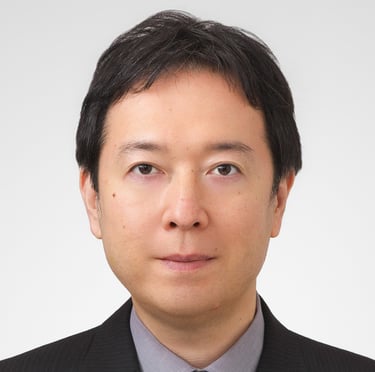
Takeshi Hayashi is an associate professor at Yokohama College of Commerce in Japan, specializing in Anglophone culture and literature and TESOL. He has also worked as a translator and lyricist for the Japanese editions of American music magazines. He teaches English at the university level, and has been writing a long-running column on English education and extensive reading for Asahi Weekly for over a decade. His work explores literature, travel, and language, with a particular interest in how places are experienced and interpreted through reading and writing.
Subscribe to FREE digital flip copy of the Adelaide Magazine printed edition.