THEY MADE ME A CRIMINAL: A Brief History of My Life as a Pain Patient
ALM No.87, March 2026
ESSAYS
I have always liked showing off how strong I am. When I was a little girl, I would grab hold of my parents’ friends and lift them off the ground (just the men—the bigger the better); later, in my twenties, I would challenge boys to arm wrestles. When I was older, I treated myself like a pack mule, carrying tons of groceries home—things that any normal person would have delivered. Later, when I discovered that the sidewalks of New York were laden with treasure, I would heave cast-off pieces of furniture I found on the street back to my apartment--no matter how big or heavy the load I always managed to figure out a way to get my loot home.
I never thought twice about the effect these exertions could be having on my body until one day when schlepping forty pounds of groceries down 181st Street my back gave out and I ended up being taken by ambulance to the emergency room of New York Presbyterian Hospital with three herniated disks.
The pain was so bad I couldn’t walk and after two weeks of being homebound I ordered a wheelchair. My husband would wheel me around the neighborhood and take me on the forty-five-minute bus ride from our apartment in Washington Heights to go swimming at the Columbia University gym on 116th Street. Swimming was the only physical activity I could tolerate.
The world from a wheelchair turned out to be a surprisingly friendly place. People on the street would smile at me sympathetically. When bus drivers saw me waiting in my wheelchair, they would tell all the other passengers to step aside and to the accompaniment of a loud hydraulic hiss lower the bus and then with a great ding, ding, ding, ding let down the ramp so that Phil could wheel me onboard. Anyone sitting up front in the place reserved for people like me having been ordered to leave, the bus driver would fold down the seats and secure my wheelchair to the floor with metal hooks. After paying our fare a few times, Phil and I realized that wasn’t necessary--the bus drivers always let us both on for free.
The emergency room doctors had given me a prescription for Percocet, which while doing nothing to relieve the pain in my back, had a miraculously healing effect on my bladder, that little chamber of horrors that has plagued me most of my life. My bladder problems go way beyond the “garden variety” that bother many women, or so the doctors, with a casual shrug, have told me over the years. Worse than having to pee all the time is an extreme, all-pervasive discomfort—burning, itching, wetness, coldness, dampness, electricity coursing through my body and other strange, maddening sensations that make me want to jump out of my skin.
When I hurt my back, my major concern was not my back; it was how I was going to deal with the forty-foot hallway that stood between my bedroom and the bathroom. My plan was to take the Ficus plant out of the antique commode I picked up off the street years before and set it beside my bed and put it back to serving the purpose it had served a century ago. Fortunately, this did not turn out to be necessary.
It took me a while to put two and two together and realize that it was because of the Percocet, and not some weird side effect of my herniated disks or some fortuitous remission, that I did not have to get up out of bed and crawl down my long hallway to the bathroom--no exaggeration--every five minutes.
It isn’t life-threatening, this condition of mine; it does not show up on any tests, its only manifestation is one of sensation--a sensation that the patient is asked to categorize with a smiley face or a frowny face or a number between one and ten. The severity of pain—whether or not it exists at all, is known only to the sufferer herself.
Perhaps this was why it was of so little interest to the doctors. One of them, a urologist, his office adorned with New York Magazine “Best Doctor” covers; in the waiting room, an enormous fish tank that emitted a loud, continuous gurgle (an odd choice of décor for a urologist, I thought), after subjecting me to a series of painful, expensive tests, all of which I had had many times before, sat me down in a small, dark examination and told me what wonderful bladder I had.
Had he forgotten my reason for coming to see him in the first place? I was too befuddled to ask.
For a long time, I gave up on doctors, but at some point, my symptoms having reached a new level of unbearable, I renewed my search for medical help, and I finally came across a urologist familiar with conditions similar to mine, one that she was actually able to treat.
So for the next four years, I took the subway down from my apartment in Washington Heights to the Midtown Manhattan office of Dr. Voyager (not her real name) three times a week to have a concoction of various numbing agents injected into my bladder.
Dr. Voyager seemed to regard her medical practice as a day job; her main interest in life was traveling (the walls of her office were decorated with tribal masks from Africa, porcelain vases from Japan, Oriental rugs from Iran, et cetera) and when she was away on one of her many trips, my husband and I would take charge of the bladder instillations ourselves. I would catheterize myself while Phil, after pouring the contents of four chemical solutions into a syringe, would inject them into the catheter’s tubing. Our procedures worked as well as the peripatetic Dr. Voyager’s, thus saving me those long trips back and forth downtown. But then I started developing chronic bladder infections and I had to stop.
The emergency room doctor who had introduced me to the miraculous healing power of Percocet refused to renew my prescription, so I made an appointment with my internist, whom I will call Dr. Nice. Phil wheeled me up the steep hill to see her at the clinic on 181st Street and St. Nicholas Avenue.
Dr. Nice had always been sympathetic about my bladder condition; she knew I had tried every bladder medication on the market and alternative remedies, as well, all to no effect.
I liked Dr. Nice and I believed that she liked me. Nevertheless, she wouldn’t give me a prescription for Percocet. Explaining that it was a highly addictive opiate, she suggested that I return to my urologist.
Reluctantly, and a little resentfully, too, Dr. Voyager agreed to write me a small prescription for Percocet. If I wanted opiate prescriptions, I would have to see a pain doctor.
I went to every pain doctor I could find, receiving the same response every time:
Percocet is a highly addictive opiate that can kill you. 5But my bladder is killing me, I would argue.
Then one day I ran into a woman on Fourteenth Street who, mistaking me for my twin sister, greeted me on the street. After going through the usual back and forth with a stranger who thinks I am Beth:
Twins! I didn’t know Beth was a twin! You look just like her.
Yes, I know. This happens all the time.
How funny! There are two of you!
We got to talking about one thing or another, our conversation eventually focusing on our health issues, which along with wrinkles, diminishing sex drives and the fact that men no longer look at us on the street is a unfailing topic of discussion for women past the age of fifty. She told me about her migraines and I told her about my bladder and the trouble I was having finding a doctor willing to prescribe Percocet for me. Shaking her head in the wise and weary manner of a veteran sufferer, she said she knew all about that. Then with sympathy and affection, taking both my hands in both of hers (I love when people do that!) her face lit up and she said she had good news! The Beth Israel Pain Clinic at Union Square was willing to prescribe opiates.
I was so excited about this wonderful news that on my return home from the torturous subway ride my bladder and I had just endured, I wistfully bypassed the bathroom and went straight to the phone to call Beth Israel for an appointment. The receptionist informed me they were booked up for a month.
I called the clinic obsessively for two weeks to see if there had been any cancellations. The receptionist and I became good friends. She had bladder problems of her own, but not nearly as bad as mine (we had had many long discussions about this) and one Monday at two I got a call from her, asking me if I could get there in an hour and a half.
It was a frozen winter day and I had just washed my hair. I dressed quickly and ran out the door. By the time I reached the top of the hill on 181st Street and Ft. Washington Avenue, my hair was glazed with a patina of ice.
For the next six years I took the hourlong trip to Downtown Manhattan from my apartment in Washington Heights for my monthly prescription for Percocet. There were many other patients who traveled much longer distances than I. One man who had been injured in a construction accident took a three-hour bus ride in from Eastern Long Island once a month to get a Morphine prescription. A former schoolteacher who had hurt her back in a car accident twelve years before rode two painful hours by subway from the depths of Brooklyn for a Vicodin prescription.
There were always a few drug addicts in the crowded waiting room. I helped one of them, an emaciated man, his face frozen in a wince, faded tattoos on his arms, all but his two front teeth missing, fill out a questionnaire.
He had been talking to himself:
Normal routine: Don’t have none.
Sleep: Two hours a night. Maybe. Tops. Two hours a night.
Ability to concentrate? I have that thing . . . What the fuck is it called? That thing . . .
ADHD, I volunteered.
Yeah. That’s it.
The clipboard on his lap, he got back to work on the questionnaire.
Then with a start, he exclaimed to himself, What the fuck! What day is today?
October 17th, a man with a Mohawk told him.
Fuck. Shit. Shit. Fuck. It’s my goddamn fucking birthday.
Everyone in the room wished him Happy Birthday.
The man with the Mohawk got up from his chair to sit beside him.
They say the will to live is very strong, he said. As human beings we adapt.
I considered the dilemma that drug addicts suffering from pain must present to doctors. I would listen as they complained about being denied their usual prescriptions. One woman, heavily made up, dressed in a mini skirt, her legs bare on a cold winter day, speaking to no one in particular, paced the room, complaining that her doctor had refused to renew her prescription for Morphine because she had tested positive for Cocaine.
“There’s a place in Brooklyn,” the friendly man with the Mohawk told her. “They’ll give you anything. As much as you want. No questions asked.”
We all scrambled to scribble down the information.
Later, when I was having prescription problems of my own, I called that clinic, which turned out to be for patients who were dying of AIDS.
I only used Percocet when I needed it and one month when my symptoms were in remission my urine tested negative for Percocet. My doctor expressed mild curiosity about this. I was curious too—my bladder might have been less of an irritant the past month, but it was still no angel. I had been taking fewer than my usual twenty milligrams a day but I had still been taking it.
Are you drinking more water than usual? Dr. Sackheim asked, inviting me to help her solve this mystery.
I always drink a lot of water, I responded.
But are you drinking more than usual?
I don’t think so.
Are you sure you took the Percocet?
Yes. Just not as much. At least five milligrams a day. I was in a kind of remission, you see. It happens sometimes.
Well, I’m afraid I can’t prescribe you Percocet anymore.
What? I was shocked
This is the second time in a row your urine tested negative for Percocet, she explained.
So? I asked.
I’m afraid I can’t prescribe Percocet to you anymore.
Why not?
Because you tested negative for Percocet.
But I was taking the Percocet. Just not as much. Don’t you believe me?
Of course I believe you, she said.
We went on like that for a while.
I demanded to see the supervising physician. Everyone called her Dr. G. since her real name was hard to pronounce.
I asked Phil to come with me to the clinic for my appointment with Dr. G. the following week. I figured that showing up with a husband would lend me an air of respectability. I also figured that having Phil by my side would help keep me in check. Flying into a rage or breaking down in tears wouldn’t look good. It might give them another reason to accuse me of being a drug dealer, which I had learned from searching the Internet was what testing negative for a prescription opiate implied.
But the main reason I wanted Phil there was because he is the opposite of me. My husband has the appearance of being a quiet, unassuming kind of guy, the sort of guy who, no matter how hard he tries to get out of it, will be picked for jury duty every time; certainly not the kind of man to be married to a drug dealer .
As it turned out, Phil made things worse. When the chubby Dr. G., dressed in one of her ridiculous outfits--today, a dress with a flared skirt that skimmed the top of her chubby knees and the spike heels she always wore, even, as I recall, when performing medical procedures like the nerve block she once performed on me--smiled and said:
“No more Percocet for you.”
Phil, revealing himself to be not the unassuming guy everyone takes him for, countered with hostility of his own, in response to which Dr. G. threatened to discharge me from the clinic right then and there.
“Well that sure backfired,” I said to him when we left the clinic. “Thanks a lot.”
I was mad at him, although perhaps I shouldn’t have been: He had not been schooled in the attitude of submission that pain patients seeking opiates learn to assume.
The issue of Percocet off the table, Dr. G. wrote me a prescription for Kadian, another opiate, but one with presumably less street value, a drug that, while steering clear of my bladder, did a great job messing up my brain. I couldn’t read. I couldn’t write. I couldn’t think. The one and only thing that held my attention was my bladder, and it was every bit as riveting as ever.
Most disturbing of the drug’s many disturbing side-effects was a startling confusion, combined with extreme forgetfulness. On a trip back from upstate New York, I traveled fifty miles in the wrong direction. It was late autumn; the leaves had been glorious. I failed to notice the dramatic changes in the topography--the landscape turning from vibrant colors to black and white, the trees barer and barer, until all they had no leaves left at all. By the time it began to dawn on me that I might be going north instead of south, the composition of the highway had changed too. It was packed with the roar of gigantic trucks that threatened to upend my little Honda in the force of the aggressive breeze they generated whizzing past me.
I asked to be assigned another doctor, and I was. The new doctor agreed to prescribe Percocet. Shortly after I began seeing him my symptoms went into remission. I skipped my next appointment at the clinic. And I skipped the appointment after that one as well. I wanted to believe that this nightmare with my bladder had finally come to an end.
But my remission, like all the other remissions before it, didn’t last, and two months later my symptoms returned worse than ever. So I made an appointment at the clinic.
After the usual hourlong wait, the doctor (a new one) informed me that it had been so long since my last visit he couldn’t prescribe Percocet until my urine tests came back.
I panicked. Since my symptoms had returned, I had been taking my leftover Percocet and my urine was going to test positive! What would the doctors make of that? Patients were not supposed to hoard drugs. A stupid rule, and one that no pain patient in her right mind would ever follow. The thought of being without our pain medication is terrifying. Since pain often varies, many of us will choose to endure a lesser pain and skip a dose to make sure we have another pill to add to our emergency supply--we all have our secret stashes hidden away in Ziploc bags in our night table drawers, in storage containers under our beds; I kept my stash in a sock in the bottom of my underwear drawer, along with my diamond engagement ring and the emerald necklace I inherited from my grandmother.
This sounds like the behavior of a drug addict. But in terms of desperation, there isn’t much difference between a drug addict in need of a high and a person in pain.
Feeling like a criminal, I reviewed my options. A positive urine test was sure to raise alarms. Where had I gotten the Percocet? Did I buy it on the street? Had I been hording it? Had I tricked another doctor into writing me a prescription? Why had it been two months since I had been to the clinic?
I decided I would say I couldn’t pee. A credible excuse, since “urinary hesitancy” was one of my documented symptoms.
But I had to pee, and for me this is an agony that requires immediate attention. It travels way beyond its place of origin, waves of electric shock making my body go completely haywire.
The problem was that all the bathrooms were located in the vicinity of the doctors’ offices. What if one of them happened to see me leaving the bathroom? I could pee and not flush the toilet. But what if a doctor happened to check? These and other contingencies flashed through my mind.
In order to avoid blowing my cover, I decided to leave the clinic and find a bathroom on another floor, where I could pee in anonymity. And that’s what I did.
When I returned to the clinic, an empty jar in my hand, I was greeted by two doctors and a nurse, all of them, weirdly, standing there, as if anticipating my arrival. One of them was the sadistic Dr. G. standing there in one of her silly outfits and her signature high heels, her eyes glowing with the same glow of self-satisfaction with which they glowed the day she declared: “No more Percocet for you.”
Now she was announcing that she was kicking me out of the clinic.
“What?” I asked. I was genuinely perplexed.
“You know what rules.”
“No I don’t. What rules?”
When I got home, I went straight to the Internet and learned that the reason people were not allowed to leave the premises with their little plastic jars was because of one drug addict trick is to pay people to pee into the jars for them.
Some addicts are not that clever. A doctor acquaintance of mine told me about a patient who handed her a urine specimen that turned out to be apple juice.
A week later I got a letter from Dr. Russell Portenoy, the head of the clinic, officially discharging me. I wrote back to him, including in my letter excerpts from the eight-page, point by point refutation of my medical records I had written to Dr. G. after she kicked me out of the clinic.
Here are some of my responses to that report:
“She demands ONLY Percocet….She has been steadily increasing the dose of Percocet needed.”
(Not true: I often take less than the prescribed dose. I only take Percocet when I need it.)
“One of the samples may have been intentionally diluted.”
(I have no idea what that means!)
The most damning thing in Dr. Sackheim’s account was me telling her that I had held on to an old bottle of Methadone I came upon when cleaning out my mother’s medicine chest after her death. Ironically enough, I told Dr. Portenoy that it had been he who prescribed Methadone for my mother, for the pain caused by spinal stenosis. And another funny thing! Guess who accompanied on her visits to you, Dr. Portenoy? Me!
Phil had been sitting next to me in front of the computer, helping me write this letter, and when he got to that part he jumped out of his chair and asked me what the hell was I thinking saying something like this????!!!! Methadone! You sound like you come from a long line of drug addicts!
A week later, I received an actual letter addressed to me from Dr. Portenoy, telling me I could return to the clinic, with the warning that I had better behave myself.
This time around my case was assigned to a nurse practitioner. Eager to start off with a clean slate, I told Debbie the story of my troubled history with the clinic. She believed me when I told her that the reason my urine had tested negative was because I hadn’t taken the Percocet and that the reason I hadn’t taken it was because I didn’t need it.
I wrote to Dr. Portenoy, thanking him and telling him how great Debbie was, and he wrote back thanking me for being “gracious enough” to write to him and that he thought Debbie was terrific too.
So that was it. Peace at last. The two of us, my bladder and I, enemies no more, living in harmony with each other, in a world filled with kindness and understanding.
Debbie trusted me so much she didn’t even bother testing my urine. Not being treated like a drug addict was a great source of pride for me; knowing that I was, in fact, not a drug addict made me feel prouder still.
After Debbie left the clinic to take a teaching job, the doctor who took over for her was willing to prescribe me Percocet as well, although he did insist on testing my urine. Having learned from my mistakes, I always made sure to take a double dose of Percocet a couple of days before my appointment, even if I didn’t need it, to make sure that all my urine tests would come back positive.
Two years passed, during which time I went through a few more doctors. Then everything changed. Beth Israel was taken over by Mt. Sinai, which instituted a clinic-wide injunction against opiate prescriptions for all patients but those just out of surgery or suffering from cancer, a decision stemming from word that the Center for Disease Control and Prevention (CDC) was about to crack down on the opiate prescriptions. The Beth Israel Pain Clinic, which had been the only pain clinic in the city still willing to prescribe narcotics to pain patients, was gone. Now what was I going to do?
Reading the CDC guidelines, I latched onto a ray of hope: it was up to the doctors to decide for themselves, on a case-by-case basis, whether, based on their consideration of the needs and criminal proclivities of each patient, to write or not to write opiate prescriptions.
However, as I was to learn, although the guidelines were just guidelines, and not prescriptive, they might as well have been. There were stories about doctors convicted of overprescribing opiates whose licenses had been revoked; some had even been sentenced to jailtime.
The one official diagnosis I received for this weird condition of mine was something called “idiopathic neuropathy.” So I decided to give neurologists a go.
I made an appointment with a doctor at Mt. Sinai, Dr. Brown, who, after recommending a number of drugs, all of which I had tried, said she could not prescribe Percocet because Opiates are addictive, opiates can kill you.
In the meantime, a friend of mine, a scientist, an avid reader of science journals, who is always sending me articles she thinks might be of interest to me, sent me an article, entitled “When Arousal is Agony” that described a medical condition the symptoms of which included both urinary frequency and inexplicable bouts of sexual arousal. (Nancy knew that I, like the women in the article, suffered from sudden, desperate needs for sexual release.)
There were some pretty funny anecdotes about this seemingly risible condition with the risible name of “restless genital syndrome”: a kindergarten teacher who would find herself in a state of sexual excitation when standing in front of a classroom of six-year-olds; a middle-aged woman whose doctor, in response to hearing about her symptoms quipped-- “I wish my wife had that!”
I came armed with these articles to my next appointment with Dr. Brown, who, going straight to her computer, found out that the drug prescribed to treat this conditionwas Risperdal.
I knew all about Risperdal. I have an autistic son, and there was a time when Risperdal, a heavy-duty antipsychotic with a host of severe, alarming and potentially permanent side effects, was the drug of choice for autism. Phil and I refused to consider it for Benjy. When I mentioned this to Dr. Brown, she told me that the dose recommended for my condition was very low, and unlikely to cause any side effects at all.
After my first dose of Risperdal my bladder and I were happier than we had ever been. Every morning when I reached for my daily dose we would be overcome with love and gratitude for the precious little pill.
I was so in love with that tiny pill that the other changes I had been experiencing passed me by. Gone was my usually terrific memory. Gone was my compulsion to attend to the practical details of living; in its place was a remarkable absentmindedness. Simple math was a problem. The usual fluidity of my unconscious, so important for writers, was a brick of ice.. An eerie emptiness filled my mind. I felt stupid. I was stupid. My bladder was etherized and so was I.
I started to wean myself off Risperdal. After the weaning, all my bladder symptoms came back and along with them a monstrous depression.
A friend of mine had recently urged me to see her doctor. During my first appointment, which lasted over an hour, instead of the usual fifteen minutes, I presented an abbreviated version of the story of my bladder
Without hesitation, Dr. X. wrote me a prescription for 20 milligrams of Percocet a day.
Now, once again, the universe my bladder and I are inhabiting is an enchanted one. But happy as we are today, we have a lurking sense of dread of the trouble that lies ahead as the crackdown on opiates keeps on getting bigger than ever.
This is why the stash of ingredients for our instillations (the catheters, the syringes and the bottles of Alkalinized Lidocaine, Heparin, DMSO and Sodium Bicarbonate) still lie sealed up in plastic boxes underneath our bed, as they have been for going-on fifteen years now.
Phil, who thinks I am a hoarder, keeps on nagging me to throw them out. I tell him I will never throw them out.
But they’re two and a half decades old, he argues. Don’t you know they are worthless?
I don’t care.
We have had many arguments about this.
My refusal to part with my bladder concoctions and the byzantine apparatus that goes with them is to some extent rooted in feelings of sentimentality and gratitude for the fond memories they hold.
They are all years past their expiration dates. Nevertheless, it comforts me to know that in the event opiate prescriptions for people like me become obsolete, my supplies will there, ready to get to work, as will my husband, who when called upon to do so, will once again assume his place beside me, staunchly at the ready, cracking dumb jokes as I sit on the edge of our bathtub inserting the catheter into that place, the precise location of which I had previously been innocently, mercifully unaware; like a chemist performing a delicate experiment, he will open the tiny bottles one by one by one by one, and inject them into the syringe.
The procedure completed, he will then fill the bathtub with warm water, dump a carton Epsom salts into it and hold me as we sit soaking together, waiting for the chemicals to work their magic, giving my poor bladder and me the relief we require, the relief we deserve, the relief to which pain patients with our aching muscles, joints and organs and assorted other body parts are, according to ethics of medicine, and the personal morality of its practitioners, are supposed to be entitled.
Maxine Rosaler’s The Missing Kidney and other stories (Delphinium Books, 2025) was on the Kirkus List of Best Fiction Books 2025 and was selected as an Oprah Daily Best Summer Reads of 2025 Pick. Her novel Queen for a Day, (Delphinium Books, 2018) was nominated for The Kirkus Prize and was one of ten fiction books included in the Jewish Book Council's 2021 list of recommended books. Stories of hers have appeared om Prairie Schooner, Tikkun, The Southern Review, Glimmer Train, Witness, Fifth Wednesday, storySouth, Green Mountains Review and other literary magazines and have been cited in editions of Best American Short Stories and Best American Essays and one was a finalist for the Nelson Algren Awards. Her work has been cited in editions of Best American Short Stories and Best American Nonfiction.
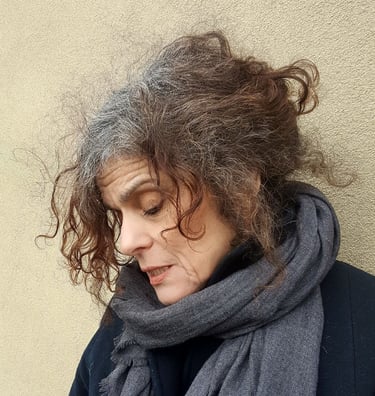
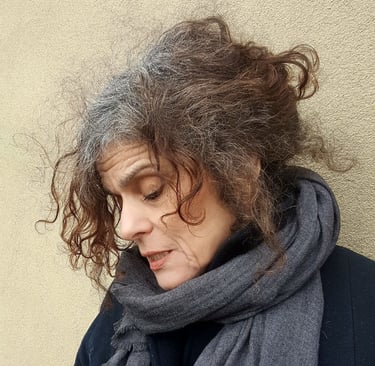
Photo by Ann Slavit
Subscribe to FREE digital flip copy of the Adelaide Magazine printed edition.