TRANSFIGURATIONS
ALM No.91, July 2026
ESSAYS


After my wife, Beth, finished talking on the phone with her mother, she burst into tears. “The doctors told my mother she needs to have surgery right away to remove a tumor that’s grown rapidly in her lower abdomen.”
As I tried to comfort Beth, I wondered how that could be possible. Her mother, Sue, had visited us in Washington, D.C. just two months before that to be with us for the birth of our son Travis. She had seemed fine then. We imagined her doting on Travis for years to come. How could things have changed so dramatically in just the past few months?
The next day, Beth flew to Dallas to be with her mother during the surgery. Traveling alone with a two-month-old son was especially difficult because she was breastfeeding Travis.
The news from the surgery was devastating. Sue had a very malignant form of cancer. Although she had an excellent surgeon, but the prognosis was grim. Aggressive chemotherapy was planned.
Sue’s life quickly crumbled. She had been planning to retire within the year, and had already moved from Houston to a lovely house in Nacogdoches that she was converting into a bed-and-breakfast. Now she was immediately forced to take retirement. Then Beth’s stepfather abandoned her, unable to cope with her illness. Sue had to sell the house in Nacogdoches, and moved to Washington, D.C. to live with us. My therapist observed that her life was like the story of Job.
Suddenly, our small row house in the Mt. Pleasant neighborhood of Washington, D.C. felt cramped. In quick succession, we went from just Beth and me living there to having a baby, then an au pair, and now Beth’s mother.
I didn’t complain. After all, this was a crisis. Instead, I focused on being as helpful as I could. I took Sue to doctors’ appointments, did the grocery shopping, and prepared meals. I also handled Travis’ diapers. Since Beth was breastfeeding him, we joked that she was in charge of input, while I handled output.
Despite all of my assistance, Beth was still suffering. Her body felt trashed by her pregnancy, childbirth, and now the demands involved in breastfeeding Travis. She was exhausted from waking several times each night. And she felt torn apart as she watched her mother slowly dying in our house.
The doctors continued to treat Sue’s cancer with chemotherapy. But the prognosis remained grim. They gave her morphine to ease the pain. Although she often complained that she needed a stronger dose, the doctors hesitated to increase it because of the side effects.
One day when Beth returned home from work, Sue told her excitedly that some people from NASA had come by.
“NASA?” Beth said, her voice filled with skepticism.
She nodded and explained that they were from the “Babies in Space” program. Her face glowing with pride, she told Beth that they thought Travis was a perfect fit for the program.
Slowly shaking her head, Beth gently suggested that maybe Sue had taken too much morphine that day.
Beth eventually decided that it might help her mother and herself to get some spiritual solace. She had been raised as a Methodist in Bovina, a small town in the Texas panhandle. But her family had not been very religious. By the time Beth went to college at the University of Texas in Austin, she had drifted away from her Methodist upbringing. She told me she had been repelled by the prejudice against black and brown people that she had witnessed in the church.
Nevertheless, honoring her mother’s background, Beth decided to take her to services at a large, well-known progressive Methodist church in Washington, D.C. Sue’s head was covered with a scarf when they entered the church, a clear sign that she was a cancer patient. Although the large church had five ministers, no one greeted Beth and her mother or spoke with them after the service.
Time passed. Then a friend suggested that maybe Beth should visit All Souls Episcopal Church, a smaller cottage-style chapel in the Woodley Park neighborhood of Washington, D.C. The next Sunday morning, Beth visited the church by herself. She was surprised to find the priest, Father John David van Dooren, standing at the front door welcoming the parishioners as they came in. Greeting her warmly, he took her arm and walked her to the second pew saying, “I want to seat you next to an experienced parishioner who can help guide you through the service.”
When the service was over, Father John David invited the parishioners to come to the undercroft to socialize. Beth hesitated as she entered the room, but Father John David came over and said, “Let me introduce you to some of the other parishioners.” As she was preparing to leave, he told her, “Make sure you leave your name and address in our guest book.”
Several days later, Beth received a hand-written note from Father John David thanking her for coming to All Souls, and hoping she would return soon. Although she was touched, Beth wrote back saying, “I’m too overwhelmed by the demands of caring for a newborn and my dying mother to be able to attend services at the church on a regular basis.”
The next week, Beth received a phone call from Father John David. “I received your letter,” he said. “I’d like to come visit your mother.”
Beth hesitated, and then said, “She’s a Methodist.”
“I understand,” Father John David replied. “But I’d still like to visit her.”
Beth conferred with her mother, and they decided it couldn’t hurt.
Father John David visited Beth’s mother that week. He returned to visit her every week after that.
After he had been visiting her for a while, Sue noticed that Beth fussed over him each time he visited, getting out her best china to serve him tea. She also noticed that Father John David was “easy on the eyes,” reminding her of Richard Chamberlain in The Thorn Birds. One evening after Father John David had visited her, Sue insisted on talking with Beth. Becoming agitated, Sue told her, “I’m grateful that you and Alan have taken care of me.” Pausing, she bit her lip and then plunged on. “But I’ll never forgive myself if my coming to live with you has led to problems in your marriage.”
At first, Beth was dumbfounded, not understanding what was troubling her mother. When it finally dawned on her what was going on, she tried to reassure her mother there was nothing to worry about. “I’m pretty sure the priest is gay.”
Sue stared at her for a moment and then exclaimed, “Thank God!”
Eventually the doctors suggested that Sue enroll in an experimental drug trial. But by the time they got an infection under control, the they decided she was too weak to proceed with the drug regimen. Sue didn’t object. Worn down by the constant pain, she told them, “I just want to go back to our house.”
As the end drew near, Father John David came to give Sue the last rites. That night, I listened to her death rattles as she lay in the next room. When we woke up in the morning, she was gone.
We held a memorial service for Sue back in Texas, scattering her ashes in Rocky Creek on the ranch in the Texas hill country where Beth’s grandparents lived. Sue had spent many wonderful afternoons there when she was raising Beth and her brother.
After the funeral, Beth started going to services every Sunday at All Souls Episcopal Church. Soon she insisted that Travis accompany her.
At first, I just swallowed my reservations. But one day I finally complained saying, “You were non-religious, like me, when we married.”
Without batting an eye, she replied, “I never promised you I wouldn’t change.”
Thinking back to our wedding vows, I realized she was correct.
When our daughter, Raffa, was born two years later, Beth insisted on taking her to church every Sunday, along with Travis. They were both baptized by Father John David, went to Sunday school, served on the altar, and eventually were confirmed.
I remained at home, steadfastly unchurched. I felt it would have been disloyal to how my parents had raised me to have joined Beth in going to church.
My mother came from Russian Jews and my father from German Lutherans, but religion barely existed in our home. My parents were married by a judge. We never attended church or synagogue.
Instead, my parents inculcated in us their passionate commitment to the labor movement. In the evenings, I remember listening to them talk about the UAW’s battles to win pensions and a guaranteed annual wage, and the struggles for civil rights. I grew up singing “Solidarity Forever” and “We Shall Overcome.” A charcoal drawing of a poor worker cutting a loaf of bread always occupied a central place in our house.
As a young adult, I followed in the path ordained by my parents. I never went to church or synagogue. My life centered around my work for the UAW, first as an attorney in the union’s legal department, and then later doing legislative work in the UAW’s Washington office. Labor activism effectively was my secular religion.
When I met Beth in 1988, she shared my passion and devotion to unions. Eventually she became the legislative-political director for the largest federal employee labor union, AFGE. Thus, when we were married in 1990, it seemed natural that we were just had a civil ceremony.
But our common bond had now been fractured by Beth’s newfound devotion to All Souls Episcopal Church. For a while, I wrestled with how to respond to the new developments. But then I realized that I didn’t mind my children being exposed to religion. Some grounding in religion might be good for them, I thought. And they’ll be able to make up their own minds about it when they are older.
I also didn’t mind it when Beth began to say grace before our meals. Her prayer was short, but powerful: “Bless this food to the nourishment of our bodies. Bless the many hands that prepared it. And make us ever mindful of the needs of others.” The blessing seemed very consistent with the values that had been passed along to me by my parents.
On special occasions, like Christmas Eve and Easter Vigil services, Beth asked me to accompany her and the children to church. I always listened respectfully to the prayers and homily, and enjoyed the music and singing by the choir. But I resolutely avoided going to the altar for a blessing. When our children were baptized, I stood through the ceremonies politely, uncertain what I believed, but proud to show off my children to the congregation.
Father John David and his partner became close friends of our family. Instead of proselytizing me, they joked about their religion saying they were “Whiskeypalians” and remarking, “We’re the only religion founded on adultery.”
Father John David was the first openly gay priest in the Washington D.C. diocese. As we got to know some of the other parishioners, my outlook on LGBTQ issues changed. One evening when we were attending a foyer dinner intended to build community among the parishioners, I was stunned when the man sitting next to me remarked, “Most of my friends have died of AIDS.”
Still, I often felt uncomfortable when Beth made comments in support of various LGBTQ issues. One day I finally blurted out to her, “It’s not the same thing as real civil rights. You know, like equal rights for Blacks and women.”
Mindful of the twelve-year gap in our ages, she replied, “I guess that’s just a generational difference between us.”
Not wanting to admit that she was right, I gradually began to re-evaluate my views.
Over time, I stopped thinking much about Father John David’s sexuality. What stayed with me was the depth of his religious faith, and his unusual ability to make people feel seen.
I remain grateful for the compassion and love he bestowed on my family when we were facing a crisis.
I wasn’t surprised that Travis and Raffa stopped going to church when they left home for college. Years later, after Beth and I moved to Austin, she also stopped going to church. Travis commented sarcastically, “I guess that was just something we did back then.”
Thinking back on our journey, I’m less cynical. I realize that I was blessed with different strands of secular and religious beliefs. Rather than being a source of acrimony and conflict, they have brought greater comfort and richness to my life.
Sometimes I wonder whether they are really that different. In the end, Father John David played an enormously consequential role in our lives, not because of the religious views he espoused, but because he showed up when it truly mattered. His compassion and presence mattered more than the theology. The social justice values I inherited from my parents - their deep belief in the dignity of all human beings – seem remarkably similar. It makes me think of the grace that Beth would say before our meals. “Make us ever mindful of the needs of others.”
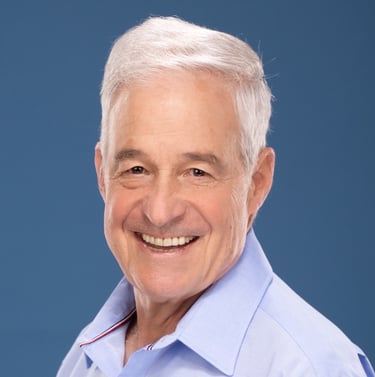
Alan Reuther: I am the author of "Roy Reuther and the UAW: Fighting for Workers and Civil Rights" (Michigan State University Press, 2025), which was named a 2025 Notable Book by the Michigan Historical Society. I was a lawyer and lobbyist for the United Auto Workers (UAW), serving as the Legislative Director from 1991 until my retirement in 2010. My memoir-in-progress, "Fire into Silence: A Son's Reckoning," explores how my mother transformed from a radical activist to a woman consumed by debilitating depression, and the impact this had on my ability to form enduring relationships with women.
Subscribe to FREE digital flip copy of the Adelaide Magazine printed edition.