UNSENT
ALM No.87, March 2026
ESSAYS
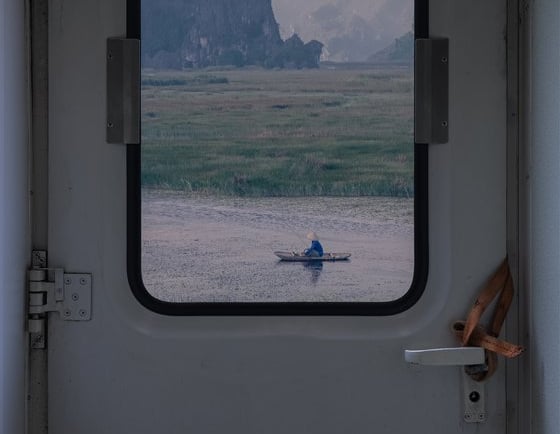
My goal was simple. Just leave him. Not today, maybe not tomorrow, but soon enough that I could still pretend I had chosen the timing.
I told myself I was waiting for the right moment, a quiet moment, a safe moment, a moment that would not anger him into becoming the version of himself I pretended not to recognize. Fear was my weakness, planning was my courage, but even courage feels like a weight pressing into your ribs. So, I practiced courage and fed my weakness until they both felt identical inside my chest. Every night I lie beside him, counting apologies instead of exits and calling the waiting a strategy instead of surrendering.
Our apartment smelled like the night before. His stale coffee, his cologne, the quiet patience of a man who forced me to belong to him. Before I had packed in pieces. I’d pack a sweater one morning, my birth certificate the next week, even slip a toothbrush into my purse like contraband. I hid these small rebellions under the bed, inside old shoes, and in the pockets of my winter coats. Not today, those objects would no longer be a promise I postponed. When Evan was gentle, I postponed. When he was cruel, I postponed harder. I told myself love required patience. I told myself pain was temporary. I told myself that leaving meant loneliness would be permanent. These lies became my voice and began answering me before I could think of objecting or ever saying his name aloud with anger. When he kissed me, I let him, because the gentleness made leaving harder, but not today.
I decided to go to my mother’s first. I was going to leave him properly, with a destination, and proof that I wasn’t unlovable. I left before the sun rose. On the bus, the view was blurred by the rain-streaked windows. I kept practicing the one sentence that mattered. I am leaving him. Those words felt fictional in my mouth. They felt like a line from someone else's life. I knew that only my mother's voice would be a soft landing for my hard truths. She would understand that I needed to breathe without asking permission and not have to apologize for the space my body required to exist.
Her house was dark when I arrived. The wet leaves on the steps were as messy as unresolved thoughts. I knocked, not expecting the neighbor to answer. My mother had died that morning. Those words passed through me like a cold wind; something inside me closed carefully. It felt like a door that had learned how to lock itself from the inside out. Inside, the house looked as if it had paused mid-sentence. Her cup ring-stained table sat tilted in front of a chair where her cardigan hung as if she had just stood up and forgotten to return. I didn’t cry. I couldn’t. I had moved through these rooms my whole life, but today it felt so unfamiliar, like I was watching someone else’s memories. I was searching for something and nothing at the same time. I sat on her bed and pressed my face onto her pillow. It didn’t smell like her anymore. That felt deliberate, and I felt abandoned. I sat up, and something hard sticking out from the bed skirt rubbed against my ankle. I found an old wooden box with my name fading on the lid. Inside sat a mountain of letters all unsent, each one layered with dust, and waiting with quiet endurance. The jagged handwriting of her seemingly quaking hands broke into lines describing my father.
The first one began:
You broke things in me that still make noise when I breathe. I renamed your bruises to accidents. I chose silence in exchange for peace. You changed my name to “Mrs. Please, I’m sorry,” and I only knew you as “Mr. You made me do this”. I mistakenly equated the length of our relationship with the depth of our commitment.
She wrote love with fluency in pain. At the bottom of the box was an envelope that was sealed and addressed to me. Her handwriting looked even more wavered, like the word itself was dangerous. It read, leave him, do not wait the way I did. The fear of loneliness is how abuse teaches you to stay. It’s better to be alone than erased.
I folded it until it softened enough to carry without bleeding. Grief pressed against me like a second body. I pulled myself together, determined to no longer live inside the pauses between his moods. I boarded the bus again, carrying my goal like a fragile secret wrapped in guilt instead of hope. I kept Evan’s calls waiting. I knew the sorrow and anger that I was feeling would break the obedient tone he was accustomed to the moment I heard his voice. Finally, I answered. He said he was worried and that he loved me. He said he couldn’t live without me, and that he had mistook possession for demonstrating how deeply he needed me. All lies he didn’t have to tell. I just hung up.
Outside the apartment, the cold, thin rain stitched through the sky. I could only think of my bag waiting under the bed. My hands were steady, which frightened me more than fear ever had, as I packed everything at once. I stood at the door, imagining my future as an empty, safe, and lonely room. I told myself I could live with loneliness because loneliness doesn’t bruise. I reached for the doorknob and felt my pulse arguing with my bones. Suddenly, the lock turned. Evan came home early. His shoulders dripped with rain, and his eyes awake with suspicion. I stumbled back, dropping my bag.
“What are you doing?” he asked way too calmly.
My goal rose in my throat, almost choking me.
“I am leaving you,” I said as my voice trembled and broke.
The silence that fell between us was thick enough to smother my courage, yet I reached for the door handle anyway. He reached for me as if I were something he had misplaced rather than someone escaping. His voice said my name as fiercely as the crack of a whip. The room inhaled, breaking my nerve as it exhaled. In my last seconds between life and death, I realized pain was an agreement I’d made with myself with no set tenure.
I thought of my mother folding herself smaller so his hate could have more space. I thought of the box waiting under her bed like a mouth with no voice to speak. I thought of all the exits I had rehearsed, but I understood too late that waiting is a form of believing that you deserve what hurts you. The floor rose to meet me like something patient and final. Darkness arrived gently, the way lies always do. They will say I tried to leave, but I waited too long. They will find my mother’s letter in my hand, creased in the shape of my last pulse. It will say that I almost believed that being alone would hurt, but not erase you. I died overtethered, not to love, but to the terror of standing in the world without pain as an explanation of where I belonged. This was my inheritance. This was the story I learned to call devotion instead of captivity while I still had the breath to rename it. My goal had been simple. Just leave him.
Miosha Johnson is an aspiring Author with a deep love for storytelling in all its forms, especially television drama. She is drawn to stories that prioritize character, emotional depth, and the quiet moments that reveal who people really are. She writes with strong attention to detail and a natural talent for narrative analysis. She is interested in how stories unfold over time, how characters evolve under pressure, and how trauma, love, power, and identity shape long-form storytelling.
Subscribe to FREE digital flip copy of the Adelaide Magazine printed edition.