WHAT IT TAKES TO LIVE IN THIS WORLD
ALM No.84, January 2026
ESSAYS


What does it take to live in this world?
You have to be a cheater,
a deceiver,
a liar,
a backstabber.
A face for the day,
a face for the night.
Appear one way,
go another.
Agree, but don’t.
Pretend to give,
but take instead.
You are alive,
but dead.
For if you’re honest,
you’ve no chance
in this world.
Where the pure are battered,
broken,
and hurled.
After observing people and speaking with them in search of meaning, I often return to one question: What does it take to live in this world?
The common wisdom, though seldom spoken aloud, is brutal: one must be a cheater, a deceiver, a liar, a backstabber. One must carry a face for the day and another for the night. One must appear in one direction but move in another. Agree with one’s lips while one’s heart resists. Pretend to give, while taking instead. This is how the game is played, and those unwilling to play are dismissed as naïve.
And so, many are alive, but dead. Their bodies walk, their mouths speak, their eyes flicker with motion, yet their souls wither, suffocated beneath masks. The honest man, who refuses disguise, finds himself disadvantaged, exposed, or discarded. To live openly seems to be to lose.
The crowds wear the masks everywhere
Søren Kierkegaard warned that “the crowd is untruth.” He observed that society trains us to wear masks: to smooth away our contradictions, to appear agreeable, to hide our despair. For him, the greatest danger was not dramatic ruin, but the quiet loss of self that occurs when we surrender to conformity. A mask may protect us, but it erodes our identity until nothing remains but a performance.
Nietzsche sharpened this critique further. He called it herd morality: the collective instinct to reward obedience and punish difference. The herd has no tolerance for authenticity, because authenticity threatens the fragile consensus upon which it survives. To speak one’s true mind is to risk expulsion. And so, the herd applauds dishonesty — so long as the dishonesty preserves the surface harmony of the group.
In this sense, dishonesty becomes a survival strategy. To lie is not merely to deceive others, but to remain acceptable within the crowd. To wear two faces is not hypocrisy, but camouflage.
The price of honesty is exclusion.
So, ask yourself: what is the cost of the mask?
But there is a deeper cost, one that cannot be ignored. To live behind a mask is to fracture one’s existence. Dostoevsky captured this in Notes from Underground, where the narrator confesses that the greatest torment is not the cruelty of others, but the self-knowledge that he is dishonest with himself. A man may wear masks so convincingly that even he forgets his own face.
Jean-Paul Sartre called this condition bad faith: the act of lying to oneself in order to avoid the weight of freedom. The waiter who convinces himself he is nothing but a waiter, the lover who convinces herself she feels more than she does — these are masks of convenience, shields from the terror of choice. Bad faith preserves social acceptance, but at the cost of authenticity.
Marcus Aurelius, writing centuries earlier, knew this same danger. He urged himself daily:
“If it is not right, do not do it; if it is not true, do not say it.”
For Aurelius, dishonesty corrodes the soul. One may survive the crowd, but the self becomes uninhabitable. To wear too many masks is to exile oneself from one’s own being.
So, what is left for the honest man?
If he speaks plainly, he may be ridiculed or ignored. If he refuses the mask, he risks exclusion. If he persists in sincerity, he may find himself poor, friendless, misunderstood. Honesty in such a world seems almost suicidal.
And yet, to live dishonestly is a slower death. Camus framed this as the absurd: the tension between our hunger for meaning and the world’s refusal to provide it. To live honestly is to confront the absurd — to acknowledge life’s dishonesty without participating in it. Camus admired those who faced the absurd directly, who lived without illusions. He compared them to Sisyphus, pushing his rock eternally yet refusing despair.
In this view, the honest man may not “win” in the world’s sense. He may not acquire wealth, status, or easy acceptance. But he wins something greater: a life lived without self-betrayal.
Survival or Integrity - which one will you choose?
This, then, is the paradox. To survive in society, one must often cheat. To survive in oneself, one must be honest. Which survival matters more? The world rewards dishonesty, but existence itself punishes it. The mask may feed the body, but only authenticity nourishes the soul.
Perhaps the true question is not what does it take to live in this world, but what does it take to live with oneself? To cheat and deceive may allow one to live comfortably among others, but only honesty grants the strength to face oneself. This is why I choose honesty because I am inseparable from my thoughts; they shape, guide, and sustain me. I make this choice knowing it will set me apart, perhaps even as an outsider in society — yet it is a cost worth bearing.
Which do you choose?
The world may belong to the liars, but eternity belongs to the honest.
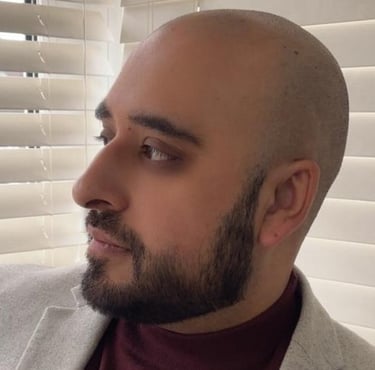
Zeshan Aslam: I am an aspiring author exploring the intersections of morality, consciousness, and the quiet tensions of modern life. I am currently working on my book ‘Contemplations: Reflections for an Uneasy Age’, a collection of essays that blends philosophy with personal reflection. With a background in education and psychology, my writing often turns toward the inner landscapes of thought, doubt, and character. I draw inspiration from classical philosophers, contemporary neuroscience, psychology and the struggle to live with integrity in an increasingly chaotic world. My aim is to give readers clarity and depth, while awakening a renewed spirit of questioning and reasoning.
Subscribe to FREE digital flip copy of the Adelaide Magazine printed edition.